



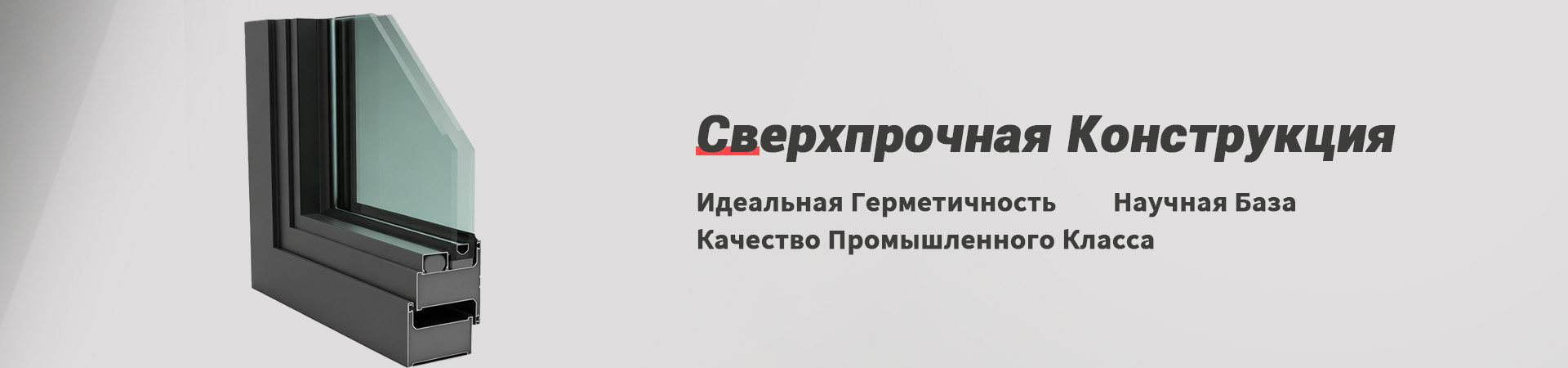
Energy saving due to thermal break: buy a profile from the factory
2026-08-16
- Energy savings due to thermal break: direct savings on heating and air conditioning
- Physics of the process: how energy saving due to thermal break works
- Profile structural elements: what determines efficiency
- Comparative analysis: Cold metal vs Thermal break vs PVC
- The role of the manufacturer: the experience of Chongqing Huaxia Windows and Doors LLC
- Application in industries: where energy saving due to thermal break is critical
- Engineering calculation and profile selection: a practical guide
- Typical errors during installation and operation
- Business Case: ROI of Thermal Break Implementation
- How to choose a reliable profile provider
- FAQ: Frequently asked questions about energy saving and thermal break
- Conclusion and recommendations for purchasing
Energy savings due to thermal break: direct savings on heating and air conditioning
Energy saving due to thermal breakis a fundamental engineering approach to reducing heat loss in building structures, based on the physical separation of the metal frame of the profile with a polymer insert. In the context of rising energy tariffs in 2026 and tightening requirements of SP 50.13330.2012 “Thermal protection of buildings”, the use of aluminum and steel systems with thermal breaks has ceased to be an option in the premium segment, becoming a mandatory standard for industrial and civil construction. The essence of the technology is to interrupt the cold bridge: metal, having high thermal conductivity (for aluminum λ ≈ 220 W/(m K)), is replaced in the “street-room” contact zone with polyamide or special poured insulation, whose thermal conductivity is 1000 times lower. This allows you to maintain the strength and durability of the metal, while achieving thermal resistance (R₀) values comparable to or even superior to PVC systems.
For purchasers, chief engineers and architects understanding the mechanismenergy saving due to thermal breakcritical not only for passing the project examination, but also for calculating the total cost of ownership of the facility (TCO). A properly selected profile with enhanced thermal break reduces the load on HVAC (heating, ventilation and air conditioning) systems by up to 35-40%, which pays off the initial investment within 3-5 years of operation. In this material, we will analyze in detail the physics of the process, technical characteristics of modern insulation solutions, installation errors and criteria for choosing a supplier, so that you can make an informed decision about purchasing a profile directly from the manufacturer.
Physics of the process: how energy saving due to thermal break works
To understand whyenergy saving due to thermal breakis the most effective solution for metal structures, it is necessary to consider the thermophysical processes occurring in the enclosing contours. Metal alloys (aluminum series AD31, 6060, 6063 or non-ferrous steel) have exceptional mechanical strength, corrosion resistance and aesthetic flexibility. However, their main drawback is their high thermal conductivity. In a “cold” profile without a thermal insert, the inner surface of the frame quickly cools down to street temperatures in winter. This leads to two negative consequences:
- Intense heat loss through convection and radiation into the room.
- Condensation occurs on the inner surface of the profile when the dew point is reached, which leads to the formation of mold, damage to the finish and discomfort for users.
Thermal break technology solves this problem radically. The profile is cut into two parts (internal and external), which are then connected with special polymer bridges - thermal insulating inserts, or filled with highly effective insulating material. In the case of polyamide inserts, glass fiber reinforced polyamide 6.6 (PA66 GF25) is used. Reinforcement with glass material (25% fiberglass) is necessary not only to reduce thermal conductivity, but also to ensure a coefficient of linear thermal expansion identical to metal. If ordinary plastic were used, with temperature changes from -40°C to +80°C, critical stresses would arise, leading to deformation or failure of the connection.
Thus,energy saving due to thermal breakis ensured by the creation of a barrier with high thermal resistance. The heat flow, tending from a warm zone to a cold one, is forced to pass through a narrow channel of the insulator, which greatly reduces its intensity. Modern systems make it possible to achieve a heat transfer resistance coefficient R₀ of up to 1.2–1.4 m² °C/W, which meets the requirements for passive houses and energy-efficient buildings of class A and A+.
Profile structural elements: what determines efficiency
Not all thermal break profiles are equally effective. Efficiencyenergy saving due to thermal breakdirectly depends on the geometry and quality of the system components. Let's consider the key elements that influence thermal performance indicators:
1. Polyamide insert or casting technology (thermal insulation barrier)
The heart of the system. Quality insulation must meet strict standards (eg DIN EN ISO 1160 for inserts). The most important parameters:
- Insertion/layer width:The wider the thermal bridge, the higher the resistance to heat transfer. Standard values range from 14 mm to 40 mm or more. For the northern regions of Russia, it is recommended to use inserts with a width of 24 mm or more or systems with poured insulation of increased thickness.
- Geometry:Modern inserts have a complex cellular structure or additional chambers filled with air or foam material, which creates additional barriers to heat flow.
- Material:Only polyamide 6.6 with 25% glass fiber or specialized polymer compositions for casting. The use of recycled materials is unacceptable due to the risk of brittleness at low temperatures.
2. Seals (EPDM)
Even a perfect thermal break will not save you from losses if the tightness of the vestibule is broken. Ethylene propylene rubbers (EPDM) are used, which retain elasticity in extreme frosts (down to -60°C). It is important to have two sealing circuits: external (wind and moisture protection) and internal (vapor barrier).
3. Filling the translucent part
A profile is just a frame. Main impact on overallenergy saving due to thermal breakprovides double glazing. For maximum effect you must use:
- Double-chamber double-glazed windows with low-emissivity i- or k-glass.
- Filling the interglass space with an inert gas (argon or krypton).
- Warm spacer frames (made of polymer materials or stainless steel with a thermal break), preventing freezing along the edge of the glass unit.
Comparative analysis: Cold metal vs Thermal break vs PVC
When choosing a material for façade solutions, a dilemma often arises. Below is a comparison table demonstrating the advantages of the technologyenergy saving due to thermal breakfacing alternatives in the context of industrial and commercial construction.
| Parameter | Cold aluminum/steel | Aluminium/Steel with thermal break | PVC (Plastic) |
|---|---|---|---|
| Heat transfer resistance (R₀) | 0.1 – 0.3 m²°C/W | 0.45 – 1.4 m²°C/W | 0.6 – 1.1 m²°C/W |
| Strength and rigidity | High | Very high (load-bearing facades, high-rise buildings) | Medium (requires steel reinforcement) |
| Durability | 40-50 years | 50-80 years | 20-30 years (plastic degradation) |
| Possibility of large formats | Yes, but only indoors | Yes (panoramic glazing, stained glass) | Limited (risk of sashes sagging) |
| Fire safety | NG (non-flammable) | NG / G1 (depending on filling) | G2-G3 (low-flammability) |
| Aesthetics and design | Minimalism, any RAL colors | Premium, bicolor (different colors inside/outside) | Limited choice of textures |
| Life cycle cost | Low initial, high maintenance | Average initial, low operational | Low initial, medium operational |
As can be seen from the table,energy saving due to thermal breakmakes metal structures competitive where PVC cannot cope with loads: high-rise construction, large spans, aggressive environments. At the same time, heat losses are reduced to a level close to plastic windows, but while maintaining the architectural expressiveness and reliability of metal.
The role of the manufacturer: the experience of Chongqing Huaxia Windows and Doors LLC
Choosing a reliable partner is critical for projects that require high energy efficiency standards. A prime example of a company successfully integrating advanced thermal break technologies into mass production isChongqing Huaxia Windows and Doors Co., Ltd.. This Russian legal entity, operating within the framework of a strategic association with Chongqing Huaxia Steel Structures LLC, is based in one of the key industrial centers of China - Chongqing.
The company implements a unique dual business model: “Energy efficiency in construction + Intelligent production in heavy industry.” This approach allows the application of quality standards used in critical engineering to the production of building envelopes. The company's specialization in products for use in harsh climatic and extreme industrial conditions makes its solutions especially relevant to Russian realities.
The main range includes energy-efficient window and door systems made of colored steel (series 60, 75, 120) and steel windows with poured thermal insulation (series 50). These solutions are designed using advanced thermal break technology and multi-circuit seals, providing high wind resistance and airtightness. The production base combines the capabilities of two specialized enterprises, which provides a full cycle of metal processing - from design to final assembly. Strict quality control at all stages, including incoming control of raw materials and operational control of parameters, guarantees the stability of thermal break characteristics in each batch of products.
Application in industries: where energy saving due to thermal break is critical
The introduction of heat saving technologies is regulated not only by the desire to save money, but also by building codes. Let's look at the key sectors where purchasing a profile with a thermal break is technically justified.
Civil engineering and residential complexes of comfort and premium class
In apartment buildings, panoramic glazing of balconies and loggias has become standard. The use of “cold” metal here is prohibited by housing construction standards, as this leads to cooling of adjacent rooms and the formation of condensation.Energy saving due to thermal breakallows you to combine a loggia with a living room without installing additional radiators, keeping the thermal contour of the building intact. For developers, this means increasing the energy efficiency class of the house and, consequently, its market value.
Industrial facilities and warehouse logistics
In warehouses with temperature control (pharmaceuticals, food, electronics), gates and office partitions inside the workshop must provide a stable microclimate. Office blocks built into production workshops (“clean rooms”) are often made of metal profiles. Without a thermal break in winter, the walls of such offices will be covered with frost. The use of systems with a wide thermal bridge or flooded insulation allows you to maintain a temperature of +22°C inside the office at -30°C outside, reducing the cost of heating workplaces by 25-30%.
Public buildings: schools, hospitals, airports
The key factor here is not only heat, but also sound insulation, as well as anti-vandalism. Metal profiles with thermal breaks provide a sound insulation index of up to 45-50 dB, which is critical for buildings located near runways or in the centers of megalopolises. In addition, the durability of the coating (powder painting or anodizing) reduces the cost of reconstructing facades.Energy saving due to thermal breakon such a scale, it saves budget funds on utility bills in the amount of millions of rubles annually.
Engineering calculation and profile selection: a practical guide
How to choose the right profile for realenergy saving due to thermal breakcorresponded to the design? Errors at the selection stage lead to the fact that expensive structures do not perform their functions.
Step 1. Determination of the climatic region
According to SP 131.13330.2012, Russia is divided into climatic regions. For Moscow and Moscow Region (III climatic region), the required reduced heat transfer resistance of windows is about 0.55-0.6 m² °C/W. For Yakutsk or Norilsk - over 0.8 m² °C/W. Based on this, the width of the thermal break is selected:
- Up to 20 mm:Southern regions, glazing of internal partitions.
- 20-24 mm:Central Russia, standard window glazing.
- 24-34 mm and more:Northern regions, facade glazing, panoramic doors.
Step 2. Calculation of the Uf coefficient (heat transfer profile)
Professional designers use software packages (for example, Therm or Window) to calculate isotherms. It is important to ensure that the 0°C isotherm passes inside the polyamide insert or insulation layer without affecting the metal parts in contact with the interior. If the isotherm is shifted indoors, the risk of condensation is high. Ask your supplier for isotherm maps for your specific profile series.
Step 3. Check static loads
Increasing the width of the thermal break can reduce the rigidity of the profile. For large heights (stained glass windows over 3 meters high), it is necessary to use profiles with additional internal reinforcement or increased metal wall thickness (from 2 mm). The manufacturing plant must provide calculations for deflection and wind load.
Typical errors during installation and operation
Even the highest quality profile with perfectenergy saving due to thermal breakcan become a source of problems if the installation is carried out incorrectly. Complaint statistics show that 70% of problems are not related to the product, but to the human factor.
- Depressurization of fastening units:When assembling corner joints, it is important to use special heat-shrink caps and sealants at the junction points of thermal bridges. If moisture gets inside the thermal break cavity, it can expand when it freezes and damage the insulator structure.
- No vapor barrier:The installation seam between the profile and the wall must be protected from the inside with vapor barrier tape. Otherwise, warm, moist air from the room will penetrate into the thermal break zone, causing hidden wetting of the insulation and reducing its effectiveness.
- Use of incompatible components:Installing cheap seals or fittings that are not designed to support the weight of heavy double-glazed windows leads to misalignment of the sashes. Violation of the pressure negates all the benefits of thermal break, creating drafts.
- Mechanical damage to the insert:When transporting and drilling holes for fittings, you must avoid getting into the insulating bridge. Drilling a thermal break is unacceptable - it is a direct bridge of cold.
Business Case: ROI of Thermal Break Implementation
Many customers believe thatenergy saving due to thermal break- it's expensive. Let's do the math. The difference in cost between “cold” and “warm” metal profiles is approximately 30-50%. However, if we consider the object over a 10-year horizon:
- Savings on heating: for a private house with an area of 200 m² with large glazing, the difference in gas/electricity bills can be up to 50-70 thousand rubles per year.
- No repair costs: the absence of condensation means the preservation of slopes, curtains and floor coverings.
- Property capitalization: buildings with certified energy-efficient facades have higher rental and sales prices.
Thus, the overpayment for thermal break technology is recouped through operating costs. In 2026, taking into account the projected increase in energy prices, the payback period is shortening.
How to choose a reliable profile provider
The metal systems market is saturated with offers. To buy a profile that will actually provideenergy saving due to thermal break, pay attention to the following manufacturer's markers:
1. In-house production and control of components
The best factories either produce insulating inserts/mixtures themselves or work with world leaders. Certificates for materials (PA66 GF25 or equivalents for pouring) are required. An example of this approach is the policy of Chongqing Huaxia Windows and Doors LLC, which applies strict incoming control of raw materials and operational control of technological parameters.
2. Build quality control
The process of pressing the thermal bridge into metal (rolling) or pouring must be automated. Manual assembly is unacceptable for mass production, since it is impossible to guarantee uniform force and the absence of microcracks in the polymer.
3. Technical support and calculations
The plant must provide not just “sticks” of metal, but a comprehensive solution: drawings of components, thermal physics calculations, installation instructions. The ability to order non-standard colors from the RAL catalog or textures also indicates the technological maturity of the enterprise.
4. Logistics and packaging
The metal is easily scratched, and the thermal break is sensitive to shock. Check if the supplier uses protective film and cardboard spacers when packing. Having our own warehouses in key regions reduces the risk of damage during transportation.
FAQ: Frequently asked questions about energy saving and thermal break
Does the width of the thermal break affect the strength of the window?
Yes, increasing the width of the insulating layer reduces the moment of inertia of the profile. However, modern systems compensate for this by increasing the height of the profile section or using additional stiffeners. For standard window sizes, the effect on strength is minimal and is completely offset by the benefits of thermal insulation.
Is it possible to make a thermal break yourself in a cold profile?
No. Technologyenergy saving due to thermal breakrequires precision extrusion and press-fitting/pouring in the factory. Attempts at homemade insulation with polyurethane foam or rubber will not provide either tightness or durability, and can lead to structural failure.
What is the service life of the insulating insert?
Polyamide 6.6 with glass fiber or quality casting compounds are chemically inert and not subject to aging under the influence of UV radiation (since they are located inside the metal). Their service life is equal to the service life of the metal profile itself - at least 50 years, subject to operating conditions.
Do profiles with thermal break require special care?
No. Standard care: cleaning with mild detergents, lubricating the fittings once a year, checking the seals. The main thing is to prevent mechanical damage to the protective coating of the metal.
Conclusion and recommendations for purchasing
In 2026energy saving due to thermal breakis the uncontested standard for high-quality metal glazing. This is not just a marketing ploy, but a proven engineering technology that allows you to combine the aesthetics and strength of metal with the warmth of wood. For businesses, this is a tool for reducing operating costs; for private developers, it is a guarantee of comfort and the absence of problems with condensation.
When choosing a profile, give preference to factories with a full quality control cycle that can provide test reports and thermal calculations. Don't skimp on the thermal break in cold climates - this mistake will cost you more in your heating bills.
Companies such as Chongqing Huaxia Windows and Doors LLC are demonstrating that combining competencies in structural glazing and heavy machinery can create products that can withstand extreme conditions, from polar climates to harsh industrial environments. Their experience in reconstruction and import substitution projects confirms their ability to deliver reliable solutions even with high order volumes.
Ready to move on to project implementation? Our engineers will help you choose the optimal profile series for your needs, calculate heat loss and prepare a commercial proposal taking into account logistics to your facility.
Get an individual consultation and cost estimate:
→Download the catalog of profiles with thermal break
→Request samples and technical data sheets
→Contact the factory sales department


