



Buy thermally insulated steel windows from the factory
2026-08-16
- Thermally insulated steel windows: direct deliveries from the manufacturer in 2026
- What are thermally insulated steel windows and their design features
- Where are insulated steel windows used: industry analysis
- Main technical characteristics and selection parameters
- How to choose a supplier: criteria for assessing the manufacturing plant
- Chongqing Huaxia Windows and Doors LLC: integration of technology and reliability
- Price Range and Cost Factors
- Logistics, installation and export capabilities
- Comparison with alternative materials
- Typical errors when ordering and using
- Engineering opinion: limitations and prospects
- FAQ: Frequently asked questions
- Recommendations for purchasing and concluding a contract
- Conclusion: Why choose our factory
Thermally insulated steel windows: direct deliveries from the manufacturer in 2026
Thermal insulated steel windowsare high-tech translucent structures that combine the strength of hot-rolled or cold-formed steel profiles with modern polymer thermal breaks. In the context of industrial construction and premium architectural projects in 2026, these systems are the only solution where maximum load-bearing capacity of the frame is required while maintaining high energy efficiency. Buying thermally insulated steel windows directly from the factory means eliminating intermediary markups, receiving guaranteed compliance with GOST and the possibility of customization for non-standard geometric parameters of openings.
The key difference between such structures and standard aluminum or PVC analogues is the ability to withstand extreme wind loads (up to 1500 Pa and above) and the weight of heavy double-glazed windows (triple glazing, armored glass) without deforming the frame. The steel core, insulated from the external environment by polyamide inserts with a width of 24 to 60 mm, eliminates the formation of “cold bridges”. This is critical for facilities in northern latitudes, where the temperature difference between indoors and outdoors can exceed 60°C. Purchasing from the manufacturer provides not only a competitive price, but also full control over the quality of welds, anti-corrosion treatment (galvanizing + powder coating) and the accuracy of assembly of fittings.
What are thermally insulated steel windows and their design features
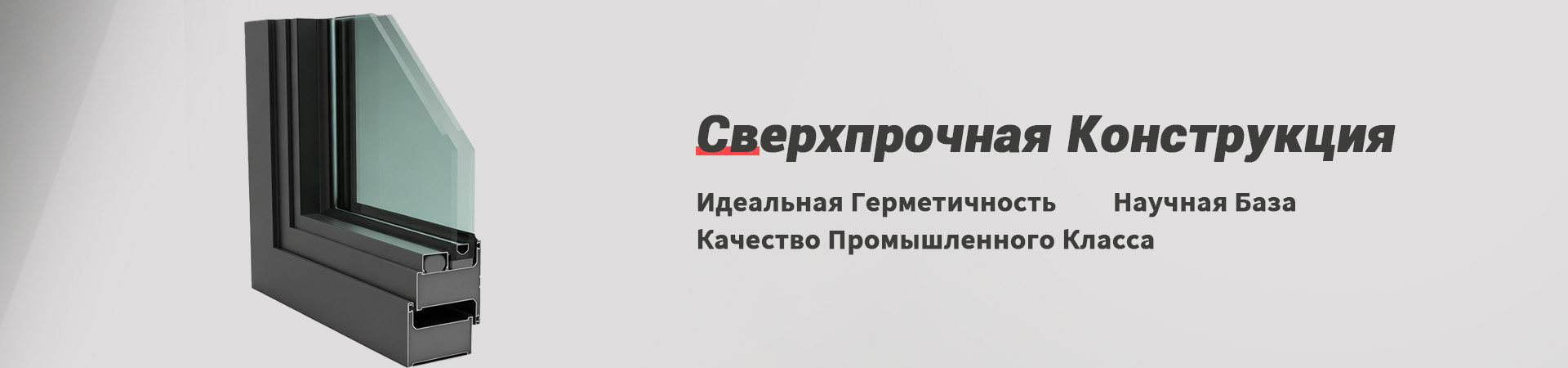
The design is based on the principle of a composite profile. If we considerthermally insulated steel windowsfrom an engineering point of view, it is a sandwich structure where the outer and inner shells of steel are mechanically or adhesively bonded through a thermally insulating barrier. In 2026, production technologies have stepped forward compared to the classic solutions of the last decade. Modern factories use a method of extruding glass fiber reinforced polyamide, which fills the space between steel profiles, creating a sealed contour.
The steel used in production usually has a wall thickness of 1.5 to 3.0 mm. In comparison, standard aluminum profiles are often 1.2-1.8mm thick, making the steel more resistant to impact and burglary attempts. However, steel has high thermal conductivity (about 50 W/(m K)), so without a high-quality thermal break, such a frame would turn into a huge heating radiator in winter. An engineering solution to the problem is to create a heat flow gap. The polyamide bridge has a thermal conductivity of about 0.25 W/(m K), which is 200 times lower than that of steel.
An important aspect is the method of connecting the corners. Unlike aluminum, which often uses angles and mechanical assembly, high-qualitythermally insulated steel windowsare produced using welding of profile joints before coating, or using high-precision mechanical connections followed by sealing with specialized compounds. This prevents moisture from getting inside the profile, which could lead to corrosion from the inside - the main enemy of metal structures.
Key Design Elements
- Outer contour:Steel profile with powder coating, resistant to UV radiation, temperature changes and chemical influences of the urban environment.
- Thermal break:Polyamide profile with stiffeners. The width of the thermal bridge directly affects the heat transfer resistance coefficient (R). The wider the bridge, the higher the energy efficiency.
- Inner circuit:Steel profile, which can be painted in any RAL color or have a decorative coating (wood look, matte varnish).
- Seals:EPDM (ethylene propylene rubber) or premium silicone seals are used, maintaining elasticity at temperatures down to -60°C.
- Accessories:Reinforced hinges and locking mechanisms designed for sash weights up to 150–200 kg. Hidden fittings are often used to improve aesthetics and seal the narthex.
Where are insulated steel windows used: industry analysis
Demand forthermally insulated steel windowsis formed not only by aesthetic preferences, but also by the strict technical requirements of various industries. In 2026, the main consumers of these products can be divided into several key segments, each of which dictates its own specifications.
Industrial construction and heavy industry
In factories, workshops and warehouse complexes with high ceilings, windows are subject to significant wind loads. Standard PVC systems are not applicable here due to insufficient rigidity over large glazing areas. Steel frames allow you to create stained glass windows with an area of more than 6–8 square meters in one section without additional imposts. This increases light transmission and reduces the cost of artificial lighting. In addition, steel does not burn, which meets strict fire safety standards in industrial facilities.
Premium civil engineering (Loft, Industrial Chic)
The industrial architectural style remains dominant in the design of luxury apartments, class A offices and public spaces. Fine visual lines of the steel profile (narrow faces) provide maximum visibility. Thermal insulation allows the use of such windows in residential premises, providing a comfortable microclimate and low heating bills. Not only the function is important here, but also the tactile quality of the coating and the quiet operation of the fittings.
Objects with special operating conditions
These include swimming pools, chemical laboratories, food production. Steel coated with high-quality polymer is resistant to aggressive environments, high humidity and frequent sanitary treatment. Unlike aluminum, which can suffer pitting in chlorine-containing environments, properly treated steel will last for decades without losing its appearance.
Main technical characteristics and selection parameters
When forming a technical specification for a purchase, it is necessary to rely on specific physical parameters. Simply asking for “steel windows” is not enough. Design engineers must consider the following metrics that determine the longevity and efficiency of a system.
| Parameter | Value/Range | Impact on Operation |
|---|---|---|
| Heat transfer coefficient (Uw) | 1.1 – 1.8 W/(m²°C) | Determines energy efficiency. Passive houses require Uw < 0.8, which is only achievable with highly specialized systems. |
| Breathability resistance | Class A (highest) | Eliminates drafts even in hurricane winds. Critical for high-rise buildings. |
| Sound insulation (Rw) | 35 – 45 dB | Depends on the thickness of the glass unit and the quality of the seal. The steel frame provides better clamping than many analogues. |
| Maximum sash weight | Up to 200 kg | |
| Thermal gap width | 24 mm, 34 mm, 45 mm, 60 mm | The wider, the higher the thermal resistance, but the larger the frame dimensions. |
| Anti-corrosion protection | Galvanizing + Polymer | Rust-free guarantee for up to 25-50 years depending on the environment. |
It is important to note that the Uw indicator depends not only on the frame, but also on the glass unit formula. A steel frame with a conventional single-chamber double-glazed window will have worse performance than an aluminum frame with a three-chamber one. Thereforethermally insulated steel windowsshould always be considered as a system: profile + double-glazed window + fittings.
How to choose a supplier: criteria for assessing the manufacturing plant
The metal window market in Russia and the CIS countries is heterogeneous. There are many garage workshops posing as factories and large industrial enterprises. Tobuy thermally insulated steel windowsefficiently and on time, it is necessary to audit the potential supplier on the following points:
- Availability of its own profiling cycle.The present plant has a polyamide extrusion line and steel bending/rolling machines. If a company only assembles windows from a purchased profile, it depends on the logistics of component suppliers, which increases the risk of missing deadlines.
- Quality control laboratory.Check whether the factory conducts tests for water permeability, air permeability and wind resistance. Test reports in accordance with GOST 30674-99 or European standards EN 14351-1 are required.
- Coating technology.High-quality powder coating requires preliminary chemical preparation (degreasing, phosphating) and compliance with the polymerization temperature regime. Ask to see the painting area. The presence of an automatic line guarantees layer uniformity and adhesion.
- Engineering support.The supplier must provide profile strength calculations for large formats. If a manager can't answer a question about the profile's moment of inertia, that's a red flag.
- Reference list.Request contact information for properties completed 3–5 years ago. The condition of the windows after a while will say more than an advertising brochure.
Chongqing Huaxia Windows and Doors LLC: integration of technology and reliability
Choosing a reliable partner becomes a key factor in the success of the project. A striking example of an enterprise that meets the high standards of 2026 isChongqing Huaxia Windows and Doors Co., Ltd.. A Russian legal entity operating within the framework of a strategic association with Chongqing Huaxia Steel Structures LLC, the company is based in Chongqing, one of the key industrial centers of China. Implementing a dual business model of “Energy Efficiency in Construction + Intelligent Manufacturing in Heavy Industry”, the company specializes in products designed for use in harsh climates and extreme industrial conditions.
The company's production base is unique in that it combines the capabilities of two specialized enterprises: in the field of construction metal structures and in the field of heavy engineering. This allows us to provide a full cycle of metal processing - from design and cutting to welding, painting and final assembly. This approach guarantees strict quality control at all stages: from incoming control of raw materials to output control of finished products.
The core range includes energy-efficient window and door systems (modular windows 60, 75, 120 series and flood-insulated windows 50 series), developed using advanced thermal break technologies. These solutions provide high wind protection and tightness, which is confirmed by the company’s participation in the creation of Chinese state standards for steel windows. The geography of supplies covers the CIS countries, the Middle East and Eastern Europe, and the service policy is based on the principles of rapid response and technical support, which is especially important for complex reconstruction and import substitution projects.
Price Range and Cost Factors
Costthermally insulated steel windowsvaries significantly. In 2026, the average market price per square meter of the finished product (with glazing and fittings) starts from 25,000 rubles and can reach 60,000 rubles and higher for complex architectural forms. Understanding the price structure helps justify the budget to the customer.
What affects the cost?
- Complexity of geometry.Rectangular windows are cheaper. Arched, round, trapezoidal shapes require individual profile bending and manual welding, which increases labor intensity by 2–3 times.
- Opening type.Solid structures are the cheapest. Tilt-and-turn mechanisms with reinforced fittings add 30–40% to the cost.
- Thermal gap width.Profiles with a wide polyamide bridge (45 mm+) are more expensive due to higher material consumption and assembly complexity.
- Color solution.Standard colors (black moiré, white) are usually included in the base. Painting in complex RAL colors, especially with different colors on both sides, requires reconfiguring the line and is more expensive.
- Batch size.Purchase from 50 sq.m. allows the plant to optimize metal cutting and reduce waste, which gives a discount of up to 15%.
Saving on the quality of steel or the thickness of the polymer layer is unacceptable. Cheap analogues often begin to corrode at the welds after 2-3 years, which leads to expensive repairs and replacements.
Logistics, installation and export capabilities
When working with a manufacturing plant, it is important to take into account logistical nuances. Steel windows are heavier than aluminum or plastic. This requires reinforced packaging (wooden frames, protective corner pads) to prevent damage during transportation.
For international orders (export to the CIS countries, the Middle East, Asia), the plant must have experience in preparing customs documents and EAC certification. Correct labeling of goods and provision of quality certificates for each shipment speeds up customs clearance. Companies like Chongqing Huaxia LLC, with experience in the global market, ensure stable delivery times even with high order volumes, thanks to well-established logistics chains.
Installation of steel windows differs from installation of PVC. Due to the high rigidity of the structure, expansion gaps are minimal. Fastening is carried out through special brackets or directly through the frame with anchor plates, with the obligatory use of vapor and waterproofing tapes. Errors at the installation stage can negate all the benefits of thermal break, creating cold bridges through the installation seam. Manufacturing plants often offer installation supervision or supervision services, which is highly recommended for large facilities.
Comparison with alternative materials
To make an informed decision, it is useful to compare steel insulated systems with the main competitors on the market.
| Characteristics | Steel with thermal break | Aluminum with thermal break | PVC (Plastic) |
|---|---|---|---|
| Strength / Stiffness | Very high | Average | Low (requires reinforcement) |
| Maximum sash size | Up to 3.5 x 3.5 m or more | Up to 2.5 x 2.5 m | Up to 1.5 x 1.5 m (without risks) |
| Thermal insulation | High (depending on profile) | High | Very high |
| Durability of the coating | 20–50 years (with good paint) | 15–25 years | 10–15 years (may turn yellow) |
| Aesthetics (fine lines) | Excellent (minimalism) | good | Bulky |
| Fire safety | Non-flammable material | Non-flammable (melts) | Flammable |
| Price | High | Medium/High | Low/Medium |
The table shows that steel wins where scale, safety and durability are important. PVC is not suitable for large display cases, and aluminum is inferior to steel in terms of rigidity at a comparable price for premium series.
Typical errors when ordering and using
Even experienced developers sometimes make mistakes. Here is a list of the problems we encounter most often:
- Ignoring the weight of the glass unit.The customer chooses beautiful, thin fittings that are not designed to support the weight of a triple-glazed window. Result: sash sagging after six months. Solution: always match the fittings to a specific glazing formula.
- Wrong choice of exterior color.Dark colors on the sunny side heat up to 70–80°C. If the thermal break is of poor quality or there are assembly defects, this can lead to thermal deformations. It is necessary to use profiles certified for use at high temperatures.
- Lack of hardware maintenance.Steel windows are heavy. Hinges require adjustment and lubrication at least once a year. Ignoring this leads to wear and tear of the mechanisms.
- An attempt to “reduce the cost” by reducing the width of the thermal gap in cold regions.Installing a profile with a 24 mm thermal bridge in Yakutia or the North will lead to condensation and icing of the internal frame contour.
Engineering opinion: limitations and prospects
As an expert with many years of experience, I must point out one important limitation:thermally insulated steel windowsare not a universal solution for “passive houses” in their strict sense without a significant increase in cost. To achieve a Uw coefficient < 0.8, a very wide profile (more than 80 mm) and specialized double-glazed windows with krypton are required. This makes the structure massive and expensive. In such cases, architects sometimes prefer wood-aluminum systems. However, for 95% of commercial and industrial applications, thermally broken steel is the optimal balance between strength, aesthetics and warmth.
Uncertainty in the 2026 market is associated with the volatility of metal prices and the logistics of imported fittings. Therefore, choosing a local plant with established supply chains becomes a strategic advantage. We are seeing a trend towards increasing the width of visible parts of the profile to create a more brutal industrial look, which paradoxically simplifies production and reduces cost due to lower requirements for bending precision of thin elements.
FAQ: Frequently asked questions
Do insulated steel windows rust?
No, if the production technology is followed. The steel profile inside the thermal break is protected from contact with moisture. The outer part is coated with zinc and polymer. Corrosion is possible only if the coating is mechanically damaged down to the metal and the scratch is not repaired in a timely manner.
Is it possible to make a window completely black inside and out?
Yes, powder coating allows you to create any RAL color on both sides. This is a popular solution for loft style. It is important to use high-quality paints that are resistant to fading.
What is the factory's minimum order quantity?
This depends on the specific manufacturer. Large factories usually work from batches of 10–20 sq.m. or from a certain order amount. For individual private homes, some factories offer small-run services, but with an increased cost for setting up the equipment.
How long does production take?
Standard production timethermally insulated steel windowsis 3–5 weeks. Complex custom shapes may require up to 7-8 weeks. Always allow time for logistics.
Are these windows suitable for apartments in apartment buildings?
Yes, they are ideal for replacing the glazing of balconies and loggias, as well as for panoramic windows in apartments on the upper floors, where high wind loads make the use of plastic unsafe.
Recommendations for purchasing and concluding a contract
Before signing a supply contract, make sure that the technical specifications clearly state:
- Steel thickness and metal grade.
- Type and width of polyamide thermal break.
- Brand and color of powder coating (indicating the standard, for example, Qualicoat).
- Glass unit formula and type of spacer frame (warm frame is required).
- Warranty conditions: separately for the profile (usually 5–10 years), for the coating (3–5 years) and for the fittings (2–5 years).
Feel free to request sample nodes. A good manufacturer will always have demonstration stands or ready-made samples of profile sections to show the client the internal structure.
Conclusion: Why choose our factory
We producethermally insulated steel windows, meeting the most stringent requirements of modern construction. Our experience allows us to implement projects of any complexity: from small transoms to facade glazing several floors high. Using our own equipment for profiling and painting, we control every stage, guaranteeing deadlines and quality.
In 2026, supplier reliability is more important than a low initial price. Our windows last for decades, maintaining warmth and aesthetics. We are ready to provide technical advice, calculate the project and offer the optimal solution to suit your budget.
Ready to discuss your project?
Contact our engineers for a detailed calculation and advice on choosing a profile.


