



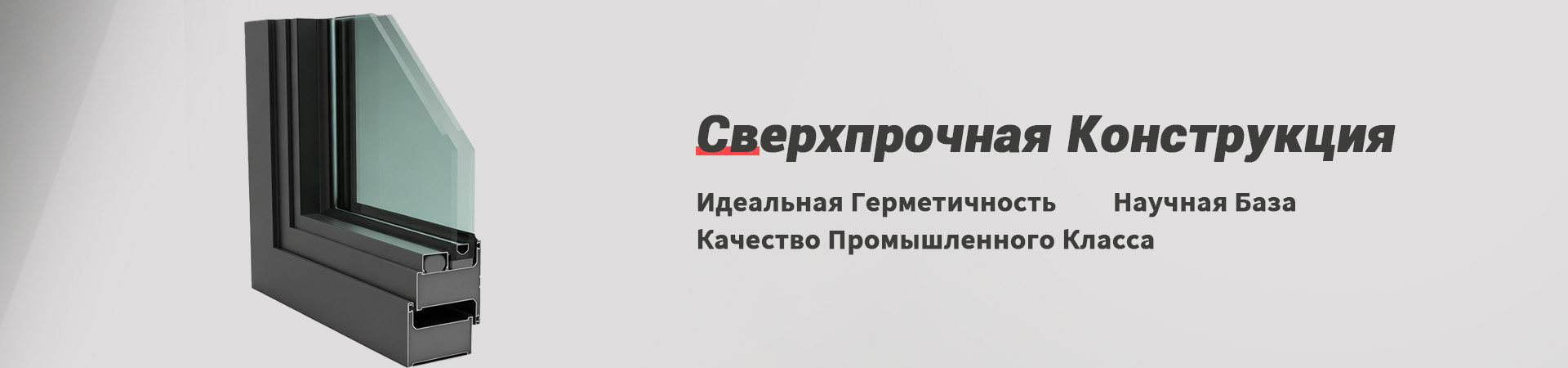
Industrial windows with ventilation from the manufacturer
2026-08-17
- Industrial windows with ventilation: an engineering approach to the workshop microclimate
- Classification and design features of industrial windows
- Where are industrial windows with ventilation used: industry specifics
- Specifications and selection options
- How to choose a supplier: reliability criteria in 2026
- Typical mistakes during design and installation
- Model Comparison: Manual vs Automatic Control
- Logistics and export: delivery features
- FAQ: Frequently asked questions
- Recommendations for purchasing and concluding a contract
- Conclusion
Industrial windows with ventilation: an engineering approach to the workshop microclimate
Industrial windows with ventilationare specialized translucent structures integrated into the enclosing contours of industrial buildings to ensure controlled air exchange without compromising the tightness and thermal conditions of the room. Unlike household analogues, these systems are designed to operate in aggressive environments, high wind loads and temperature changes from -45°C to +60°C. The key function of such windows is not just ventilation, but participation in the overall aeration system of the enterprise, allowing excess heat, smoke or chemical vapors to be removed directly from the work area.
For the chief engineer or procurement manager, choosing the correct glazing configuration is critical: an error in calculating the area of the opening sashes can lead to insufficient draft of natural ventilation or, conversely, to excessive heat loss in winter, increasing the load on heating systems by 15-20%. Modernindustrial windows with ventilationare equipped with electric drives, rain and wind sensors, and are also integrated into SCADA class dispatch systems, which transfers them from the category of building elements to the category of active process equipment. The effectiveness of such a system directly affects compliance with SanPiN standards and reduction of costs for forced exhaust.
Classification and design features of industrial windows
The industrial glazing market offers solutions adapted to specific technological tasks. Understanding the differences between construction types allows you to optimize your budget and operating costs. The main classification is based on the opening mechanism and profile material.
Top-hung & Middle-hung windows
The most common type for high-rise workshops. The door opens outwards or inwards around a horizontal axis.
- Benefits:Safe during maintenance (access from the inside), efficient release of hot air accumulating under the ceiling.
- Limitations:They require free space above or below for the sash to move. Not suitable for areas with heavy traffic of crane beams directly next to the window.
Sliding industrial windows (Sliding Windows)
They are used in rooms where swing doors interfere with the technological process.
- Application:Warehouse complexes, assembly lines near the walls.
- Technical nuance:Sliding systems have worse tightness indicators compared to rotary systems. For cold regions of the Russian Federation, the installation of additional brush seals and temperature compensators is required.
Hatches and skylights with ventilation
Integrated into the roof. They are the most effective tool for removing heat and smoke during a fire.
- Feature:They work as part of a smoke removal system. Mandatory for facilities with an area of more than 1500 m² in accordance with fire safety requirements.
Profile materials: Aluminum vs PVC and steel
The choice of material determines durability and life cycle cost (TCO). Traditionally, the market is divided into aluminum and PVC, but for extreme conditions, non-ferrous steel solutions with thermal break are increasingly being used.
| Parameter | Aluminum profile (with thermal break) | PVC profile (reinforced) | Steel windows with thermal break (Series 60-120) |
|---|---|---|---|
| Durability | 40-50 years | 20-25 years | 50+ years (high corrosion resistance) |
| Maximum sash size | Up to 2.5 x 3.5 m | Up to 1.2 x 2.4 m | Individual, high structural rigidity |
| UV and chemical resistance | High | Average | Extreme (powder coating, flood insulation) |
| Cost | High | Budget option | Optimal price/quality ratio for harsh conditions |
| Maintainability | High | Low | High (modular design) |
For metallurgy, chemical industry and facilities with high aesthetic requirements, aluminum or specialized steel systems are recommended. For warehouses, logistics centers and food production facilities in temperate climates, reinforced PVC systems remain the optimal choice.
Where are industrial windows with ventilation used: industry specifics
Not every window is suitable for every workshop. An engineering approach requires taking into account the specifics of pollution and thermal loads. Let's look at three key application scenarios, whereindustrial windows with ventilationplay a critical role.
1. Metallurgical and foundry production
Problem:Extreme heat loads (up to +40°C inside the workshop in winter) and the presence of metal dust.
Solution:Use of top-hung aluminum windows powder coated in RAL 9010 or anodized. Insulating glass units must have tempered outer glass (ESG strength class) to protect against thermal shock.
Engineering Experience:At one of the factories in the Chelyabinsk region, replacing fixed windows with ventilated aluminum ones made it possible to reduce the temperature in the work area by 8°C in the summer without turning on expensive air conditioning systems. The payback period for the project was 14 months due to energy savings.
2. Chemical and pharmaceutical industry
Problem:Aggressive vapors of acids and alkalis, strict requirements for tightness when the window is closed.
Solution:Profiles with increased chemical resistance, seals made of EPDM or silicone (resistant to ozone and chemicals). Integration with air quality sensors is required. When an excess of the maximum permissible concentration is detected, the window opens automatically at an angle of 15-30% to smoothly equalize the pressure.
Important:Standard hardware lubricants should not be used in such areas. The use of inert lubricants is required to avoid reaction with volatile substances.
3. Food production and cold storage
Problem:The need to maintain stable temperature and humidity, to prevent condensation.
Solution:Windows with high heat transfer resistance (R > 0.8 m²·°C/W). Using glass with low-emissivity coating (i-glass) to retain heat inside. Ventilation should be short-term and intense so as not to chill the room.
Parameters:For refrigeration chambers with a temperature of -18°C, special frost-resistant drives are used that can operate when the mechanism is icing.
Specifications and selection options
When forming technical specifications (TOR) for delivery, it is necessary to take into account a number of physical and operational parameters. Ignoring at least one of them leads to complaints in the first year of operation.
Heat transfer resistance (Ro)
For most regions of Russia, the minimum required value is 0.55 m²·°C/W. For northern latitudes and energy-efficient buildings, the standard becomes 0.85-1.0 m²·°C/W. This is achieved through:
- Multi-chamber profiles (from 5 chambers for PVC, thermal break from 34 mm for aluminum).
- Double-chamber double-glazed windows with argon filling.
- Using “warm” spacers (TGI, Swisspacer) instead of aluminum ones, which are cold bridges.
Waterproof and breathable
The water resistance class must be at least E750 (withstands pressure of 750 Pa, which corresponds to storm winds and rain). Air permeability when closed should tend to zero (class A) to prevent uncontrolled drafts.
Opening mechanisms and drives
The choice of drive depends on the weight of the sash and the frequency of use.
- Chain drives:Reliable, provide high locking force (up to 1000 N). Ideal for heavy aluminum sashes. The downside is noise during operation.
- Spindle drives:They are silent, aesthetically pleasing, but have less locking force. Suitable for lightweight PVC windows and transoms.
- Lever drives:Provide better pressure around the perimeter, recommended for large windows.
Security and automation
Modernindustrial windows with ventilationrarely operated manually. Standard equipment includes:
- Rain/wind sensor:Closes windows during precipitation or wind speeds of more than 10-15 m/s.
- Limit switches:They transmit a signal to the control system about the window position (open/closed).
- Emergency close button:Mandatory element for integration with fire alarms.
How to choose a supplier: reliability criteria in 2026
The market is oversaturated with offers, but the quality of execution varies critically. Purchasing windows is an investment for 15-20 years. Here is a checklist for assessing a potential manufacturer.
1. Availability of own engineering calculations
A professional supplier does not just sell “windows”, he provides aeration calculations. He must answer the questions:
- What is the air exchange rate in your workshop?
- How will windows affect the thermal balance of a building?
- Are the connections between windows and walls confirmed by calculations for ventilation?
If a manager offers a “standard solution” without requesting façade drawings and a workshop flow sheet, this is a red flag.
2. Certification and compliance with GOST/EN
Check the availability of certificates of conformity with GOST 30674-99 (for PVC) or GOST R 56926-2016 (for facade systems). For export or international projects, CE certificates and tests according to EN 14351-1 (hatches) and EN 14351-2 (windows) are important.
3. Experience in implementing similar projects and production base
Request a reference list for the last 3 years. Call the chief engineer of one of the facilities. Ask not about “beauty,” but about the frequency of drive failures, problems with condensation in winter and the speed of service response. Real operating experience is more important than a beautiful booklet.
In this context, the approach of companies combining competencies in construction and heavy engineering deserves special attention. For example,Chongqing Huaxia Windows and Doors Co., Ltd., operating as part of a strategic alliance with a steel structure manufacturer, implements a dual business model: “Energy efficiency in construction + Intelligent manufacturing”. Based in the industrial center of Chongqing and with a Russian legal entity, the company specializes in solutions for extreme conditions.
Their experience in the production of not only window and door systems (including the unique 60, 75, 120 series steel windows with insulated insulation), but also critical industrial hardware (valve manifolds, motor bases), guarantees the highest level of quality control. The full cycle of metal processing - from design to final assembly - allows such manufacturers to ensure stable delivery times and reliability of products tested in polar climates and aggressive industrial environments. This is especially important for import substitution projects and reconstruction of prefabricated facilities in the CIS countries and Eastern Europe.
4. Service support and spare parts availability
An industrial window is a complex mechanism. Make sure that the manufacturer guarantees the supply of spare parts (drives, control boards, seals) for at least 10 years after the model is discontinued. Lack of support can paralyze the ventilation of an entire workshop.
Typical mistakes during design and installation
Even the most expensive window will perform poorly if errors are made during the design or installation stages. Analysis of service requests shows the following patterns.
Mistake #1: Insufficient ventilation area
Designers often set the area of opening parts to be less than 5-10% of the floor area. This is not enough for natural ventilation at high heat emissions.
Recommendation:Perform aerodynamic modeling (CFD modeling) during the design phase. It is often more economical to install fewer, but larger windows with electric drives than many small manual transoms.
Mistake #2: Ignoring cold bridges during installation
Installation on ordinary foam without vapor barrier on the room side and waterproofing on the street side leads to freezing of the slopes and destruction of the installation seam in 2-3 years.
Correct installation:The use of PSUL tapes, vapor barrier membranes and anchor plates designed for wind loads of a particular region.
Mistake #3: Incompatibility of automation and design
Installing a weak drive on a heavy aluminum sash. The drive quickly fails and does not provide complete locking. The result is wind whistling and ice in winter.
Rule:The drive power reserve should be at least 20-30% of the calculated opening force.
Mistake #4: Lack of Maintenance
Industrial windows require maintenance twice a year (spring/autumn). Cleaning drainage channels, lubricating fittings, checking chain tension. Ignoring this leads to jamming of the mechanisms.
Model Comparison: Manual vs Automatic Control
The dilemma of “savings now” versus “efficiency later”. Let's compare two approaches.
| Criterion | Manual opening (levers/chains) | Automatic opening (electric drives) |
|---|---|---|
| CAPEX (initial costs) | Low | High (+30-50% to the cost of the window) |
| OPEX (operation) | High (staff labor costs) | Low (automation) |
| Energy efficiency | Low (windows are often forgotten to close) | High (working on sensors) |
| Security | Risk of falling from height during maintenance | Safe (control from remote control/PC) |
| Integration | Missing | BMS, SCADA, fire alarm |
| Recommendation | Only for hard-to-reach places with infrequent use | Standard for modern production |
Conclusion:For new construction projects, automation is economically justified already at the operating stage of the first year due to heat savings and a reduction in payroll (wage fund) for cleaning and technical personnel.
Logistics and export: delivery features
When ordering large industrial windows, it is important to consider logistical constraints.
- Packing:It is mandatory to use wooden frames (lathing) to protect corners and glass. The glasses must be separated by spacers to prevent glass-to-glass contact.
- Transportation:Windows with a width of more than 2.5 meters may require oversized transport or special stacking in a “pyramid” in Euro trucks.
- Customs clearance:The HS code is usually 7610 10 000 0 (aluminum doors, windows and their frames). The correct package of documents is required: certificates of origin, technical passports, instructions in the language of the importing country.
FAQ: Frequently asked questions
Q: Can existing fixed windows be retrofitted by adding ventilation?
A: Yes, it is possible to insert vents or replace part of the blank filling with opening sashes. However, this is more expensive than making new windows and requires careful sealing of the new junctions. More often than not, a complete replacement is more economically feasible.
Q: What is the service life of ventilated industrial windows?
A: When using high-quality components (Roto, Siegenia fittings, D+H, Belimo drives) and regular maintenance, the service life is 25-40 years for aluminum and 15-20 years for PVC. Steel systems with anti-corrosion protection can last more than 50 years.
Q: Do windows work during a power outage?
A: Automatic windows must have a backup power supply (UPS) or the possibility of manual emergency opening/closing through a special hex key or lever. This is a fire safety requirement.
Q: Does wind affect the operation of open windows?
A: Yes. In strong winds, open doors experience heavy loads. Wind sensors should close the windows when wind speeds exceed 10-15 m/s (adjustable). There are also windproof visors that reduce the load on the sash.
Q: How much do industrial windows with ventilation cost?
A: The cost depends on the size, material and configuration. Approximately: PVC window with electric drive - from RUB 15,000/m²; Aluminum window with thermal break and automation - from RUB 25,000/m². An accurate calculation is possible only after receiving the technical specifications.
Recommendations for purchasing and concluding a contract
Before signing a contract, make sure that the specification clearly states:
- Profile brand and wall thickness (for aluminum no less than 1.5-2 mm).
- Type of glass unit and formula (for example, 6zak-14Ar-6i-14Ar-6zak).
- Drive model and its force (in Newtons).
- Warranty for tightness and operation of mechanisms (minimum 3-5 years).
- Conditions for installation supervision or supervision.
Don’t settle for “of similar quality” language. Require specific brands of components.
Conclusion
Well designedindustrial windows with ventilationis not just a facade element, but a microclimate control tool that affects the health of employees, the safety of equipment and the energy balance of the enterprise. The transition from spontaneous ventilation to controlled aeration allows you to reduce operating costs and increase the transparency of business processes. Choosing a proven, engineering-minded manufacturer such as Chongqing Huaxia Windows and Doors Co.,Ltd., which provides full-cycle manufacturing and heavy-duty steel-level quality control, ensures long-term system reliability even in the harshest environments.
To calculate the cost of your project, get advice on selecting automation, or order a field engineer for measurements, please contact us.
Ready to optimize your workshop ventilation?
Our engineers will prepare a preliminary aeration calculation and commercial proposal within 24 hours.
→Get advice and cost estimate
→View completed projects


