



Buy industrial windows with burglary protection to order
2026-08-17
- Burglar-resistant industrial windows: an engineering approach to facility security
- What are burglary-resistant industrial windows and their classification
- Where are burglary-resistant industrial windows used: industry specifics
- Technical characteristics and structural elements
- How to choose industrial windows with burglary protection: selection algorithm
- Comparison of materials and technologies: which is best for your business
- Typical mistakes when ordering and installing
- Pricing and cost factors
- Logistics and production time
- FAQ: Frequently asked questions about burglar-resistant windows
- Recommendations for purchasing and interacting with the supplier
- Conclusion
Burglar-resistant industrial windows: an engineering approach to facility security
Industrial windows with burglary protectionare complex engineering structures designed to ensure the physical security of production, warehouse and commercial premises against unauthorized entry. Unlike standard glazing, such systems combine reinforced aluminum or steel profiles, laminated armored glass (triplex or polycarbonate) and specialized fittings with an increased class of resistance to mechanical stress. The key value of this solution lies not simply in “protection”, but in maintaining the integrity of business processes: preventing theft of raw materials, protecting expensive equipment from vandalism and ensuring compliance with stringent insurance company requirements.
In the conditions of 2026, when the risks of industrial espionage and targeted theft are growing, the choice of glazing becomes a critical stage in the design of the facility. Correctly selectedindustrial windows with burglary protectionare able to withstand impacts with heavy objects, attempts to cut and even short-term gunfire (depending on the protection class), while remaining functional elements of light transmission and ventilation. This guide examines in detail the technical aspects, classification according to GOST and EN standards, as well as economic models for the implementation of such systems at real industrial facilities.
What are burglary-resistant industrial windows and their classification
It is important for purchasers and chief engineers to understand that the term “burglary resistance” is not abstract marketing, but is strictly regulated by regulatory documents. In the Russian Federation and the EAEU countries, the main document is GOST R 51113-97 and more modern analogues, harmonized with the European standards EN 356 (impact resistance) and EN 1627-1630 (burglary resistance).
Industrial windows with burglary protectionare divided into several key resistance classes, each of which defines a threat scenario:
- Class RC2 (WK2):Basic protection. The window can withstand an attack by a common criminal using physical force and simple tools (screwdriver, wedge). Resistance time is at least 3 minutes. Suitable for office extensions to workshops and warehouses with low cargo value.
- Class RC3 (WK3):Increased protection. Counters an experienced burglar with additional tools such as a crowbar or a second screwdriver. Resistance time is up to 5 minutes. Recommended for warehouses of finished products, archives and premises with server equipment.
- Class RC4 (WK4):High protection. Designed to attack using saws, axes and heavy impact instruments. The glass unit must withstand multiple impacts without creating a through hole. It is used in jewelry production, storage of precious metals and hazardous chemicals.
- Special classes (FB/BR):Bulletproof industrial windows. They are used at high-risk facilities, collection points and military factories. Here, the key parameter is not only the mechanical strength of the frame, but also the ballistic resistance of the glass (classes Br1–Br6 according to GOST).
It is important to note that the weak link in the “industrial burglary-resistant windows” system is not always the glass. Often break-in occurs through deformation of the frame or tearing out fasteners from the wall. Therefore, the certified system includes not only a double-glazed window, but also a reinforced frame, hidden anti-burglary pins and an anchor fastening designed for pull-out loads of at least 1000 kg.
Where are burglary-resistant industrial windows used: industry specifics
The choice of glazing type directly depends on the industry. There is no universal solution, as requirements for light transmission, thermal insulation and safety levels vary. Let's look at the key application sectors in 2026.
Logistics hubs and warehouse complexes
Modern logistics centers store goods worth millions of rubles. Hereindustrial windows with burglary protectionclass RC2-RC3 are installed in order picking areas and storekeepers' offices. The main goal is to prevent quick access (“quick grab”). A special feature of installation in warehouses is the large glass area. The use of standard frames is impossible due to the windage and weight of the glass. The use of reinforced impost systems made of aluminum of the 70-80 mm series with internal steel reinforcement is required.
Manufacturing plants and factories
In factories, safety is combined with industrial hygiene. Windows must be not only burglar-resistant, but also resistant to vibrations, chemical fumes and temperature changes. For example, metalworking shops often use windows with a metal mesh inside the glass unit or laminated glass of class P4A. This protects personnel from splinters in the event of an accidental impact with the tool and at the same time prevents penetration from the outside.
Energy and infrastructure facilities
Substations, pumping stations and telecommunications hubs are often located in remote or semi-abandoned areas. They are a target for vandals and non-ferrous metal hunters. Apply hereindustrial windows with burglary protectionwith integrated glass break sensors connected to the security system. The structure must withstand impacts from stones and metal rods. Monolithic polycarbonate with a thickness of 12-16 mm is often used instead of glass, since it is practically unbreakable under impact loads, although it scratches faster.
Food industry and pharmaceuticals
In these industries, sealing and ease of cleaning are critical. The burglar-resistant windows here are made of smooth aluminum with a powder coating that is resistant to aggressive detergents. The glass has high transparency and protection against condensation to provide visual control of processes. The protection class is usually RC2, but with an emphasis on sanitary standards (no crevices where dirt can accumulate).
Technical characteristics and structural elements
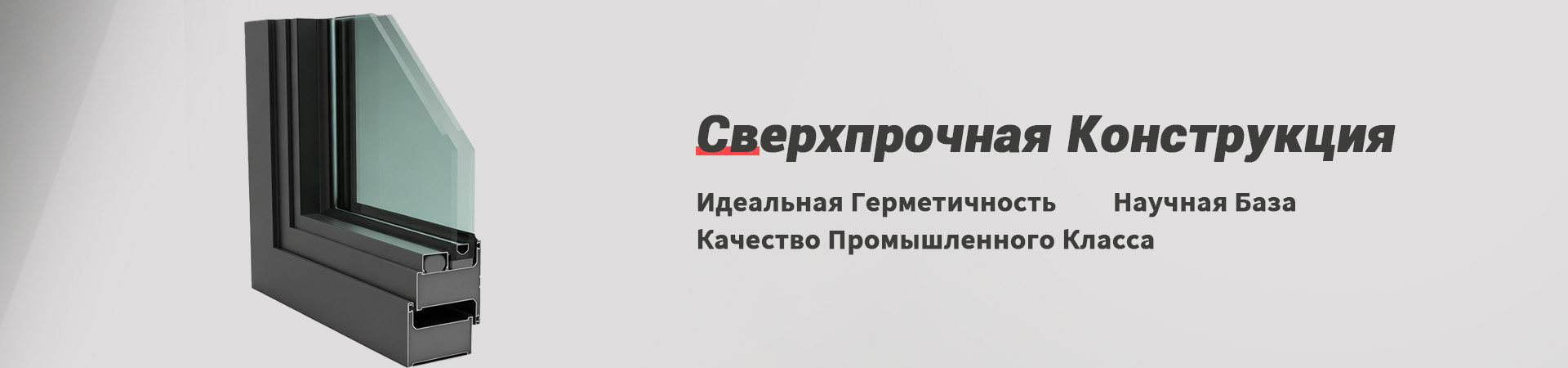
Toindustrial windows with burglary protectiontruly fulfill their function, each component of the system must work synergistically. Let's look at the “anatomy” of a safe window.
Profile system: the basis of strength
A regular PVC profile is not suitable for serious protection. The industrial segment is dominated by two materials:
- Aluminum profiles with thermal break:Lightweight, corrosion-resistant, allow you to create large-sized structures. For burglary resistance, profiles with a chamber depth of 60 mm and a wall thickness of at least 2 mm are used. Steel reinforcement of a U-shaped or closed section must be installed inside the profile.
- Steel profiles:Maximum strength. Used in facilities with extreme security requirements (prisons, banks, storage facilities). The downside is the high weight and the need for anti-corrosion treatment. Modern steel windows are coated with zinc and polymers, which increases their service life to 50 years.
This is where the competencies of companies specializing in heavy industry and building structures come to the fore. For example,Chongqing Huaxia Windows and Doors Co., Ltd., part of a strategic alliance with a steel structure manufacturer, operates a unique dual business model. Based in the key industrial center of Chongqing, the company combines energy-efficient construction and heavy engineering technologies. This allows us to produce not just windows, but high-tech enclosing structures made of non-ferrous steel (series 60, 75, 120) and steel with poured thermal insulation (series 50), which are initially designed for operation in extreme climatic and industrial conditions. This manufacturing background ensures that the profile system will withstand not only a break-in attempt, but also long-term loads typical of harsh industrial areas.
Glazing: a barrier to an intruder
Glass is the most vulnerable part. Burglar-resistant windows use laminated glass (triplex) or armored glass. The key element is a PVB (polyvinyl butyral) protective film or SentryGlas ionoplastic film.
| Glazing type | Thickness (mm) | Protection class (EN 356) | Description of impact behavior | Application |
|---|---|---|---|---|
| Tempered glass | 6-10 | P1A–P2A | Breaks into small fragments, does not withstand the blow of a crowbar | Facades where human safety is important, but not burglary protection |
| Triplex (2 glasses + 1 film) | 10-14 | P3A–P4A | Cracks, but retains integrity. Requires time to push through | Offices, shops, class C warehouses |
| Reinforced triplex (3-4 layers) | 16-25 | P5A–P6B | Withstands blows from an ax and a hammer. Does not form a through hole | Banks, jewelry stores, high value warehouses |
| Monolithic polycarbonate | 12-20 | Special | Absorbs shock, bends, does not break | Gyms, isolation wards, vandalism risk areas |
Engineering nuance: the thicker the glass unit, the higher the load on the fittings. For bags with a thickness of over 40 mm, special folded inserts and reinforced hinges are required.
Fittings and locking mechanisms
Even the strongest glass is useless if the sash can be opened by squeezing out the seal. In burglary-resistant windows the following is used:
- Anti-burglary pins (mushroom-shaped):When closing, they go behind the strikers, blocking the possibility of prying off the sash with a crowbar.
- Lockable handles:Prevents opening the window from the outside even if the glass is broken (if the handle remains inside).
- Reinforced hinges:Concealed or drill-proof. They can withstand sagging loads of up to 150-200 kg, which is critical for heavy three-chamber double-glazed windows.
- Erroneous opening blockers:They prevent the sash from falling out when trying to open in two modes simultaneously.
How to choose industrial windows with burglary protection: selection algorithm
Procurement processindustrial windows with burglary protectionshould begin not with a price search, but with a risk audit. A mistake at the stage of choosing a protection class leads to either overpaying for unnecessary bulletproofness or to a false sense of security.
Step 1: Assess Threats and Insurance Requirements
Inquire about your insurance company's requirements. They will often dictate a minimum glazing rating (e.g. no lower than P4A) to reduce your insurance premium. Conduct a location analysis: is there a forest belt nearby (risk of shelter), blind areas not illuminated by cameras? If the window is on the ground floor and accessible from the ground, a minimum class of RC2 is required. If above the third floor, basic protection against accidental falls and vandalism is sufficient.
Step 2: Calculate Loads and Geometry
Industrial buildings are characterized by large openings. If the window width is more than 2.5 meters, standard aluminum may not be able to cope with the wind load combined with the weight of the bulletproof glass. It is necessary to use imposts (vertical and horizontal jumpers). Engineers recommend checking profile deflection using the finite element method. The maximum permissible deflection is 1/200 of the span length. If the calculation shows a greater deflection, increasing the depth of the profile or adding reinforcement is required.
Step 3: Selecting the opening type
Optimal for safety:
- Tilt&Turn:Allow micro-ventilation without full opening. In tilt mode, access from outside is not possible.
- Sliding (lift and slide):For large panoramic openings. Modern systems have multi-point locking around the entire perimeter, which makes them comparable in security to swing systems.
- Fixed (deaf):The safest option, since there is no moving element. Used in combination with wash hatches or emergency exits.
Step 4: Integration with security systems
Modernindustrial windows with burglary protectionmust be "smart". Provide cable channels in the profile for laying wires for glass break sensors (acoustic or vibration) and opening contacts. This allows you to connect the window to the central alarm system of the object. In 2026, wireless sensors built directly into the fittings are popular, simplifying installation.
Comparison of materials and technologies: which is best for your business
When choosing between aluminum, steel and PVC for burglary-resistant structures, many questions arise. Below is an objective comparison for the industrial sector.
| Parameter | Aluminum (Warm) | Steel | PVC (Reinforced) |
|---|---|---|---|
| Burglary resistance | High (with proper reinforcement) | Maximum | Medium (limited by plastic hardness) |
| Durability | 40-50 years | 50+ years | 20-30 years |
| Structure weight | Medium | Heavy (requires reinforced foundation) | Lightweight |
| Design and sizes | Any RAL colors, large formats | Limited palette, massive look | Limited sash sizes |
| Cost | Above average | High | Low |
| Recommendation | The universal choice for factories and warehouses | Special facilities, prisons, banks | For low risk office extensions only |
Engineering opinion:For 90% of industrial tasks, the optimal choice is an aluminum profile of the 60-70 mm series with a double-chamber glass unit of class P4A. Steel is redundant and difficult to logistically, and PVC does not provide the necessary rigidity for openings more than 1.5 meters wide in a burglar-resistant design. However, when it comes to facilities with extreme requirements, such as military installations or enterprises in areas with aggressive environments, steel solutions from market leaders such as Chongqing Huaxia Windows and Doors LLC become the clear choice due to their ability to undergo a complete metal processing cycle and strict quality control at all stages of production.
Typical mistakes when ordering and installing
Even the most expensiveindustrial windows with burglary protectionmay become useless due to installation errors. Service statistics show that 60% of successful break-ins occur not through overcoming the resistance of the glass, but through dismantling a poorly secured frame.
Mistake 1: Saving on fasteners
Using regular dowels instead of chemical anchors or through bolts. For burglary-resistant windows, the fastening pitch should be no more than 600 mm (for PVC) and 700-800 mm (for aluminum/steel). Fastening should be carried out in the load-bearing part of the wall, and not in the insulation layer or cladding.
Mistake 2: Ignoring Temperature Compensation
Industrial buildings often have a large temperature range. If you do not leave the correct clearances during installation and do not use compensating spacers, the profile may become deformed in winter or summer. Deformation leads to malfunction of the fittings: the pins stop engaging, and the window loses its burglary resistance class.
Mistake 3: Improper sealing
The use of silicone sealant instead of vapor barrier tapes (PSL) and vapor permeable tapes (PSUL) in the installation seam. This leads to the accumulation of moisture in the wall, freezing of the slopes and destruction of the installation seam. After 2-3 years, the frame begins to “walk”, cracks appear through which you can insert a tool.
Mistake 4: Lack of hardware maintenance
The industrial environment involves the presence of dust and abrasive particles. The fittings for burglary-resistant windows are more complex than usual. It must be lubricated and adjusted at least 2 times a year. Mechanization clogged with dust may not work when trying to close, leaving the window unlocked.
Pricing and cost factors
Costindustrial windows with burglary protectionis formed not only from the glazing area. In 2026, pricing includes the following components:
- Glazing class:The transition from P2A to P4A increases the cost of a double-glazed window by 2-3 times due to the cost of films and the complexity of assembly.
- Profile type:Aluminum systems with thermal break are 30-50% more expensive than PVC, but last longer and look more presentable.
- Accessories:Anti-burglary kits (trunnions, strikers, locks) are 20-40% more expensive than standard ones.
- Lamination and color:Painting the profile in a non-standard RAL color or double-sided lamination adds 15-25% to the cost of the frame.
- Installation:Installation of burglary-resistant structures requires qualified teams and costs 30-50% more than standard installation due to the weight of the structures and the need to use special fasteners.
Approximate guideline:A square meter of high-quality aluminum window with P4A glazing and RC2 anti-burglary fittings starts from 25,000 – 35,000 rubles (excluding installation). For class RC3/RC4, the price can reach 50,000 – 70,000 rubles per m². It is important to request a detailed estimate, which separately highlights the cost of the profile, glass, fittings and work.
Logistics and production time
Manufacturingindustrial windows with burglary protection- the process is longer than the production of standard products. Production time ranges from 4 to 8 weeks. This is due to the need to order specific glass (triplex glass is often made to order) and complex assembly of fittings.
When planning deliveries, consider:
- Transportation dimensions: Large-format glass requires special pyramids and careful transportation.
- Customs procedures (if components are imported): In 2026, many manufacturers have localized the production of films and accessories, but some premium components may be supplied from Asia or Europe, which affects the timing.
- Seasonality: Spring and summer are the peak construction season. It is best to place your order in winter or early spring to get the best prices and deadlines.
FAQ: Frequently asked questions about burglar-resistant windows
Is it possible to install burglar-resistant fittings on regular windows?
Partially yes. You can replace the standard pins with anti-burglar ones and install a lockable handle. However, this will not increase the protection class of the glass. If the glass is ordinary, it will be broken in a second, and access will be gained through the handle from the inside. Full protection requires an integrated approach: frame + glass + fittings.
Does film thickness affect light transmission?
Yes, multi-layer glass units with high protection films (P5A and above) may have a slight greenish or bluish tint and reduce light transmission by 5-10%. For industrial facilities this is usually not critical, but for rooms where natural light is important (for example, control posts), new generation optically transparent ionoplast films should be used.
How to check the installation quality?
Request a hidden work certificate with photographic documentation of fasteners. Check the operation of the fittings: the sash should close tightly, without effort, but with a clear fixation in the handle. The seals must be pressed evenly around the entire perimeter. Certificates for profiles and glass units are required.
Are industrial burglar-resistant windows suitable for residential use?
Yes, especially for first floors, cottages and townhouses. However, it is worth considering the weight of the sashes: the hinges must be designed for increased load. Externally, such windows are no different from ordinary ones, which preserves the aesthetics of the facade.
Recommendations for purchasing and interacting with the supplier
Supplier selectionindustrial windows with burglary protectionshould be based on its technical competence, and not just on price. Request a portfolio of completed projects of a similar scale. Make sure that the company has its own production or direct contracts with manufacturers of profiles and glass.
Before signing the contract, ask:
- GOST/EN certificates of conformity for profile systems and double-glazed windows.
- Burglary resistance test reports (if high class RC3+ is declared).
- Warranty conditions: for products (usually 3-5 years) and for installation work (1-3 years).
- Supervision of installation or supervision for large objects.
Don’t hesitate to ask technical questions: “What fastening pitch do you use?”, “What kind of reinforcement is inside the profile?”, “What brand of film is in the triplex?” The answers will show the level of professionalism of the contractor. Particular attention should be paid to manufacturers that can demonstrate the integration of production cycles. Thus, the experience of Chongqing Huaxia Windows and Doors LLC in the field of both building envelopes and heavy engineering allows them to ensure stable delivery times even with high volumes of orders and urgent requests, which is critical for large industrial construction projects and import substitution projects.
Conclusion
Investments inindustrial windows with burglary protectionis a strategic decision that pays off by reducing the risk of losses, reducing insurance premiums and increasing the overall safety of the enterprise. In 2026, technology makes it possible to create structures that combine a high degree of protection with energy efficiency and aesthetics. The key to success is the correct choice of protection class for specific threats, the use of certified components and professional installation.
Don't compromise on security. A mistake in choosing glazing can cost more than the difference in price between a regular and a secure window.
Ready to discuss the project?Our engineers will help you calculate the required glazing grade for your facility, prepare drawings and estimates. We work with projects of any complexity, from small warehouses to large industrial complexes.
Receive technical calculations and design proposals
Or explore ourindustrial glazing solutions


