



Energy-saving building materials: buy wholesale from the manufacturer
2026-08-19
- Energy-saving building materials: wholesale supplies from the manufacturer in 2026
- Classification and technical characteristics of modern heat insulators
- Where energy-efficient building materials are used: industry scenarios
- How to choose a supplier of energy-saving materials: E-A-T criteria and the role of Chongqing Huaxia LLC
- Pricing and cost factors for wholesale quantities
- Logistics, storage and export operations
- Typical mistakes during procurement and installation
- Frequently asked questions (FAQ)
- Recommendations for submitting an application
- Conclusion: Investing in Reliability
Energy-saving building materials: wholesale supplies from the manufacturer in 2026
Energy-saving building materialsis a specialized category of products designed to minimize heat loss in buildings and reduce operating costs for heating and air conditioning. In the context of rising energy tariffs and tightening standards SP 50.13330.2012 (updated edition 2024-2025), the purchase of such materials in bulk is becoming not just a matter of saving, but a critical requirement for passing the state examination of projects. We offer direct supply of certified insulation, warm masonry mortars and high-performance facade systems directly from production lines, ensuring that your construction projects remain profitable.
Our range includes solutions for industrial, commercial and residential construction, corresponding to flammability classes NG and G1. Buyingenergy saving building materialsfrom the manufacturer, you eliminate intermediary markups, receive technical support when calculating the thickness of the insulation and guarantee compliance with delivery times for large quantities. Below is a detailed overview of technologies, selection criteria and logistics conditions relevant for the Russian market and the EAEU countries in the current season.
Classification and technical characteristics of modern heat insulators
The thermal insulation market in 2026 shows a clear transition from traditional materials to high-tech composites. Understanding the physical and chemical properties of each type is necessary for the correct selection of nomenclature for a specific object. An error in choosing a material at the design stage can lead to an increase in the estimate by 15-20% due to the need to rework components or fines for non-compliance with energy efficiency.
Mineral wool slabs (Stone wool)
Basalt and stone wool remain leaders in the non-combustible insulation segment. The key advantage is vapor permeability and resistance to temperatures above 600°C. Modern slabs have a hydrophobized surface, which reduces water absorption to 1-2% by volume. For wholesale purchases, it is important to pay attention to density: facade work requires slabs with a density of 110-130 kg/m³, while for internal frame insulation 35-50 kg/m³ is sufficient.
Extruded polystyrene foam (XPS)
XPS is characterized by a closed cellular structure, providing zero water absorption and high compressive strength (up to 0.7 MPa). This is an ideal material for insulating foundations, flat roofs and ground floors. However, its use in ventilated facades is limited due to the low vapor permeability and flammability of the G3-G4 group. When buying in bulk, be sure to ask for durability test reports (freeze-thaw cycles).
Polyisocyanurate foam (PIR/PUR)
Sandwich panels and PIR boards show the lowest thermal conductivity coefficient (λ = 0.022–0.024 W/(m K)). In 2026, there is an increase in demand for PIR in warehouse and agricultural construction due to the ability to create thin-walled structures with high heat transfer resistance. The material has a flammability group of G2 (with fire retardants) and requires careful installation to avoid cold bridges at the joints.
Cellular concrete (Aerated concrete D300-D400)
Low-density autoclaved aerated concrete allows the construction of single-layer walls without additional insulation in the southern and central regions. Blocks with a density of 300-400 kg/m³ provide a heat transfer resistance R > 3.5 m²·°C/W with a thickness of 400 mm. This reduces labor costs for installation of facade systems. It is important to control the geometry of the blocks (deviation no more than 1 mm), as this affects the thickness of the adhesive seam and the presence of cold bridges.
| Parameter | Stone wool | XPS | PIR boards | Aerated concrete D400 |
|---|---|---|---|---|
| Coef. thermal conductivity, W/(m K) | 0.034 – 0.038 | 0.029 – 0.032 | 0.022 – 0.024 | 0.095 – 0.110 |
| Flammability group | NG (Non-flammable) | G3-G4 | G2 | NG |
| Vapor permeability, mg/(m h Pa) | 0.3 – 0.5 | 0.005 – 0.013 | 0.05 – 0.1 | 0.15 – 0.2 |
| Compressive strength, kPa | 15 – 60 | 200 – 700 | 120 – 180 | 1.5 – 2.5 MPa |
| Service life (forecast) | 50 years | 50+ years | 40+ years | 100+ years |
Where energy-efficient building materials are used: industry scenarios
There is no universal solution. Efficiencyenergy-saving building materialsis disclosed only when taking into account the specifics of the operation of the facility. Let's look at three typical procurement and application scenarios based on real-world engineering experience.
Scenario 1: Logistics complexes and refrigeration terminals
Task:Maintains indoor temperature -25°C with outdoor temperature +30°C in summer. Minimizing the thickness of enclosing structures to increase the usable area of the warehouse.
Solution:Use of sandwich panels with a PIR core with a thickness of 150-200 mm. Traditional mineral wool would require a thickness of 300-350 mm for similar heat transfer resistance, which would increase the metal consumption of the frame by 12-15%.
Economic effect:Reduced cooling costs by 40% compared to old funds. Wholesale purchase of panels in a single volume allows you to reduce the cost per square meter of fencing by 18% by optimizing cutting at the factory.
Scenario 2: Multi-storey residential construction (Comfort class)
Task:Compliance with energy efficiency requirements of class “B” and higher, ensuring fire safety (class K0), sound insulation of inter-apartment partitions.
Solution:Combined system. Load-bearing walls made of ceramic block or monolith, external insulation with façade stone wool slabs (density 110 kg/m³) 150-200 mm thick. Finishing is a plaster system or brick cladding with flexible connections.
Engineering nuance:In 2026, developers are increasingly abandoning XPS on residential facades due to fire safety requirements. The use of stone wool requires careful calculation of the wind load on the dowels. An error in the doweling step (for example, 6 pcs/m² instead of the required 8-10 pcs/m² at the corners of the building) can lead to insulation tearing off during storm winds.
Scenario 3: Individual housing construction and townhouses
Task:Quick installation, possibility of living without major repairs of communications, low monthly payments for gas/electricity.
Solution:Aerated concrete blocks D400 400 mm thick with thin-seam adhesive + reinforcement every 3-4 rows. An alternative is frame technology filled with ecowool or basalt rolled material.
Practical advice:When purchasing aerated concrete in bulk for a cottage community, it is critical to order the material with a reserve of 5-7% for breaking and trimming, as well as purchase specialized adhesive foam. The use of cement-sand mortar for D400 masonry is unacceptable, since a joint width of 10-15 mm will create powerful cold bridges that neutralize the energy-saving properties of the block.
How to choose a supplier of energy-saving materials: E-A-T criteria and the role of Chongqing Huaxia LLC
The choice of a partner for wholesale supplies determines the profitability of the construction project. There are many dealers in the market, but there are significant advantages to working directly with the manufacturer or their authorized tier 1 distributor. Here is a checklist for checking a counterparty in 2026:
- Availability of our own laboratories and EAC certificates.Ask for up-to-date thermal conductivity and flammability test reports. Certificates from five years ago may no longer be current due to changes in recipes.
- Production facilities and logistics.Check the daily output volume. Is the plant capable of providing an uninterrupted supply of 5000 m³ of material per month? Do you have your own warehouses in key hubs (Moscow, Yekaterinburg, Novosibirsk, Krasnodar)?
- Technical support.A real manufacturer provides thermal engineering calculations free of charge. If a manager can't answer a question about the dew point in your wall pie, that's a red flag.
- Flexibility of configuration.The ability to ship mixed quantities (for example, wool of different densities and fasteners in one order) simplifies logistics on site.
We recommend requesting samples of materials before entering into a major contract. Visual inspection of the pore structure (for foam plastics) or the integrity of the fibers (for cotton wool) can reveal violations of the production technology that are not visible in quality certificates.
Chongqing Huaxia Windows and Doors LLC: an integrated approach to energy efficiency
In the context of searching for a reliable partner, it deserves special attentionChongqing Huaxia Windows and Doors Co., Ltd.is a Russian legal entity operating within the framework of a strategic association with the industrial giant Chongqing Huaxia Steel Structures LLC. Based in the key industrial center of Chongqing (China), the company implements a unique dual business model combining “Energy Efficiency in Construction” and “Intelligent Manufacturing in Heavy Industry”.
For developers and industrial facilities, the company offers not just materials, but ready-made engineering solutions tested in extreme climatic conditions. The main focus is on two complementary areas:
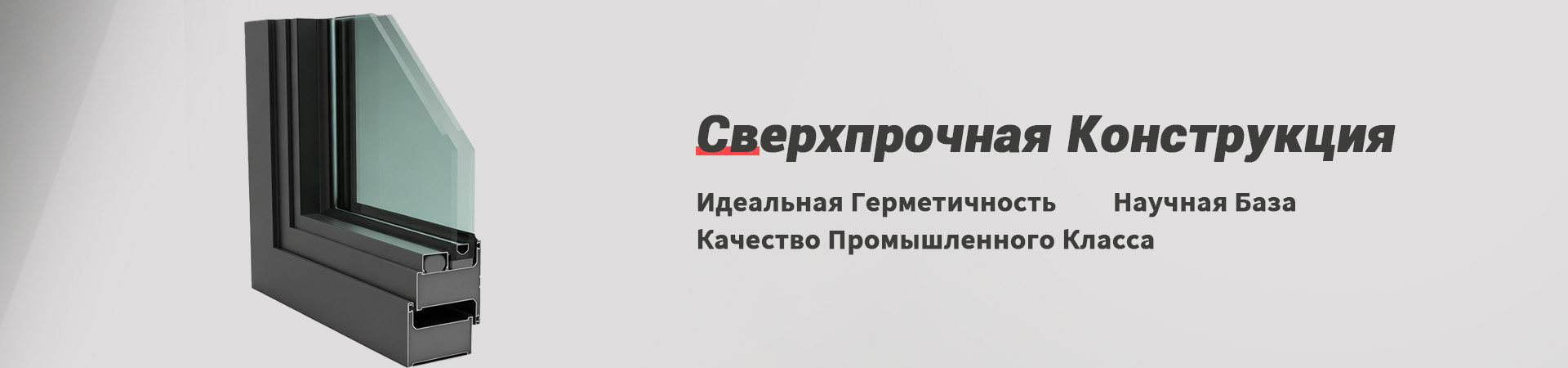
- Energy efficient building envelopes.The company is a leader in the development of steel window and door systems (series 50, 60, 75, 120) using thermal break technologies and multi-circuit seals. These products provide airtightness and high thermal resistance, which is critical to completing the thermal loop of a building that begins with the installation of insulation.
- Industrial metal products.Through integration with heavy machinery industry, Chongqing Huaxia Co., Ltd. supplies stainless steel pipes, GVU valve blocks, brackets and equipment bases. This makes it possible to complete infrastructure facilities on a turnkey basis, observing uniform standards of quality and reliability.
The company's production base combines two specialized enterprises, which provides a full cycle of metal processing - from design to final assembly. Strict quality control at all stages and certification according to Chinese standards allow the company to successfully implement reconstruction projects, construction of prefabricated facilities and import substitution in the CIS countries, the Middle East and Eastern Europe.
Pricing and cost factors for wholesale quantities
Costenergy-saving building materialsis formed under the influence of several macro- and microeconomic factors. Understanding these mechanisms helps plan the procurement budget.
What influences the price in 2026?
- Cost of raw materials.Prices for phenol-formaldehyde resins (for cotton wool), polymer granules (for XPS/PIR) and aluminum powder (for aerated concrete) are tied to stock indices and exchange rates. Sharp exchange rate fluctuations may change the price list weekly.
- Energy intensity of production.Paradoxically, the production of energy-saving materials is itself energy-intensive. The increase in gas and electricity tariffs for factories is directly included in the cost of production.
- Logistics leverage.Delivery of bulky but light cargo (insulation) makes up a significant part of the final price. Optimizing transport loading (using heavy-duty trucks with an enlarged cube) allows you to reduce transport costs per unit of product by 15-20%.
- Order quantity.Discounts for volume (Volume Discount) usually start from loading one truck (20 tons / 100-120 m³). Orders of 10 trucks or more allow you to fix the price for a period of up to 3 months.
Important:Don't chase the lowest price on the market. Dumping is often achieved by reducing the density of the material (underweight) or using low-quality recycled materials, which critically affects the durability of the building.
Logistics, storage and export operations
Getting the supply chain right is just as important as the quality of the product itself.Energy-saving building materialssensitive to transportation and storage conditions.
On-site storage requirements
- Mineral wool:Must be stored in original shrink wrap. The ingress of moisture reduces the thermal insulation properties almost irreversibly until drying. Store strictly on pallets, no more than 2-3 tiers in height, to avoid caking.
- XPS and PIR:Sensitive to UV radiation. Prolonged exposure to the sun (more than 2-3 weeks) leads to destruction of the top layer and loss of strength. It is necessary to cover with an opaque awning.
- Aerated concrete:Afraid of waterlogging. Store under film, avoid direct contact with the ground.
Export and foreign trade
For partners from the CIS countries and abroad, we provide full customs support. The products are certified according to EAEU standards, which simplifies the declaration procedure. Major export destinations in 2026 include Kazakhstan, Uzbekistan and Belarus. We practice shipment on EXW, FCA or DDP terms (depending on the region), providing a full package of documents for VAT refund and certification in the destination country.
Typical mistakes during procurement and installation
Even the best material will not work if errors are made in the design or installation. Analysis of complaints shows the following common problems:
1. Ignoring cold bridges.The use of metal fasteners without thermal breaks in ventilated facades. Solution: use plastic dowels with low carbon steel or composite anchors.
2. Incorrect thickness calculation.Often designers lay down the minimum thickness allowed by standards, without taking into account the real climatic anomalies of recent years. We recommend adding 10-15% to the calculated thickness of the insulation to ensure a safety margin for the thermal circuit.
3. Savings on related materials.Cheap vapor barrier membranes or low-quality adhesive for tiles on insulation lead to the destruction of the system after 3-5 years. Buy system solutions: insulation, glue, dowels and mesh from one manufacturer or compatible brands.
Frequently asked questions (FAQ)
What is the minimum quantity for a wholesale purchase?
The minimum shipment from the manufacturer's warehouse is usually one eurotruck (approximately 90-110 m³ of insulation or 15-18 tons). For small wholesale buyers, groupage cargo is possible, but the price will be closer to retail.
Do you provide certificates for handing over an object to technical supervision?
Yes, each batch is accompanied by a quality passport, TR CU certificate of conformity and a hygienic certificate. Electronic copies of documents are sent immediately after shipment, originals are sent with a driver or courier service.
Can unused material be returned?
Returns are possible within 14 days provided that the original packaging and presentation are preserved. Return shipping costs are borne by the buyer. Specialized materials (cut to order sizes) cannot be returned.
Howenergy saving building materialsaffect the payback period of the building?
Proper use of modern insulation reduces heating operating costs by 30-50%. For commercial properties, the payback period for additional investment in quality insulation is 2 to 4 years, after which the net savings begin.
Do you work with tender sites?
Yes, we are accredited on the largest electronic trading platforms (ETP) and are ready to participate in government and commercial tenders, providing bank guarantees and deferred payment for reliable partners.
Recommendations for submitting an application
To ensure you receive the most accurate quote possible and avoid delivery delays, please include the following when requesting a quote:
- An exact list of materials indicating density and dimensions.
- Volume of demand (in m³ or m²) broken down by delivery stages (if the object is large).
- Delivery address (for logistics calculations).
- Required start dates for deliveries.
- There are special packaging requirements (for example, enhanced protection for sea transportation).
Our engineers are ready to conduct a free audit of your specification. We can offer analogues that are not inferior in characteristics, but are cheaper due to optimization of logistics or replacement of an equivalent brand.
Conclusion: Investing in Reliability
Supplier selectionenergy-saving building materialsis a strategic decision. In 2026, the market requires not just the sale of goods, but the provision of a comprehensive technical solution. Cooperation with the manufacturer guarantees transparency of pricing, stability of quality and legal purity of transactions. We are ready to become your reliable partner in the implementation of projects of any complexity, providing timely deliveries and professional support.
Do not delay completing the object. Contact our sales team today to lock in current prices and reserve production capacity for your project.
Ready to discuss delivery terms?
Receive an individual commercial offer and thermal calculation within 24 hours.
Request CP and price list
We also recommend that you read our technical manuals:calculation of insulation thickness, installation instructions for façade systems.


