



Windows for the Far North from the manufacturer
2026-08-19
- Windows for the Far North: an engineering approach to glazing in extreme conditions
- Specific climatic conditions and requirements for translucent structures
- Design features of Arctic window blocks
- Comparative analysis of materials: PVC, Aluminum, Steel
- The role of manufacturing giants in creating Arctic solutions
- How to choose windows for the Far North: a checklist for buyers
- Typical errors when ordering and using
- Logistics and installation: features of work in the North
- Economic justification: why cheap windows are more expensive
- Frequently asked questions (FAQ)
- Recommendations for window maintenance in arctic conditions
- Conclusion and call to action
Windows for the Far North: an engineering approach to glazing in extreme conditions
Windows for the Far Northare not just translucent structures, but complex engineering systems designed to operate at temperatures down to -60°C, strong wind loads and permafrost conditions. Unlike standard PVC products, Arctic window blocks require the use of frost-resistant seals (EPDM, silicone), reinforced multi-chamber profiles with reinforcement 2 mm thick and specialized double-glazed windows with low-emission coatings and inert gas. The main task of such solutions is to prevent heat loss, eliminate the formation of condensation and ice on internal surfaces, and also ensure mechanical strength during hurricane gusts of wind, characteristic of the coast of the Arctic Ocean.
Choosing the wrong window configuration in the conditions of Yakutia, Yamal or Chukotka leads not only to discomfort, but also to critical heat loss of the building, freezing of slopes and destruction of installation joints. Manufacturers specializing in northern design take into account the coefficient of thermal expansion of materials, which, with differences from -50°C to +20°C indoors, creates colossal stresses in the junction points. This material examines in detail the technical requirements of GOST and SNiP for the Arctic regions, analyzes errors in procurement and offers proven solutions for industrial and civil construction.
Specific climatic conditions and requirements for translucent structures
The regions of the Far North occupy more than 60% of the territory of Russia. The climate here is characterized not just by low temperatures, but by their stability in winter and sudden changes in the off-season. For the design engineer, the key factors are:
- Extremely low temperatures:The estimated temperature of the coldest five-day period can reach -55°C...-60°C (for example, in Verkhoyansk or Oymyakon).
- Wind loads:The open spaces of the tundra and coast create conditions for storm winds with speeds of up to 30-40 m/s, which requires increased resistance of the window structure to static pressure.
- High humidity and icing:Coastal zones are characterized by high air humidity, which, combined with cold, leads to rapid icing of facades.
- Ultraviolet activity:Reflection of light from the snow cover increases the UV load on profile materials and seals, accelerating their degradation.
Standard “Moscow” or “European” windows behave unpredictably in such conditions. Plastic becomes brittle, rubber seals “tan” and lose elasticity, and metal fittings can jam due to micro-icing. Thereforewindows for the Far Northmust undergo mandatory climatic tests according to the GOST 30674-99 method or more modern standards of the GOST 30673 series, confirming their frost resistance class (usually M1 or M2).
Design features of Arctic window blocks
In order for a window to survive in the North and fulfill its functions, each of its elements must be adapted. Let us consider in detail the anatomy of such a product.
1. Profile system: heat saving and rigidity
The basis of the window is the profile. For the North, the minimum permissible profile width is 70 mm, but the optimal solution is systems with a depth of 80-86 mm or more. The number of air chambers must be at least 5-7. However, what is more important is not the number of chambers, but the presence of thermal inserts and the quality of the reinforcement.
The reinforcing profile inside the PVC must have a wall thickness of at least 2.0 mm (preferably 2.5-3.0 mm). This ensures the geometric stability of the frame under wind loads. In some cases, for special purpose objects (weather stations, rotational camps), aluminum-plastic structures or wood-aluminum combined systems are used, where aluminum protects wood from the outside, and wood acts as a thermal insulator from the inside.
2. Double-glazed window: the main barrier to cold
A double-glazed window occupies up to 70% of the window area. For the Far North, single-chamber packages are unacceptable. Only a two-chamber (three glasses) or three-chamber (four glasses) option is used. But the number of glasses is not the main thing. The following parameters are critical:
- Low-E coating (I-glass):Applying a soft or hard low-e coating to the inner surface of the glass allows thermal radiation to be reflected back into the room. This increases heat transfer resistance by 30-40%.
- Filling with inert gas:Argon or krypton instead of dry air. Krypton is preferred for ultra-low temperatures because it has lower thermal conductivity and higher viscosity, which reduces convection currents inside the bag.
- Warm spacer frame:The standard aluminum frame is a “cold bridge” through which the edge of the glass unit freezes. Replacing it with a polymer (composite) frame (Swisspacer Ultimate, Technoform and analogue technologies) shifts the dew point and eliminates the formation of condensation along the edges of the glass.
- Glass thickness:The use of glass of different thicknesses (for example, 4 mm + 6 mm + 4 mm) helps to avoid resonant vibrations and improves sound insulation, which is important in strong winds.
3. Fittings and seals: reliability of the mechanism
At -50°C, ordinary rubber (TPE) cracks. Seals made of ethylene propylene rubber (EPDM) or silicone must be used. They remain elastic down to -60°C. It is important that the seal is continuous in the corners (vulcanization or gluing method), and not just joined.
The fittings must be made of stainless steel or have an anti-corrosion coating. Lubrication of moving elements must be low-temperature, otherwise the sash will be impossible to close or open after a long period of inactivity.
Comparative analysis of materials: PVC, Aluminum, Steel
When designing an object in the North, the dilemma of choosing a material often arises. Traditionally, PVC, aluminum and wood have been considered, but modern technologies offer high-performance steel systems that are especially relevant for industrial and extreme environments.
| Parameter | PVC (Arctic version) | Aluminum with thermal break | Steel windows with thermal break |
|---|---|---|---|
| Heat transfer resistance (Ro) | High (up to 1.2 m²°C/W) | Medium/High | High (due to flooded insulation) |
| Frost resistance and strength | Requires special additives, risk of fragility | High | Absolute (steel is not afraid of cold and shock) |
| Structure weight | Medium | Lightweight | High (requires reinforced installation) |
| Durability | Medium (plastic degradation) | High | Very high (resistance to aggressive environments) |
| Application | Residential buildings, rotational camps | Facades, offices | Industrial facilities, strategic structures, extreme climate |
Engineering opinion:For mass housing construction, high-quality PVC profiles remain the most cost-effective. However, for facilities where fire safety, burglary resistance and work in aggressive industrial environments are critical, steel windows with thermal break become the only choice. It is in this segment that solutions developed by companies with expertise in heavy engineering are leading.
The role of manufacturing giants in creating Arctic solutions
The development of windows for extreme conditions requires not just an assembly shop, but a full-fledged engineering production with quality control at the level of aircraft or shipbuilding. A striking example of this approach is the activityChongqing Huaxia Windows and Doors Co., Ltd.- a Russian legal entity operating within the framework of a strategic association with a large industrial holding.
Based on the facilities of one of the key industrial centers of the world (Chongqing), the company implements a unique dual business model:“Energy efficiency in construction + Intelligent production in heavy industry”. This synergy allows technologies typically used in mission-critical equipment to be applied to building envelopes.
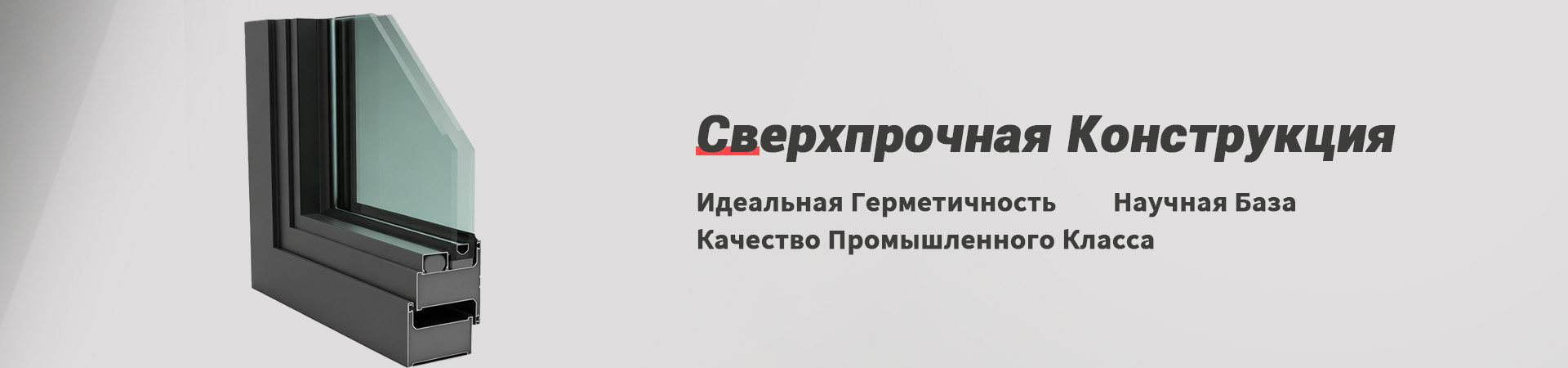
The company's product range includes energy-efficient window and door systems made of non-ferrous steel (series 60, 75, 120) and steel windows with poured thermal insulation (series 50). These solutions are specifically designed for use in harsh climates. The use of advanced thermal break technologies and multi-circuit seals provides high wind protection and tightness, which makes them ideal for areas of the Far North, where conventional materials quickly fail.
The uniqueness of the Chongqing Huaxia approach lies in combining the competencies of two specialized enterprises: one in the field of structural metal structures, the other in the field of heavy engineering. This provides a full cycle of metal processing: from design and cutting to welding, painting and final assembly under strict quality control. Such a production base allows us to guarantee stable delivery times and the highest precision of products, which is critically important when reconstructing buildings or constructing prefabricated facilities in remote regions of the CIS and the Arctic zone.
How to choose windows for the Far North: a checklist for buyers
Purchasing windows for northern properties is a high-risk area. An error in specification may result in the entire glazing being replaced after 2-3 years. Follow this algorithm when choosing a supplier and products.
- Request a GOST certificate of conformity:Make sure that the profile system is marked “M” (frost-resistant). For steel structures, it is important to have thermal break system certificates.
- Check the glass unit formula:It must be spelled out verbatim in the contract. For example: "4i-14Ar-4-14Ar-4i". Here “i” is an energy-efficient coating, “Ar” is argon. If it just says "4mm glass", that's a risk.
- Specify the type of seal:The technical documentation must indicate the material EPDM or silicone. Avoid modified PVC or TPE (thermoplastic elastomer) for the outer contour.
- Require reinforced reinforcement or all-metal construction:For PVC, fix the thickness of the metal (at least 2 mm). For steel windows, check the method of applying the anti-corrosion coating and the type of thermal insulation filler.
- Polyurethane foam and tapes:The window is half the success. The second half is editing. For the North, the use of frost-resistant polyurethane foam (with a range of application up to -20°C when applied) and vapor barrier tapes with a high adhesion coefficient at subzero temperatures is required.
Typical errors when ordering and using
An analysis of complaints from facilities in Norilsk and Salekhard reveals recurring problems.
Mistake #1: Saving on glass
Customers often choose regular float glass instead of Low-E glass in an attempt to save 10-15% of the cost. Result: the inner glass cools so much that condensation forms on it even with normal room humidity. Water flows onto the windowsill, freezes, and destroys the slopes. The energy efficiency of such a window drops by 40%.
Mistake #2: Ignoring the Vent Valve
Sealed arctic windows completely cut off the air flow. Without a supply valve (preferably with a heating or recovery function), the humidity in the room increases. Excess moisture condenses in the coldest areas - corners of slopes and edges of double-glazed windows. This leads to mold, which is difficult to remove in cold conditions.
Mistake #3: Incorrect installation into a wall made of aerated concrete or sandwich panels
In permafrost areas, foundations and walls have special dynamics. Rigid fixation of the window without taking into account shrinkage deformations or ground movements leads to frame distortion. The sashes begin to catch, the fittings fail. It is necessary to use expansion joints and flexible connections.
Logistics and installation: features of work in the North
Delivery and installationwindows for the Far Northis a separate technological process. You cannot install windows at temperatures below -15°C…-20°C without special equipment and preparation.
- Storage:Windows should be stored in a heated warehouse or under thermal covers. PVC becomes brittle in the cold, and when unloading by crane or manually, the corners of the welds can easily be damaged. Steel structures are more resistant to shock loads in the cold, but require coating protection.
- Acclimatization:Before installation, the windows must be kept in a warm room for at least 24 hours to equalize the temperature of the profile.
- Installation:Outdoor work at extremely low temperatures requires the use of heat guns to warm up the adjacent area. The foam should be applied quickly, the cylinders should be kept in thermal bags. It is better to use mechanical fasteners (pins, plates) followed by sealing with special mastics that maintain elasticity in the cold.
Economic justification: why cheap windows are more expensive
Many developers are trying to reduce the cost by choosing budget solutions. Let's calculate TCO (Total Cost of Ownership) for a typical 100 m² house in an area with a heating period of 9 months.
The difference in heat transfer resistance between a conventional window (Ro = 0.6 m² °C/W) and an arctic window (Ro = 1.1 m² °C/W) is almost 2 times. This means that heat loss through windows is halved. For a house with a glazing area of 20 m² and a temperature difference of 50 degrees (inside +20, outside -30), thermal energy savings can be up to 3000-4000 kWh per season. With energy tariffs in remote regions (where diesel generation or imported fuel is often used), the payback for premium windows occurs within 3-4 years of operation. Not to mention the costs of repairing slopes and replacing fittings, which are inevitable for low-quality products.
Frequently asked questions (FAQ)
Which profile is better to choose for a house in Yakutsk?
For Yakutsk, a profile system with a depth of at least 70-80 mm with 5-7 chambers is recommended. The presence of closed steel reinforcement with a thickness of 2 mm or more is required. The profile brand is secondary; compliance with the M1 frost resistance class is more important. Rehau Geneo, KBE Expert systems, or specialized lines from Russian manufacturers, adapted for Siberia, have proven themselves well. For industrial applications, consider thermally broken steel systems.
Is it possible to install plastic windows in winter in the North?
Technically possible down to -15°C...-18°C using winter foam and following strict storage and transportation protocols. However, we categorically do not recommend installation at temperatures below -20°C due to the risk of microcracks in the plastic and poor-quality polymerization of sealants. The ideal time is late autumn or early spring, or installation in a heated building circuit.
Do you need a triple glazing unit or is a double glazed unit with argon enough?
A high-quality double-glazed unit (three glasses) with two I-coatings and filled with krypton or argon is more effective and lighter than a three-chamber unit (four glasses). The triple package significantly increases the weight of the sash, which overloads the fittings and reduces the service life of the window. The main thing is not the number of glasses, but the presence of energy-saving coatings and a warm spacer frame.
Why do the windows in a new house in the North sweat?
This is most often a ventilation problem, not a window problem. New houses are airtight. If there is no influx of fresh air, moisture from breathing, cooking and drying clothes does not go away. Moisture condenses on the coldest element - the window. Solution: installing thermally insulated supply valves or a heat recovery system.
Do manufacturers guarantee seal operation at -50°C?
Responsible manufacturers guarantee that EPDM seals will maintain their elasticity down to -45°C...-50°C. However, it is worth remembering that at extreme peak loads (below -55°C) any material approaches the limit of its physical properties. Regular treatment of seals with silicone grease in the fall extends their life by 30-50%.
Recommendations for window maintenance in arctic conditions
Towindows for the Far Northhave served for decades, implement the following maintenance regulations:
- Autumn inspection (September-October):Clear drainage holes of dirt and ice. Checking the tightness of the valves. Lubricate fittings and seals with a silicone compound (not oil or WD-40!).
- Winter operation:Do not leave windows in micro-ventilation mode for a long time in severe frost - this will lead to local freezing of the seal. Use normal ventilation mode for a short time.
- Ice removal:Never chip ice from glass and frames with sharp objects. Use special anti-freeze glass cleaners. Mechanical impact can damage the Low-E coating or scratch the plastic.
- Control of fittings:Adjust the sash pressure once a year. Over time, the seal may settle slightly, and it will be necessary to switch the fittings to “winter” mode (if the design provides for this), although modern systems should operate stably without manual seasonal adjustment.
Conclusion and call to action
Glazing of objects in the Far North is a task that does not tolerate compromise. The cost of a mistake here is measured not only by the cost of replacing a window, but also by risks to human health, living comfort and huge heating bills. Correctly selectedwindows for the Far Northis an investment in the durability of the building and the energy efficiency of the business.
CompanyChongqing Huaxia Windows and Doors Co., Ltd.offers not just the sale of products, but comprehensive engineering support for projects of any complexity. Through integration with the heavy engineering industry, we ensure the highest reliability of our steel and composite systems, tested under extreme conditions. Our supply geography covers the CIS countries, the Middle East and Eastern Europe, and our service policy is based on the principles of prompt response and technical support at all stages.
Don't risk your property's resource. Get a free technical consultation and quote for custom window systems for your project today.


