



Industrial windows with thermal insulation from the factory: prices, production
2026-08-17
- Industrial windows with thermal insulation: direct deliveries from the manufacturer in 2026
- Technological features of industrial windows with enhanced thermal insulation
- Where are industrial windows with thermal insulation used: industry specifics
- Price Range and Cost Factors in 2026
- How to choose a supplier: criteria for assessing the manufacturing plant
- Comparison of materials: Aluminum with thermal break vs PVC vs Steel
- Typical mistakes when ordering and installing
- Logistics and export opportunities
- FAQ: Frequently asked questions about industrial windows
- An engineering view: limitations and unobvious nuances
- Step-by-step guide to placing an order at the factory
- Conclusion and call to action
Industrial windows with thermal insulation: direct deliveries from the manufacturer in 2026
Industrial windows with thermal insulationare specialized translucent structures designed for extreme operating conditions at production facilities, warehouses and logistics terminals. Unlike standard façade systems, they provide a heat transfer resistance (R) of 0.8–1.2 m² °C/W, while maintaining mechanical strength that can withstand wind loads of up to 2.5 kPa and temperature changes from -60°C to +80°C. For purchasing managers and chief engineers, the key factor in 2026 is not only the initial price of a product, but also the total cost of ownership (TCO), where energy efficiency plays a critical role.
Orderingindustrial windows with thermal insulationdirectly from the factory, you eliminate intermediary markups, gain full control over the technical specifications and guarantee product compliance with current GOST and EAC standards. Modern production lines make it possible to integrate into profile systems multilayer glass units with argon filling, low-emissivity coatings (i-glass) and thermal breaks made of reinforced polyamide. This is critically important for enterprises seeking to reduce heating and air conditioning costs by 30–45% annually. Below is a detailed analysis of technologies, pricing and engineering nuances that must be taken into account when creating a specification for glazing an industrial facility.
Technological features of industrial windows with enhanced thermal insulation
In the industrial sector, the concept of a “warm window” has strict physical limitations. The main problem with traditional aluminum glazing is the high thermal conductivity of the metal. The thermal conductivity coefficient of aluminum is about 200 W/(m K), which makes it an ideal “cold bridge”. To neutralize this effect, modernindustrial windows with thermal insulationuse thermal break technology.
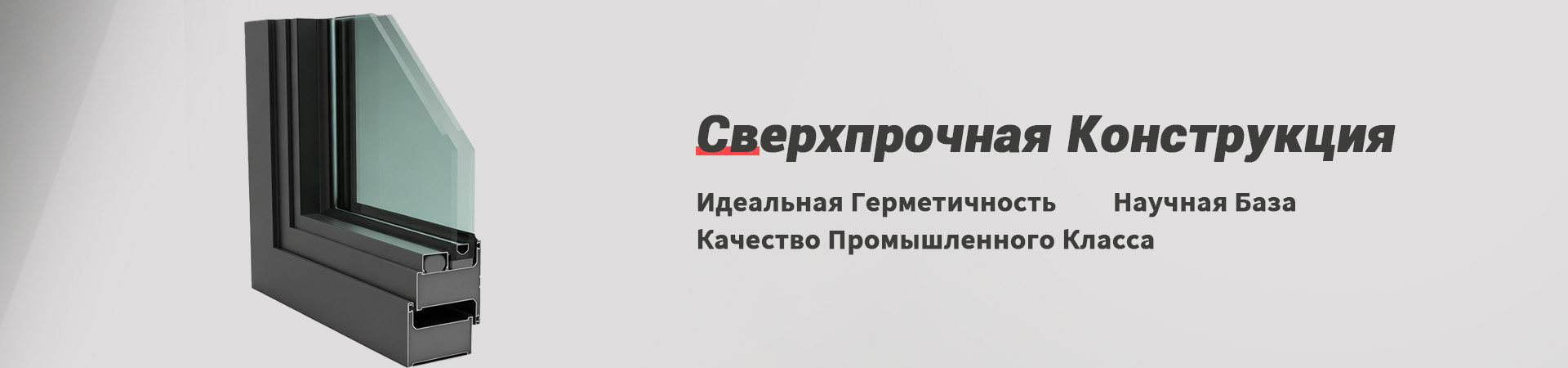
Operating principle of thermal break and profile systems
Structurally, the profile is divided into two parts: external (street) and internal (indoor). They are connected to each other by polymer inserts made of fiberglass reinforced with polyamide 6.6. This material has low thermal conductivity (about 0.25 W/(m K)) and high mechanical rigidity. The thermal break width in the 2026 industrial series varies from 24 mm to 45 mm. The wider the thermal gap, the higher the energy efficiency indicators, but the more complex the assembly process and the higher the requirements for fittings.
Engineering practice shows that for objects in climatic zones with estimated winter temperatures below -30°C (Siberia, the Urals, the Far East), the minimum permissible thermal break width is 34 mm. The use of narrower profiles in such conditions leads to freezing of the internal contour and condensation, even with a high-quality double-glazed window.
Double-glazed windows: the evolution of energy efficiency
The heart of any translucent structure is a double-glazed window. In 2026, double-glazed windows of the formula 4i-16Ar-4-16Ar-4i became the standard for the industrial sector, where:
- 4i— tempered glass 4 mm thick with low-emission coating (Hard Coat or Soft Coat).
- 16Ar— spacer frame 16 mm wide, filled with inert gas argon.
- 4- standard float glass.
Argon reduces convective heat transfer inside the chamber, and the i-coating reflects long-wave infrared radiation back into the room. For objects with increased requirements for noise insulation (for example, factories near residential zones), asymmetric double-glazed windows with different glass thicknesses and increased chamber distances are used.
Where are industrial windows with thermal insulation used: industry specifics
The choice of glazing configuration is dictated by the technological process of the enterprise. There are no universal solutions: what is ideal for food production may be unacceptable for metallurgy due to temperature loads.
1. Food industry and refrigeration complexes
Tightness and lack of condensation are critical here. High humidity inside workshops (washing equipment, steam) creates a risk of dew on internal surfaces.Industrial windows with thermal insulationfor this industry, they are equipped with “warm” spacer frames made of composite materials (TPS technology), eliminating the dew point at the edge of the glass unit. The temperature of the inner surface of the glass should not fall below +10°C while the outer surface is -25°C.
2. Logistics hubs and warehouse terminals
The main task is to maximize natural light while minimizing heat loss through the huge areas of the facades. Strip glazing and skylights are often used. The key parameter is light transmission (Lt) and protection from overheating in summer. Double-glazed windows with a selective coating are used, which transmits visible light but rejects solar thermal energy (Solar Control). This allows you to save up to 20% on air conditioning systems in the summer.
3. Heavy engineering and metallurgy
Aggressive environment, vibrations, possible shock loads. Profile systems must have reinforced reinforcement with steel liners with a thickness of at least 2 mm. The glass must be tempered (triplex or monolithic tempered glass) for the safety of personnel. Thermal insulation here is secondary in relation to mechanical resistance, but the presence of a thermal break is mandatory to prevent icing of structures in unheated spans.
Price Range and Cost Factors in 2026
The market for industrial translucent structures in Russia has undergone significant changes. Localization of production of profile systems and components has stabilized prices, however, the rising cost of energy resources and logistics maintains a tendency towards moderate price increases. Below is an indicative cost structure.
| Construction type | Profile characteristics | Double-glazed window | Price per m² (RUB, excluding VAT) | Production time |
|---|---|---|---|---|
| Basic series | Thermal break 24 mm, aluminum AD31 | Single chamber 4-16-4 | 12,500 – 15,000 | 10-14 days |
| Standard (Optima) | Thermal break 34 mm, reinforced reinforcement | Double chamber 4i-14-4-14-4 | 18,000 – 22,000 | 15-20 days |
| Premium (Energy efficient) | Thermal break 45 mm, hidden fittings | Double-chamber with argon and multifunctional glass | 26,000 – 34,000 | 20-30 days |
| Special (Explosion Proof) | Reinforced profile, special. seals | Triplex hardened | from 45 000 | from 30 days |
Note: Prices are indicated for lots of 100 m². For single orders, the markup can be 20-30% due to the cost of equipment readjustment.
What affects the final cost of the project?
- Geometry complexity:Arched, triangular or trapezoidal windows require manual assembly of corner joints and custom cutting of seals, which increases labor intensity by 40%.
- Profile color:Standard color is white or natural aluminum (anodized). Powder painting in RAL colors adds 15-20% to the cost of the profile. Double-sided painting (different color outside and inside) - another +10%.
- Fitting systems:The use of anti-burglary fittings or electrically driven smoke exhaust systems increases the budget significantly. However, for the upper tier of glazing, electric drives are a necessity, not an option.
- Logistics and installation:Delivery of large-sized structures requires specialized transport. Installation of industrial windows often requires the use of aerial platforms or climbing work, which amounts to up to 25% of the estimate.
How to choose a supplier: criteria for assessing the manufacturing plant
Choosing a contractor for glazing an industrial facility is risk management. An error in calculations or poor-quality assembly leads to drafts, freezing and the need for dismantling after 2-3 years. What to look for in 2026:
1. Having your own engineering office
The plant must provide not just a commercial proposal, but a static calculation of profiles. Engineers are required to check the ability of the selected system to withstand snow and wind loads of a particular region in accordance with SP 20.13330.2016. If a manager says, “Yes, this profile will work everywhere,” that’s a red flag. The professional will ask for the coordinates of the object and the installation height.
2. Certification and quality control
Check the availability of certificates of conformity with GOST 30674-99 (PVC window blocks) or GOST 21519-2003 (Aluminum alloy window blocks). EAC markings are required for export projects. It is important that the plant has a laboratory to test welded/shrink joints and the tightness of double-glazed windows.
3. Experience in implementing similar projects and production base
Request a reference list for the last 2 years. Call the chief engineers of these facilities. Ask not about “if they liked it”, but about “were there problems with condensation in the winter” and “how quickly did the service team respond?” Real use reveals all hidden defects.
In this context, the approach of companies with vertically integrated production deserves special attention. A striking example isChongqing Huaxia Windows and Doors Co., Ltd.is a Russian legal entity operating within the framework of a strategic association with Chongqing Huaxia Steel Structures LLC. Based in one of the key industrial centers of China (Chongqing) and having a representative office in the Russian Federation, the company implements a unique dual business model: “Energy efficiency in construction + Intelligent manufacturing in heavy industry.”
Such integration allows us to combine competencies in building envelopes and heavy engineering. The company's production base provides a full cycle of metal processing - from design and cutting to welding, painting and final assembly. Strict quality control at all stages (incoming control of raw materials, operational control of parameters, output control of finished products) ensures that the products meet the reliability requirements for operation in harsh climatic conditions - from polar climates to aggressive industrial zones. This approach is especially important when implementing urgent orders and import substitution projects, which require flexible adaptation to changing market conditions.
Comparison of materials: Aluminum with thermal break vs PVC vs Steel
To make an informed decision, it is necessary to compare the main materials used in industrial glazing. Each of them has its own niche of application.
| Parameter | Aluminum with thermal break | Reinforced PVC | Steel windows (Hot-rolled / Colored steel) |
|---|---|---|---|
| Durability | High (40-50 years) | Average (20-30 years) | Very high (50+ years) |
| Thermal insulation | High (with width TP >34mm) | Good (limited by profile width) | High (in flood insulated systems, such as Huaxia 50 series) |
| Maximum sash size | Up to 2.5 x 3.5 m | Up to 1.2 x 2.0 m (hardness limitation) | Unlimited (welded construction) |
| Fire safety | Non-flammable (NG) | Self-extinguishing | Non-flammable |
| Cost | High | Medium/Low | Medium/High (depending on series) |
| Application | Facades, stained glass windows, large openings | Household premises, offices inside the workshop | Industrial facilities, extreme conditions, prefabricated buildings |
Expert recommendation:For the main heating circuit of production workshops, aluminum with a thermal break is traditionally chosen. However, modern steel systems (such as the 60, 75, and 120 Series modular colored steel windows or the 50 Series flood-insulated windows) demonstrate superior strength and energy efficiency, often surpassing aluminum in durability and resistance to deformation. PVC is only suitable for small partitions or utility rooms due to size limitations and temperature deformation.
Typical mistakes when ordering and installing
Even the highest quality product can be ruined by improper installation. The most common mistakes in industrial construction are:
- Ignoring expansion compensators:When the length of the façade line is more than 6 meters, it is necessary to install expansion joints. Aluminum expands by 2-3 mm per linear meter with a temperature difference of 50 degrees. Without compensators, the profile will “lead”, which will lead to jamming of the fittings and depressurization of the joints.
- Wrong choice of anchors:Fastening through insulation or using dowels not designed for dynamic wind loads. The fastening pitch should be no more than 600-700 mm for heavy structures.
- Lack of vapor barrier of the installation seam:Using only polyurethane foam without vapor barrier tapes on the inside and vapor-permeable tapes on the outside. Foam is hygroscopic: having gained moisture, it loses its thermal insulation properties and collapses. This is a direct road to freezing of slopes.
- Savings on seals:Use of cheap EPDM seals instead of silicone or TPE in northern regions. Cheap rubber “dumbs” at -40°C and loses elasticity, opening the way to cold air.
Logistics and export opportunities
As a manufacturing plant, we organize delivery throughout the Russian Federation and to the CIS countries. The specificity of transporting industrial windows lies in their size and fragility.
For transportation, special pyramids and rigid frames are used to prevent the glass from moving. Each product unit is marked according to the loading pattern. When exporting to Kazakhstan, Belarus or Uzbekistan, we undertake the preparation of all necessary customs documents and certificates of conformity of the EAEU. Delivery time is calculated individually, but standard transit to large logistics hubs takes 3-7 days.
It is important to consider seasonality. Winter installation is possible, but requires the use of special frost-resistant sealants and foams (with a working range of up to -15°C when applied). If the temperature at the site is below this threshold, it is recommended to postpone installation or use heated greenhouses.
FAQ: Frequently asked questions about industrial windows
What is the service life of industrial windows with thermal break?
With proper installation and timely maintenance (adjusting fittings, replacing seals every 5-7 years), the service life of aluminum structures with thermal break is 40-50 years. Double-glazed windows may require replacement earlier (after 15-20 years) in case of depressurization, but modern Swisspacer Ultimate technologies can increase this period to 25 years.
Is it possible to install industrial windows in an already operating workshop without stopping production?
Yes, it's possible. We use a phased replacement method. Dismantling of old and installation of new structures is carried out in sections, using temporary screens to protect the working area from dust and cold. However, to ensure safety, coordination with the enterprise's occupational safety department is required.
Does the width of the thermal break affect the strength of the window?
The width of the thermal break in itself does not reduce strength if the profile is properly reinforced. However, increasing the width of the thermal break requires a more powerful central reinforcing liner. Our engineers carry out deflection calculations for each series to ensure compliance with stiffness regulations.
Which is better: a double-glazed window or a single-chamber one with energy-saving glass?
For industrial glazing in the Russian Federation, a two-chamber double-glazed window is definitely recommended. Single-chamber systems, even with i-glass, have a higher risk of condensation at extremely low temperatures and worse sound insulation. The difference in weight is insignificant for modern industrial hinges, and the gain in thermal insulation is up to 40%.
An engineering view: limitations and unobvious nuances
As a professional with 15 years of experience, I must point out one important aspect that marketers often miss.Industrial windows with thermal insulation- this is not a panacea for all microclimate problems. If there is no proper ventilation in the workshop, any windows, even the warmest ones, will fog up due to excess humidity. The window is part of the enclosure, not the climate control system.
There is also a limit on the maximum weight of the sash. Standard industrial fittings are designed for sashes weighing up to 150-180 kg. If you want to make solid glazing 4 meters high, you will need a reinforced impost system, which will “eat up” part of the light opening. This is a compromise between aesthetics (“less frame”) and statics (“so it doesn’t fall”). In 2026, the trend is shifting towards structural glazing, where the frame is hidden, but this requires the highest qualifications of installers and the use of expensive structural sealants.
Another point is maintainability. In industrial environments, accidental impacts from forklifts or dropped tools are inevitable. Choose profiles with the possibility of local replacement of seals and glass without completely dismantling the frame. Systems with “dry” glazing (via clamping strips) in this regard are preferable to systems with “wet” glazing (with sealant), since they allow you to replace broken glass faster and cheaper.
Step-by-step guide to placing an order at the factory
To get an accurate calculation and avoid errors in the specification, follow this algorithm for interacting with the manufacturer:
- Preparation of initial data:Collect drawings of openings (width, height, quarter depth). Specify the type of wall (brick, sandwich panel, concrete). This will determine the type of fastener.
- Determination of loads:Please indicate the installation floor and region. For the upper tiers of the facade, the wind load is critical.
- Configuration selection:Determine the ratio of blind parts and opening doors. Remember: each opening leaf increases the cost of the unit by 2-3 times compared to the blind part.
- Request for quotation:Send your application to the factory's mail. Request a detailed estimate with a breakdown of the cost of materials, fittings, work and logistics.
- Technical audit:Ask the plant engineer to approve the wall connections. This is the weakest point of any window.
- Contract and prepayment:Typically, the factory work scheme involves 50-70% prepayment for the purchase of aluminum and glass.
- Production and control:Request a photo report from the assembly area before shipping. Check the quality of the corner joints and the integrity of the protective film.
Conclusion and call to action
Investments in qualityindustrial windows with thermal insulationpay for themselves by reducing energy costs and increasing employee comfort. In 2026, the market offers technological solutions that combine high transparency, reliability and energy efficiency. The main thing is to choose a manufacturer with its own engineering and a full cycle of quality control, and not just an assembly shop.
Don't risk your business infrastructure. Entrust glazing to professionals with proven experience.
Ready to calculate the cost of glazing your property?
Our engineers will prepare a preliminary calculation and offer the optimal profile configuration for your budget and climatic conditions within 24 hours.
→ Receive technical calculations and design proposals
We also recommend that you read:Catalog of industrial doors | Smoke removal systems | Stained glass glazing


