



Buy protective structures for field conditions from the manufacturer
2026-08-18
- Protective structures for field conditions: an engineering approach to selection and procurement from the manufacturer
- What are protective structures for field conditions: definition and classification
- Where used: industry specifics and requirements
- Main characteristics: what to look for in the technical data sheet
- How to choose protective structures for field conditions: selection algorithm
- Comparison of models and technologies: decision table
- Typical mistakes when choosing and using
- Pricing and cost factors
- Logistics and export features
- FAQ: Frequently asked questions
- Recommendations for purchasing and cooperation with the manufacturer
- The role of industrial integration: the case of Chongqing Huaxia LLC
- Conclusion
Protective structures for field conditions: an engineering approach to selection and procurement from the manufacturer
Protective structures for field conditionsare specialized engineering systems designed to ensure personnel safety, the safety of sensitive equipment and the continuity of technological processes in aggressive external environments. Unlike standard industrial fencing or temporary canopies, these solutions are designed to withstand extreme climatic loads (temperature range from -50°C to +60°C), high wind pressures (up to 35 m/s) and mechanical impacts typical of remote locations: drilling rigs, exploration parties, military sites and emergency response zones.
The key value of such systems lies not simply in creating a physical barrier, but in ensuring the functional autonomy of the object. Properly Designedprotective structures for field conditionsintegrate elements of modular architecture that allow rapid transportation (including air delivery), assembly without the use of heavy special equipment and resistance to corrosion in conditions of high humidity or salt fog. For technical specialists and procurement managers, understanding the nuances of materials science, the regulatory framework (GOST, SNiP, ISO) and the logic for calculating loads is a critical factor in the formation of technical specifications. An error at the design stage or selection of a supplier can lead to equipment downtime, the cost of which is many times higher than the savings on the initial purchase.
In this material, we will analyze in detail the classification of field protective systems, analyze the impact of materials on service life, consider economic models of ownership and provide clear recommendations for choosing a manufacturer in the 2026 market conditions. We avoid marketing slogans, focusing exclusively on the technical feasibility and cost-effectiveness of solutions.
What are protective structures for field conditions: definition and classification
In an industrial context, the term “field conditions” implies the absence of capital infrastructure: foundations, fixed power grids and protected premises. Therefore,protective structures for field conditionsare self-sufficient engineering complexes that perform the functions of shelter, stabilization and insulation. They are divided into several key classes depending on their intended purpose and degree of capital.
1. Mobile modular shelters (Hard Shelter)
These are rigid structures made of aluminum alloys, composite panels or galvanized steel. Their main feature is the high speed of deployment (from 2 to 4 hours with a brigade of 3-4 people) and the possibility of multiple relocation. Such structures are often used to house communication server nodes, medical stations, or drone control posts. The frame is usually made according to the principle of “scissors” or telescopic stands, which minimizes the volume during transportation.
2. Reinforced awning systems (Soft Shelter)
They should not be confused with regular backpacking tents. Industrial awningsprotective structures for field conditionsthey use fabrics with a density from 650 to 1100 g/m² with a PVC coating that is resistant to UV radiation and cracking in the cold. The frame here plays the role of a load-bearing element that absorbs snow loads. The advantage of such systems is low weight and compactness, the disadvantage is less thermal insulation and noise insulation compared to rigid modules.
3. Hybrid container solutions
Combination of a standard shipping container (20 or 40 feet) and folding elements. The base ensures tightness and protection of valuable equipment, and the folding sections increase the usable area by 2-3 times after installation. This is the optimal choice for long-term projects (over a period of 6 months), where a balance between mobility and staff comfort is required.
4. Specialized screens and barriers
Structures designed not to shelter people, but to protect processes. Examples: windbreaks for welding work on pipelines, dustproof domes over crushing plants, radio-absorbing structures for field radars. The key parameter here is not comfort, but the physical permeability or reflectivity of the material.
Where used: industry specifics and requirements
Demand for qualityprotective structures for field conditionsis formed by industries where work is carried out outside of civilized infrastructure. The requirements in each sector have their own specifics, which the manufacturer must take into account at the design stage.
- Oil and gas sector and geology.The main requirement is explosion safety and spark safety of materials. Structures are often installed in areas with high hydrogen sulfide or salt content, which requires the use of AISI 316L stainless steel or special polymer coatings. Operating temperature conditions in arctic latitudes require maintaining the elasticity of seals at -55°C.
- Telecommunications and IT infrastructure.Field data centers (data centers) and communication nodes require structures with high thermal insulation (U-value heat transfer coefficient no more than 0.35 W/(m² K)) and tightness (IP54 class and higher). It is important to have cable channels and grounding systems integrated into the frame.
- Military and rescue sector.The priority is camouflage (including in the thermal range), resistance to fragmentation and chemical resistance. Deployment speed is a critical KPI. Designs must be compatible with standard military transport platforms.
- Construction of highways and power lines.Mobile heating and rest centers for workers predominate here. Anti-vandal strength and the ability to connect to low-power diesel generators are important. Fire code certification is often required for temporary structures.
Engineering practice shows that there are no universal solutions. An attempt to use a standard construction cabin in tundra conditions leads to condensation inside the room, corrosion of fasteners and destruction of insulation during the first season. Thereforeprotective structures for field conditionsmust be designed for a specific climate zone and type of tasks to be solved.
Main characteristics: what to look for in the technical data sheet
When evaluating commercial offers from manufacturers, it is necessary to abstract from general phrases and operate with specific technical parameters. Below is a list of critical characteristics that determine the quality and durability of the product.
| Parameter | Minimum Requirement (Temperate Climate) | Requirement for Arctic/Extreme | Test Method / Standard |
|---|---|---|---|
| Wind load | up to 25 m/s | up to 40-45 m/s | Calculation according to SP 20.13330.2016 |
| Snow load | 180 kg/m² | 320-400 kg/m² | Static load test |
| Operating temperature | -30°C to +40°C | -60°C to +50°C | Climatic tests with a cold chamber |
| Coating service life | 5-7 years | 10-15 years | UV aging test (ISO 4892) |
| Structure weight (per 1 m²) | up to 15 kg | up to 25 kg (reinforced frame) | Weighing |
| Tightness | IP43 | IP54 – IP65 | Water jet test |
Frame materials: aluminum vs steel
The choice of frame material determines the logistics and service life of the structure. Steel pipes (profile 40×40 mm or 60×40 mm) are cheaper, but are susceptible to corrosion even when galvanized if the coating is damaged during installation. Their weight makes air transportation difficult. Aluminum alloys (6061 or 6082 series) do not have the problem of corrosion, are 40-50% lighter, but are more expensive. Forprotective structures for field conditionsthat are expected to be moved frequently, aluminum is the preferred choice, as the savings in fuel and assembly time offset the high initial cost.
Fabric materials and membranes
If the structure is awning, the key element is the fabric. Regular polyester is not suitable. It is necessary to use reinforced fabrics with double-sided PVC coating. An important parameter is plasticizer migration. Cheap fabrics “tann” in the cold and break at the folds. Quality materials remain flexible down to -40°C. It is also worth paying attention to the method of joining the panels: high-frequency welding is more reliable than a sewing seam, which is the entry point for moisture.
How to choose protective structures for field conditions: selection algorithm
The selection process should not start with price. It should begin with an audit of operating conditions. Errors at this stage result in the structure either being destroyed by a storm or being over-costed. Follow the following engineering algorithm:
- Definition of climatic region.Use maps of snow and wind loads in the Russian Federation (or region of application). Don't focus on "average" temperatures, look at absolute minimums and maximums, and the likelihood of extreme events (freezing rain, hurricane).
- Analysis of logistic constraints.What is the maximum cargo size? If delivery is by helicopter, the weight of each module should not exceed the lifting capacity, including slinging. If by road, take into account the width restrictions (2.55 m for standard trucks) without registering oversized vehicles.
- Functional content.Do you need thermal insulation? If so, what thickness of insulation is needed to maintain +20°C inside and -40°C outside using a 2kW heater? Heat loss calculation is required.
- Security requirements.Is fire safety certification required (KM1, KM2)? Is grounding required for lightning protection?
- Service life.Is it planned to use the structure for 1-2 seasons or 10 years? For short-term projects, you can use lightweight versions, for long-term ones - capital modules with anti-corrosion treatment of class C4-C5 according to ISO 12944.
Practical advice: always ask the manufacturer for a load design. If the supplier can't provide wind load engineering calculations for your area, that's a red flag. Probably the design was copied without adapting to reality.
Comparison of models and technologies: decision table
For clarity, let’s compare the three main types of solutions available on the market in 2026. This will help determine the budget and technical requirements.
| Characteristics | Frame-awning (Arctic) | Modular rigid (Aluminum) | Inflatable structure |
|---|---|---|---|
| Purchase cost | Average | High | Low |
| Installation time | 4-8 hours | 1-2 hours | 15-30 minutes |
| Thermal insulation | Medium (requires inner contour) | High (sandwich panels) | Low (air gap only) |
| Resistance to damage | High (fabric repaired) | Medium (dents on metal) | Low (risk of puncture) |
| Logistics (volume) | Compact | Bulk (low packing density) | Ultra-compact |
| Service life | 7-10 years | 15-20 years | 3-5 years |
| Recommended Application | Warehouses, hangars, workshops | Residential modules, server rooms, offices | Temporary aid stations, quick shelters |
As can be seen from the table, inflatable structures gain in speed, but lose in reliability and energy efficiency. Rigid modules are ideal for comfort, but difficult to logistically. Frame-awning systems remain the “golden mean” for most industrial tasks, providing a balance of price and functionality.
Typical mistakes when choosing and using
An analysis of complaints and equipment failures shows that most problems are not related to production quality, but to design and operating errors. Avoid the following pitfalls:
- Ignoring condensation.In sealed structures, in the presence of people and equipment, air humidity increases sharply. Without a ventilation or recovery system, moisture settles on cold surfaces, causing corrosion of electronics and mold on fabrics. Solution: installation of supply and exhaust valves with moisture protection.
- Incorrect anchorage to the ground.The use of lightweight pegs for structures larger than 20 m² is unacceptable. Screw piles or ballast blocks are required. Statistics show that 60% of damage to awnings occurs due to fasteners breaking due to gusts of wind, and not due to tearing of the fabric.
- Saving on fittings.Zippers, locks and rigging elements experience the greatest cyclic loads. Cheap plastic fittings break in the cold. Require the use of stainless steel or reinforced plastic (POM/Delrin) metal fittings.
- Lack of spare parts.Field use inevitably leads to wear and tear. The repair kit (patches, glue, spare fragments of arcs) must be included in the basic delivery. The absence of a repair kit turns a minor breakdown into a downtime.
Pricing and cost factors
Costprotective structures for field conditionsvaries widely. Understanding the price structure helps negotiate with the manufacturer. Main cost drivers:
- Material consumption.The price of aluminum and specialized fabrics is tied to stock quotes and exchange rates. In 2026, there is a trend toward higher prices for high-quality polymers due to environmental production standards.
- Complexity of engineering.Non-standard shapes and the need to integrate life support systems (ventilation, heating, lighting) into the structure increase the cost of design and assembly.
- Certification.The presence of GOST certificates of conformity, fire certificates and test reports increases the price, but reduces the risks for the customer during inspections by supervisory authorities.
- Logistics.Delivery to remote sites can be up to 30-40% of the cost of the structure itself. Optimizing packaging dimensions directly affects the final project budget.
It is important to distinguish between CAPEX (Capital Purchase Expenditure) and OPEX (Operating Operational Expenditure). A cheap design may require annual repair of the awning or replacement of fasteners, which in the long term makes it more expensive than a high-quality analogue. It is recommended to calculate TCO (Total Cost of Ownership) over a 5-year horizon.
Logistics and export features
When purchasing large quantities or working on international projects, it is important to take into account the customs codes of the Commodity Nomenclature of Foreign Economic Activity. Protective structures are often classified as either “temporary structures” (code 9406) or “parts of aluminum/steel products.” Correct classification affects the duty rate and VAT.
The manufacturer must provide a detailed Packing List indicating the weight and dimensions of each item. For air transportation, labeling of cargo packages in accordance with IATA standards is critical. If the structure is supplied disassembled, the assembly instructions should be intuitive, preferably with QR codes leading to video manuals, since paper instructions quickly become unusable in field conditions.
FAQ: Frequently asked questions
Q: Is it possible to operate protective structures for field conditions year-round in Siberia?
A: Yes, subject to the use of arctic materials (frost-resistant PVC, aluminum alloy 6082) and proper preparation of the foundation or fastening system. It is imperative to have a heating and ventilation system to combat condensation.
Q: What is the service life of the awning cover?
A: For high-quality fabrics with acrylic or PVC coating, the service life is 7-10 years with constant outdoor use. UV stabilizers slow down the degradation of the material, but do not stop it completely.
Q: Is it possible to manufacture structures according to individual drawings?
A: Most serious manufacturers offer a customization service. However, changing the frame geometry requires repeated strength calculations. Standard modules are always more profitable in terms of price and delivery time.
Q: How is tissue damage repaired in the field?
A: Special repair kits with cold vulcanizing glue or hot-melt adhesive patches are used. The process takes 15-20 minutes and does not require dismantling the entire structure. It is important to clean and degrease the surface before applying the sticker.
Q: Can the structures withstand snow falling from the roof?
A: The structures are designed for a uniform snow load. The impact load from layers of snow coming off neighboring buildings may exceed the design load. In such cases, it is recommended to install additional canopies or strengthen the frame in the risk area.
Recommendations for purchasing and cooperation with the manufacturer
Supplier selectionprotective structures for field conditionsshould be based on a test of his engineering competence, and not just on the presence of a beautiful catalog. Ask your potential contractor the following questions:
- Do you provide load calculations for my region?
- Are there protocols for independent testing of materials (tensile, frost resistance)?
- What is the warranty on the frame and fabric elements? (Usually the frame warranty is longer).
- Can you replace damaged items during the warranty period with delivery?
- Do you have experience in supplying to similar climate zones? Request a reference list.
Avoid intermediaries who do not have their own design office. If problems arise with installation or operation, they will not be able to provide qualified technical advice. A direct contract with the manufacturer ensures the best price and direct communication with engineers.
The role of industrial integration: the case of Chongqing Huaxia LLC
In a global market, the reliability of a supplier is determined not only by the availability of warehouse stocks, but also by the depth of production expertise. A striking example of the approach that combines construction precision and heavy industrial power is the company's activitiesChongqing Huaxia Windows and Doors Co., Ltd..
This Russian legal entity, operating in a strategic association with Chongqing Huaxia Steel Structures LLC, is based in Chongqing, one of the key industrial centers of China. The company implements a unique dual business model: “Energy efficiency in construction + Intelligent production in heavy industry.” This symbiosis allows us to create protective structures and fencing systems that are tested in the harshest climatic and extreme industrial conditions.
The company's production base combines the capabilities of two specialized enterprises: one in the field of construction metal structures, the other in the field of heavy engineering. This provides a full cycle of metal processing - from design and cutting to welding, painting and final assembly. Strict quality control at all stages (input control of raw materials, operational control of parameters, output control of products) ensures that products comply with the reliability requirements for critical infrastructure components.
The company's product range includes two complementary product groups, ideal for comprehensive equipment of field facilities:
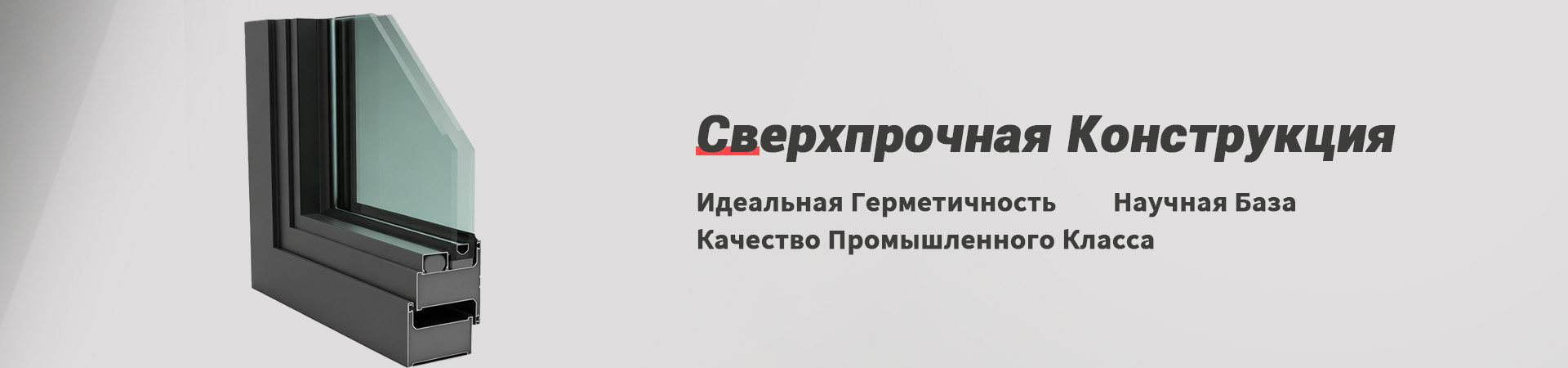
- Energy efficient window and door systems:Modular colored steel windows and doors in the 60, 75 and 120 series, as well as 50 series insulated steel windows. These solutions are designed using advanced thermal break technologies and multi-circuit seals, providing high wind protection, airtightness and thermal resistance, which are critical to maintaining the microclimate in field modules.
- Industrial metal products:Stainless steel water pipes, GVU manifolds, brackets, motor bases and other components. These products meet the highest requirements for precision and reliability required for operating equipment in aggressive environments.
The geography of supplies of Chongqing Huaxia LLC covers the CIS countries, the Middle East and Eastern Europe. The company is actively involved in projects for the reconstruction of buildings, the construction of prefabricated facilities (including temporary medical and military structures) and the import substitution of components. The service policy is based on the principles of rapid response and flexible adaptation to the specifics of regional requirements, which makes the company a reliable partner for the implementation of complex infrastructure projects.
Conclusion
Investments in qualityprotective structures for field conditionsis a contribution to business continuity and human safety. In conditions of an unstable external environment, the reliability of the shelter becomes the same strategic resource as fuel or spare parts. The 2026 market offers a wide range of solutions: from lightweight tent hangars to high-tech modular complexes with intelligent climate control. The key to success is careful analysis of operating conditions, proper selection of materials, and partnering with a manufacturer that can back up its claims with engineering calculations and tests.
Do not compromise on the strength of the frame and the quality of the fittings. The savings here are illusory and are quickly offset by the costs of repairs and downtime. Plan your purchases in advance, taking into account production and logistics times, especially for remote regions.
To receive a detailed technical calculation, select a configuration for your tasks and request a commercial proposal, contact our engineers. We are ready to develop an individual solution that meets your requirements for loads, dimensions and budget.
Ready to discuss your project?
Get an engineer's consultation and cost estimate
See also:Catalog of modular shelters | Tent hangars | Accessories and spare parts


