



Industrial windows with double glazing from the factory: prices
2026-08-17
- Industrial windows with double glazing: prices from the manufacturer in 2026
- What are industrial double glazed windows and their design features
- Where are industrial double-glazed windows used: industry specifics
- Main technical characteristics and selection parameters
- How the price of industrial double glazed windows is determined
- Comparison of profile materials: Aluminum vs Steel vs PVC
- Typical errors when ordering and using
- Logistics and export: delivery features
- FAQ: Frequently asked questions about industrial windows
- Practical recommendations for purchasing and interaction with the plant
- Conclusion: why is it important to choose a reliable manufacturer
Industrial windows with double glazing: prices from the manufacturer in 2026
Industrial double glazed windowsare engineering translucent structures designed for operation under conditions of high mechanical, thermal and acoustic loads. Unlike household analogues, these systems are based on reinforced profiles (aluminum or steel) and use double-glazed windows with a formula adapted to the specifics of production workshops, warehouses, logistics complexes and hangars. The key difference is not just the presence of two glasses, but the calculation of wind resistance, heat loss and safety in emergency situations.
For enterprise managers, chief engineers and purchasers, the relevance of the topic is due to the need to reduce operating costs (OPEX) for heating and air conditioning, as well as compliance with strict SanPiN standards for the level of natural lighting in workplaces. Direct purchasedouble glazed industrial windowsfrom the manufacturer allows you to eliminate the markup of dealer networks, obtain a technical audit of the facility and guarantee compliance of products with GOST and international EAC standards. In this material we will analyze the real pricing structure, technical nuances of choosing components and errors that lead to premature failure of structures.
What are industrial double glazed windows and their design features
In the industrial segment, the term “double glazing” is often misinterpreted. It is important to distinguish between two concepts: a single-chamber double-glazed window (two glasses, one chamber) and a design with separate glazing (two independent contours). In modern factory construction, the first option dominates due to its tightness and energy saving efficiency. However, for sites with extreme temperature changes or high requirements for sound insulation (for example, near airports or railway tracks), specialized solutions are used.
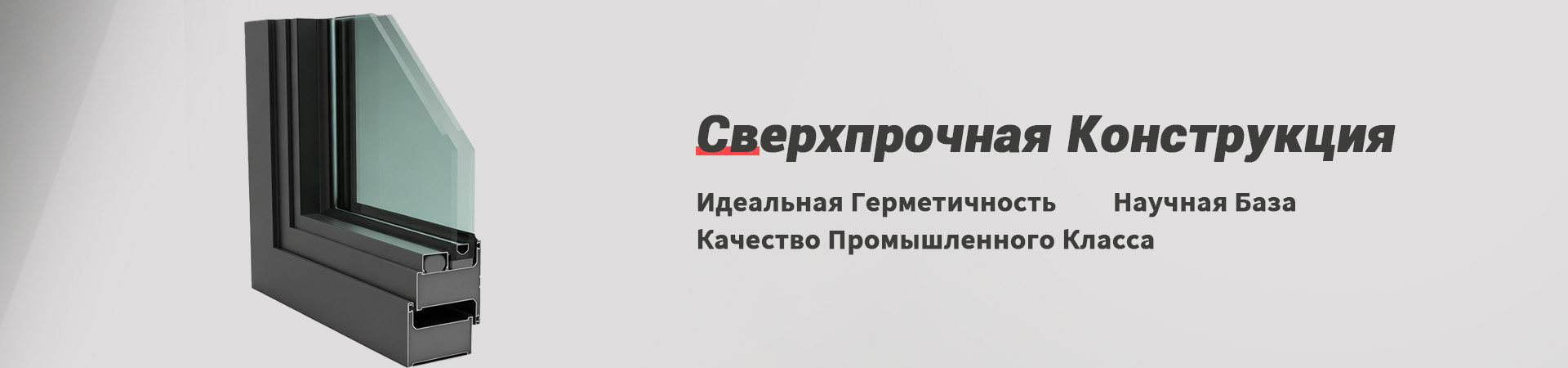
The basis of the design is the profile system. If PVC is the leader in civil engineering, then in industry the undisputed leader remains aluminum and, in some cases, steel. Aluminum profiles have high strength with low weight, which is critical for large areas of glazing (half-timbered glazing, strip glazing). They do not deform under their own weight when the sash height is more than 2.5 meters, which is a common problem with plastic analogues.
The glass unit in such windows acts as a barrier. The standard formula for temperate climates is 4-16-4, where 4 mm is the thickness of the glass, 16 mm is the width of the spacer frame. For industrial facilities this formula is modified. Tempered glass (triplex or tempered) is used, which, when broken, crumbles into non-sharp fragments, minimizing the risk of injury to personnel. Distance frames are increasingly made of composite materials (“warm edge”) to prevent the formation of condensation and ice around the perimeter of the glass in winter.
Key differences from civilian counterparts
- Reinforced fittings:Hinges and locking mechanisms are designed for a sash weight of up to 150–200 kg and an opening frequency of over 100 cycles per day.
- Tightness of units:The use of EPDM seals that are resistant to ultraviolet radiation, ozone and aggressive industrial fumes (acids, alkalis).
- Modularity:Possibility of integration into ventilated facades or use as independent blocks in brickwork.
- Maintainability:The design allows you to replace individual elements (glass, seal, fittings) without dismantling the entire frame, which reduces production downtime.
Where are industrial double-glazed windows used: industry specifics
The choice of glazing configuration directly depends on the technological process inside the building. There is no universal solution, and an attempt to save money at the design stage often leads to a multiple increase in operating costs. Let's look at the main use cases.
1. Logistics centers and warehouse complexes of class A
The priority here is energy efficiency and the absence of cold bridges. Large areas of glazing can cause enormous heat loss. Applicationdouble glazed industrial windowswith a low-emissivity coating (i-glass or k-glass) allows thermal radiation to be reflected back into the room. The temperature gradient on the inner glass should not exceed 3–4°C relative to the air temperature in the workshop to avoid discomfort for workers in the picking area.
2. Machine-building and metalworking shops
Main challenges: vibration from machines, possible ingress of chips or sparks, high noise level. Windows must have increased vibration resistance. Glass must be tempered. The sound insulation level Rw must be at least 35–40 dB so that noise from outside does not interfere with the concentration of CNC operators, and internal noise does not spread beyond the sanitary protection zone.
3. Food industry and pharmaceuticals
Strict hygiene requirements. The profile must have a smooth surface without pores, easy to clean with disinfectant solutions. Seals must be inert to chemical reagents. The use of glass with an antibacterial coating or ease of cleaning from grease stains is often required.
4. Energy and heavy industry
Objects with increased fire safety requirements. Fire-resistant double-glazed windows (class EI 30, EI 60) are used here, which are able to maintain integrity and insulating ability when exposed to an open flame for a given time. This is critical for evacuation routes and control rooms.
Main technical characteristics and selection parameters
When forming technical specifications (TOR) for the supply of glazing, it is necessary to rely on specific physical quantities, and not on marketing names. Below are the parameters that directly affect durability and costdouble glazed industrial windows.
| Parameter | Description and impact on operation | Recommended values for the Russian Federation (2026) |
|---|---|---|
| Heat transfer coefficient (Uw) | Shows how much heat is lost through 1 m² of window with a temperature difference of 1 degree. The lower the better. | Not higher than 1.3–1.5 W/(m² °C) for heated workshops. |
| Wind resistance | The ability of a structure to withstand wind pressure without deformation or destruction. | From 800 Pa (for low buildings) to 2000+ Pa (for high-rise hangars). |
| Sound insulation (Rw) | Reduced external noise levels. | 30–35 dB (standard), 40+ dB (for noisy areas). |
| Light transmittance (Lt) | The fraction of visible light passing through a window. | At least 60–70% to ensure SanPiN standards for illumination. |
| Glass type | Filling material. | Tempered or Triplex (Laminated) for safety. |
| Gas filling | Filling the interglass space with inert gas. | Argon (Ar) or Krypton (Kr) to improve thermal insulation. |
Engineering comment:Many customers mistakenly believe that increasing glass thickness always improves performance. In fact, for sound insulation, it is more effective to use glass of different thicknesses (for example, 6 mm and 4 mm), which shifts the resonant frequency of the system and dampens sound waves wider than the spectrum. For thermal insulation, the presence of a selective coating and the assembly quality of the double-glazed window are more important.
How the price of industrial double glazed windows is determined
The issue of cost is key when budgeting for capital construction or renovation. Pricedouble glazed industrial windowscannot be fixed “per piece”, since each project is unique. The cost is formed from several components, knowledge of which will help you control the estimate.
1. Material base (40–50% of cost)
- Profile:The price of aluminum is exchange-traded and volatile. The use of recycled aluminum reduces the price, but degrades the mechanical properties and corrosion resistance. Require certificates for the alloy (usually AD31T1).
- Glass:Tempering and applying a low-e coating add 15–25% to the cost of the glass part. Armored glass (triplex) can double this cost item.
- Accessories:Industrial fittings (Roto, Siegenia, Vorne or high-quality Russian analogues) are more expensive than household fittings, but provide a service life of 10–15 years of active use.
2. Technological complexity (20–30%)
Non-standard shapes (triangular, trapezoidal, round) require individual configuration of equipment and manual assembly of corner joints, which increases labor intensity. Size also affects: extra-large double-glazed windows (more than 3–4 m²) require the use of glass of increased thickness (6–8 mm) and reinforced profiles to avoid the “lens” effect and sagging.
3. Logistics and installation (15–25%)
Industrial windows are often delivered to remote sites. Transportation of large cargo requires special vehicles. Installation in an existing workshop or at a height of more than 10 meters requires the use of climbers or aerial platforms, as well as compliance with strict safety regulations, which is reflected in the estimate.
Price range (estimated for 2026)
The cost per square meter of the finished product (turnkey) varies:
- Economy (cold aluminum, regular glass):from 8,000 to 12,000 rubles/m². Suitable for unheated warehouses.
- Standard (warm aluminum, single-chamber double-glazed window with i-glass):from 14,000 to 19,000 rubles/m². Optimal for most industries.
- Premium (reinforced profile, multifunctional glass, tempered, complex fittings):from 22,000 rub./m² and above. For facilities with high microclimate and safety requirements.
Important: Prices do not include VAT and complex installation work. An accurate calculation is only possible after providing drawings or a measurement sheet.
Comparison of profile materials: Aluminum vs Steel vs PVC
When choosingdouble glazed industrial windowsThe dilemma of choosing frame material often arises. Let's compare the main options from the point of view of industrial application.
| Characteristics | Aluminum profile (Warm) | Steel profile | PVC (Reinforced) |
|---|---|---|---|
| Strength / Stiffness | High. Allows you to create large light openings. | Maximum. Ideal for heavy loads. | Average. Sash size limitation. |
| Structure weight | Lightweight. Reduces the load on the foundation. | Heavy. Requires reinforced fastening. | Average. |
| Corrosion resistance | High (with high-quality powder coating). | Low (requires constant painting). | High. |
| Maintainability | High. Easy replacement of elements. | Low. Welds are difficult to repair. | Average. |
| Service life | 40–50 years old. | 20–30 years (depending on care). | 15–20 years (risk of yellowing/deformation). |
| Price | Medium/High. | High (due to processing complexity). | Low. |
Expert recommendation:For 90% of modern industrial tasks, the optimal choice is an aluminum profile with a thermal break (polyamide bridge). It combines durability, aesthetics and sufficient thermal insulation. Steel should only be chosen for the restoration of historical industrial buildings or under extreme impact loads. PVC is acceptable only for small auxiliary premises (offices inside a workshop, change houses), but not for the main contour of the building.
Typical errors when ordering and using
An analysis of complaints over the past 5 years shows that most problems with windows arise not due to manufacturing defects, but due to errors at the design and installation stages. Avoid the following scenarios:
- Ignoring expansion compensators.With a light opening length of more than 6 meters, the linear thermal expansion of aluminum can reach several millimeters. If the structure is rigidly fixed without compensating gaps, the profile will be deformed, the glass unit will burst, and the tightness will be broken.
- Wrong choice of dew point.Installing a conventional double-glazed window in a region with cold winters (for example, Siberia, the Urals) without calculating the dew point will lead to condensation inside the chamber or on the surface of the glass. This not only impairs visibility, but also contributes to the formation of mold on the slopes.
- Saving on polyurethane foam and fasteners.The use of household foams with a low coefficient of expansion or cheap anchors leads to blowing of the joints. In industry, it is necessary to use professional installation systems with vapor barrier tapes.
- Lack of hardware maintenance.Industrial environments often contain abrasive dust. If you do not lubricate the mechanisms and clean the drainage holes at least once a year, the fittings will jam in 2-3 years.
Logistics and export: delivery features
When working with a manufacturing plant, it is important to consider logistics risks. Industrial windows are fragile cargo. Factory packaging must include:
- Corner protective pads made of thick cardboard or plastic.
- Stretch film with UV protection (if outdoor storage is planned for more than 2 weeks).
- Rigid wooden or metal pallets for fixing the vertical position.
When exporting or long-distance transportation within the country, it is recommended to insure the cargo. The production time for standard batches is 3–5 weeks. Custom solutions may require up to 8 weeks due to ordering specific profiles or glass from subcontractors.
FAQ: Frequently asked questions about industrial windows
What is the service life of industrial double glazed windows?
Provided that a high-quality aluminum profile is used and properly used, the service life is 40–50 years. Double-glazed windows may require replacement after 15–20 years (loss of airtightness, fogging), but the frame itself remains functional.
Is it possible to install industrial windows in an already used building?
Yes, this is a common practice during renovation. However, careful measurements of existing openings, which often have geometric deviations, are required. It is possible to manufacture windows with increased tolerances or use special mounting frames.
Does profile color affect the price?
Standard color (white or silver anodized) is usually included in the base price. Powder painting in colors according to the RAL catalog adds 10–15% to the cost of the profile. Textured coatings (antique, shagreen) may cost more.
What to do if the glass breaks?
Do not try to dismantle the glass unit yourself if it is at a height. Contact the manufacturer's service department. To quickly restore the tightness of the workshop, many factories offer the service of urgent production of single-glazed windows according to the saved specifications.
Are there any restrictions on the size of one leaf?
Technological limitations depend on the profile. For standard industrial systems, the maximum height of the sash can reach 3-3.5 meters, width - 1.5-2 meters. For large sizes, division into transoms and imposts is required to ensure rigidity.
Practical recommendations for purchasing and interaction with the plant
As a specialist with many years of experience in supporting industrial projects, I recommend the following algorithm of actions for the buyer:
Step 1. Preparation of technical specifications.Don't send a "need windows" request. Prepare a plan for the facades indicating the clear dimensions of the openings, the desired opening method (pivot, tilt, sliding) and thermal/sound insulation requirements. If you have a project, please attach the “Windows and Doors” section.
Step 2. Request for a commercial proposal (CP).Send your request to at least three manufacturers. Pay attention not only to the total amount, but also to the details: is the profile brand, glass thickness, type of fittings indicated? Vague wording in the CP is a sign of risk.
Step 3. Technical audit.If the order volume is significant (more than 50–100 m²), request samples of units or visit the production facility. Check the quality of the corner connections (should be smooth, without gaps) and the quality of the sealants.
Step 4. Agreement.In the contract, be sure to include warranty obligations for the tightness of double-glazed windows (usually 5 years) and for the operation of fittings (3–5 years). Specify penalties for missing delivery deadlines, since delays in windows may block the commissioning of the facility.
Engineering Caution:Do not agree to replace the proposed materials with “analogues” without written approval of the technical characteristics. Often, under the guise of an analogue, a profile with a smaller wall thickness is supplied (1.5 mm instead of 2.0 mm), which critically reduces the rigidity of the structure.
Conclusion: why is it important to choose a reliable manufacturer
Investments in qualityindustrial double glazed windowspay off by reducing energy costs, reducing downtime due to repairs and creating comfortable working conditions, which directly affects staff productivity. The market of 2026 offers a wide choice of solutions, but the key to success lies in competent technical specifications and partnership with a plant capable of providing the full cycle: from load calculations to installation supervision.
Particular attention today is paid to manufacturers capable of combining competencies in the field of building envelopes and heavy engineering. A striking example of this approach isChongqing Huaxia Windows and Doors Co., Ltd.is a Russian legal entity operating within the framework of a strategic association with Chongqing Huaxia Steel Structures LLC. Based in one of China's key industrial centers (Chongqing), the company implements a unique business model that combines energy efficiency in construction with smart manufacturing for heavy industry.
This integration allows Chongqing Huaxia to offer the market not just windows, but comprehensive engineering solutions tested in extreme conditions. The company specializes in energy-efficient window and door systems made of colored steel (series 60, 75, 120) and steel windows with poured thermal insulation (series 50). These products are designed with advanced thermal break technology and multi-loop seals to provide superior wind resistance and sealing even in harsh climates or harsh industrial environments. Having our own full-cycle production base - from design and welding to painting and final assembly - guarantees strict quality control at all stages and stable delivery times, which is critical for large infrastructure projects in the CIS, the Middle East and Eastern Europe.
We are ready to conduct a free preliminary calculation of your project, offer the optimal configuration of the profile and double-glazed windows for your budget, and also arrange for an engineer to visit the site for accurate measurements.
Ready to discuss your project?
Receive a detailed quotation with technical specifications within 24 hours.
→Contact a sales engineer
→Download the catalog of industrial window systems


