



Fireproof windows for commercial buildings: prices from the factory
2026-08-14
- Fireproof Windows for Commercial Buildings: Direct Response to Pricing and Features Requests
- What are fireproof windows for commercial buildings and why do businesses need them?
- Classification and technical characteristics: how to read the markings
- Where Fire Resistant Windows Are Used in Commercial Buildings: Industry Scenarios
- How to choose a supplier: criteria for assessing plant reliability
- Chongqing Huaxia Windows and Doors LLC: an industrial approach to glazing safety
- Price range and cost formation factors in 2026
- Logistics, installation and service
- Comparison of glazing technologies: Gel vs Ceramic vs Laminated glass
- Typical mistakes when ordering and installing
- FAQ: Frequently asked questions about fireproof windows
- Conclusion and recommendations for purchasing
Fireproof Windows for Commercial Buildings: Direct Response to Pricing and Features Requests
Fireproof windows for commercial buildingsare specialized translucent structures certified for fire resistance classes EI 30, EI 45, EI 60 and higher, designed to prevent the spread of flame, smoke and thermal radiation in office centers, shopping complexes and industrial facilities. Unlike standard glazing, such systems maintain integrity (E) and thermal insulation ability (I) for a specified time when exposed to temperatures above 900°C. For designers and purchasers, the key factor is not only compliance with the strict requirements of the Ministry of Emergency Situations and GOST, but also economic feasibility: direct deliveries from the manufacturing plant can reduce the estimated cost of the facility by 15–20% by eliminating intermediary markups. This article provides a technical overview and commercial guidance on the selection, costing and integration of fire windows into building security systems in the 2026 market.
What are fireproof windows for commercial buildings and why do businesses need them?
In modern practice of development and operation of commercial real estatefireproof windows for commercial buildingsact as a critical element of passive fire protection. Their main function is to localize the source of fire inside a separate room or compartment, preventing the so-called “domino effect” when the fire quickly spreads to adjacent floors or wings of the building through window openings. This is especially true for multifunctional centers (MFCs), where the density of people is high, and evacuation routes must remain smoke-free for as long as possible.
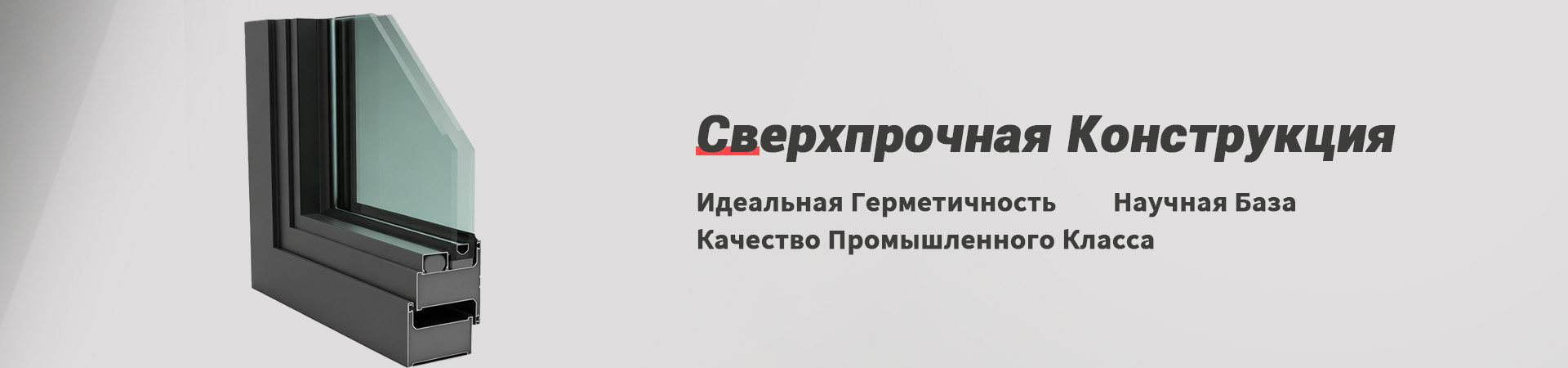
From a technical point of view, these structures are complex engineering systems. They consist of a reinforced profile (most often steel or aluminum with a thermal break), special fire-resistant glass (laminated with gel filler or monolithic ceramic) and fittings that can withstand thermal deformation without destruction. When heated to critical temperatures, the glass can become cloudy (in the case of gel systems), blocking thermal radiation, which is the main cause of ignition of objects on the other side of the partition.
For a business owner, installing such windows is not just a bureaucratic requirement of supervisory authorities. These are:
- Reduced insurance premiums:Many insurance companies are revising rates for properties with an increased fire safety class.
- Asset protection:safety of expensive equipment, servers and inventory in adjacent premises.
- Legal security:absence of risks of suspension of the enterprise’s activities due to the instructions of the State Fire Supervision Authority (GPN).
The 2026 market shows a clear trend toward the integration of “smart” systems for monitoring the condition of fire structures, which requires the supplier not just to sell “glass in a frame,” but to provide a comprehensive technical solution.
Classification and technical characteristics: how to read the markings
When forming a technical specification (TOR) for a purchase, it is necessary to clearly understand the difference in markings. An error in choosing a fire resistance class can lead to refusal to accept the object or, worse, to the ineffectiveness of the design in a real emergency. The main parameters regulated by GOST 30247.0-94 and international standards (EN 13501-2) include the fire resistance limit.
Fire resistance limits (EI)
The marking consists of letters and numbers, where the letters indicate normalized signs of loss of load-bearing capacity, and the numbers indicate time in minutes:
- E (Integrity):the structure maintains its integrity without forming through cracks or holes through which flames or combustion products penetrate.
- I (Insulation/Thermal Insulation):the design prevents the unheated surface from heating up to critical temperatures (on average +140°C). This protects people and materials from thermal shock.
- W (Radiation):limitation of heat flux density. Important for panoramic glazing, where it is important to maintain transparency and reduce the risk of fire from radiation.
The most popular classes for commercial properties:
| Fire resistance class | Resistance time (min) | Typical Application | Design Features |
|---|---|---|---|
| EI 15 | 15 minutes | Internal partitions of offices, small shops | Single-chamber double-glazed windows with a thin layer of gel, lightweight profile |
| EI 30 | 30 minutes | Corridors, staircases, atriums of the shopping center | Double-chamber packages, steel or reinforced aluminum profile |
| EI 45 | 45 minutes | High-rise buildings, server rooms, archives | Reinforced steel profile, multi-layer glazing (up to 30-40 mm) |
| EI 60 | 60 minutes | Industrial workshops, warehouses with flammable liquids, high-rise facades | Solid steel structures, ceramic glass or thick gel packs |
It is important to note: the higher the fire resistance class, the heavier and thicker the structure. For example, an EI 60 window may have a profile thickness of more than 80 mm and a glass unit weight of more than 60 kg/m², which requires reinforced hinges and foundation fastenings.
Profile materials: steel vs aluminum
The choice of frame material directly affects price and durability. Steel profiles traditionally provide better rigidity at high temperatures, as steel loses strength more slowly than aluminum. However, modern aluminum systems with thermal break and internal reinforcement with steel liners compete successfully in the EI 30 and EI 45 segments, offering better corrosion resistance and aesthetics. For facade glazing, where visual lightness is important, aluminum remains the only choice, but requires careful calculation of static loads.
Where Fire Resistant Windows Are Used in Commercial Buildings: Industry Scenarios
Applicationfireproof windows for commercial buildingsdictated not only by norms, but also by the specifics of business processes. Let's look at three real cases from 2025-2026, illustrating the importance of correct selection.
Scenario 1: Class A shopping and entertainment center (TC)
Task:Glazing of the atrium and separation of shopping galleries from food court areas. High demands on aesthetics and light transmission.
Solution:Use of aluminum fireproof stained glass windows of class EI 45. The food court is a high-risk area due to the presence of open fire and grease fumes. The windows here act as smoke barriers.
Engineering nuance:In areas with high humidity and temperature changes (restaurant kitchens), standard gel fillers may separate or become cloudy over time. Here it is recommended to use bimetallic profiles with improved sealing of the edges of the glass unit or switch to monoceramic glass if the budget allows. The cost of such a solution is 30% higher, but the service life increases from 10 to 25 years without loss of transparency.
Scenario 2: Logistics park and warehouse complexes
Task:Separation of warehouse areas of storage class B2 (combustible materials) from administrative and amenity blocks (ASB).
Solution:Steel fire resistant windows EI 60 with limited light transmission. The administrative block must be protected from the rapid spread of fire from the warehouse.
Economy:In a facility with an area of 10,000 m², the installation of ordinary windows is prohibited. The installation of 15 EI 60 structures measuring 1.5x1.5 m cost the customer 2.4 million rubles (factory prices). A similar offer from a dealer with turnkey installation was 3.1 million rubles. The savings are aimed at installing an additional gas fire extinguishing system in the server room.
Scenario 3: Open Space Business Center
Task:Zoning meeting rooms and server rooms inside a large floor without burdening the interior with massive walls.
Solution:Thin-profile EI 30 systems. They are visually perceived as ordinary office partitions, but are certified as fire barriers.
Problem:Often architects forget to take into account the weight of the sashes. Wide swing doors in such systems require closers with an anti-panic function and reinforced hinges that can withstand cyclic loads. An error in the selection of fittings leads to sagging of the sashes after just six months of operation, which violates the tightness of the sealing contour and reduces the fire resistance class to the nominal one.
How to choose a supplier: criteria for assessing plant reliability
The market for fire protection structures in Russia and the CIS is heterogeneous. There is a difference between companies that simply assemble windows from purchased components and those that have their own profile production and conduct fire tests. When choosing a partner for deliveryfireproof windows for commercial buildingsshould be guided by the following E-E-A-T criteria (Experience, Expertise, Authority, Reliability).
- Availability of valid certificates of conformity:Request copies of certificates for specific types of structures (not just glass or profiles, but prefabricated products). Check their status in the RosAccreditation register. The validity period of the certificate is usually 3-5 years. If the certificate expires in the coming months, there is a risk that the manufacturer does not plan to renew it.
- Own laboratory base or partnership with research institutes:Serious factories regularly conduct full-scale fire tests. The presence of test reports showing the heating dynamics and behavior of the structure indicates a high level of quality control.
- Technical support at the design stage:The supplier must provide connections between windows and building structures (connections to concrete, brick, plasterboard). The lack of detailed drawings of components leads to errors by installers and loss of tightness.
- Logistics capabilities:Fire glass is fragile and heavy. The fact that the plant has its own fleet of vehicles with equipped trailers (“pyramids”) reduces damage during transportation to a minimum. When sending by transport companies, the risk of damage increases to 5-7%, which delays the delivery time of the object.
Engineering advice:Do not hesitate to request a reference list of objects put into operation 3-5 years ago. Contact the chief engineers of these facilities and inquire about operational problems. Real experience of use will tell more than any presentation.
Chongqing Huaxia Windows and Doors LLC: an industrial approach to glazing safety
In the context of searching for a reliable manufacturer capable of providing stable quality of complex metal structures, the company’s experience attracts special attentionChongqing Huaxia Windows and Doors Co., Ltd.. As a Russian legal entity within the framework of a strategic merger with Chongqing Huaxia Steel Structures LLC, the company is based in the largest industrial center of China - Chongqing. This geographic and industrial background allows us to implement a unique business model that combines energy efficiency in construction with intelligent manufacturing in heavy industry.
For the commercial real estate sector, Chongqing Huaxia's key advantage is its specialization in products that have been tested under extreme conditions. The company is focused on the global market and creates products designed for harsh climates and aggressive industrial environments. This directly correlates with the requirements for fireproof windows: if the profile and fittings are able to withstand extreme loads and temperature changes in industrial areas, their reliability in fire conditions increases many times over.
The company's production base combines the competencies of two specialized enterprises: one in the field of structural metal structures, the other in the field of heavy engineering. This provides a full cycle of metal processing: from design and cutting to welding, painting and final assembly. Strict quality control at all stages (incoming control of raw materials, operational control of parameters, output control of finished products) ensures that each window meets the declared fire resistance characteristics.
The company's product range includes energy-efficient window and door systems made of colored steel (series 60, 75, 120) and painted steel windows with poured thermal insulation (series 50). These solutions are developed using advanced thermal break technologies and multi-circuit seals. While the primary focus is often on energy efficiency, the technology used to create airtight and durable steel frames is ideally suited to fire safety needs. The reinforced steel profiles used in the 75 and 120 series provide an excellent basis for EI 45 and EI 60 fire barriers, providing the necessary rigidity and heat resistance that standard aluminum systems often lack.
The supply geography of Chongqing Huaxia Windows and Doors LLC covers the CIS countries, the Middle East and Eastern Europe. The company is actively involved in projects for the reconstruction of buildings and the construction of prefabricated facilities, where the requirements for speed of delivery and reliability of structures are critically high. A service policy built on the principles of prompt response and technical support makes the company an attractive partner for large development projects that require flexible adaptation to the specifics of regional requirements.
Price range and cost formation factors in 2026
Costfireproof windows for commercial buildingsvaries widely. A direct relationship is observed between the fire resistance class, the type of glazing and the profile material. Below is an approximate price analysis “from the factory” (excluding installation and logistics) for the current period.
Pricing structure
The price of the finished product consists of:
- Profile system (30-40%):Steel is cheaper than aluminum, but more difficult to process. Premium aluminum thermal breaks are more expensive.
- Fire resistant glass (40-50%):The most expensive component. The price depends on the area, number of layers and type of filler. Ceramic glass is 2-3 times more expensive than gel glass.
- Fittings and components (10-15%):Fire-resistant seals (intumescent tapes), special handles, closers.
- Certification and overhead (10%):Depreciation of testing equipment, laboratory work.
Average market prices (RUB/m²)
| Construction type | Fire resistance class | Profile material | Factory price (RUB/m²) | Retail price with installation (RUB/m²) |
|---|---|---|---|---|
| Fixed window | EI 30 | Steel | 18,000 – 22,000 | 28,000 – 35,000 |
| Fixed window | EI 45 | Aluminum + Steel | 25,000 – 32,000 | 38,000 – 48,000 |
| Hinged door/window | EI 30 | Steel | 24,000 – 29,000 | 35,000 – 45,000 |
| Panoramic glazing | EI 60 | Reinforced steel | 45,000 – 60,000+ | 65,000 – 85,000+ |
What influences the price increase?
- Custom sizes:Double-glazed windows with a width of more than 1.5 m require the use of thicker glass (10-12 mm instead of 6 mm) to maintain rigidity, which sharply increases the price.
- Cover color:Powder coating in RAL colors is included in the base price, but textured coatings or anodizing of aluminum add 10-15% to the price of the profile.
- Production time:The standard production cycle is 15-20 working days. Urgent orders (less than 10 days) are charged with a 20-30% surcharge due to the need to rebuild the production line.
Logistics, installation and service
Even a perfectly manufactured window may fail a fire inspector's inspection if it is not installed correctly. Installation of fire protection structures is regulated by SP 484.1311500.2020 and requires qualified specialists.
Key installation requirements
The main rule: the fire barrier must be integral with the building structure. The gaps between the window frame and the wall opening should not exceed 10-20 mm. They are filled not with ordinary polyurethane foam, but with special fire-resistant materials:
- Fire retardant mastic;
- High density mineral wool boards;
- Fire retardant foam (with index EI).
The use of conventional polyurethane sealant is unacceptable - it melts at 200°C, creating a channel for smoke to penetrate.
Operation and maintenance
Fireproof windows require regular maintenance. Intumescent tapes (which swell when heated) may lose elasticity over time. It is recommended to carry out an inspection every 6 months:
- Checking the integrity of the glass (no chips, cracks, clouding).
- Checking the operation of the fittings (ease of opening, tightness of pressure).
- Visual inspection of sealing contours.
The absence of a maintenance report may be the basis for fines when checking the State Fire Registration Number. Many manufacturing plants offer service contracts, which removes this problem from the building balance holder.
Comparison of glazing technologies: Gel vs Ceramic vs Laminated glass
When choosingfireproof windows for commercial buildingsA dilemma often arises: what type of fire-resistant glass to choose? Let's compare the three main technologies available on the market in 2026.
| Parameter | Gel filling (Intumescent Gel) | Mono-ceramic glass (Ceramic) | Layered Silicate |
|---|---|---|---|
| Operating principle | The gel foams when heated, forming an opaque insulating coke | Special glass-ceramic sheet, resistant to thermal shock | Alternating layers of glass and transparent fire retardant layers |
| Transparency | High in normal condition, becomes dull in a fire | Constantly high, does not become cloudy | High, possible slight yellowing over time |
| Thermal insulation (I) | Excellent (class EI) | Weak (often only class E, requires additions) | Good (class EI) |
| Weight | Medium/High | Low (thin sheets 5-6 mm) | Very high (thick bags) |
| Cost | Average | High | Medium-high |
| Disadvantages | Sensitivity to UV (may turn yellow in the sun), risk of delamination | Does not block thermal radiation without additional coatings | Large thickness, difficulty processing large formats |
| Recommendation | For internal partitions, offices, corridors | For facades, shop windows, where visibility and light weight are important | For rooms with high insulation requirements |
Engineering opinion:For most indoor commercial premises, gel double-glazed windows remain the best choice in terms of price/quality ratio. However, if the window faces the sunny south, there is a high risk of gel degradation under the influence of ultraviolet radiation. In such cases, it is necessary to use double-glazed windows with a UV-protective outer sheet or switch to multi-layer silicate systems. Ceramic is ideal for large areas of glazing, where the weight of the structure is critical, but remember that it does not hold temperature well - it will be hot next to such a window in a fire.
Typical mistakes when ordering and installing
An analysis of complaints over the past 3 years has revealed a number of system errors made by customers and contractors. Avoiding these pitfalls will save you time and money.
- Ignoring wind loads:On the upper floors of high-rise buildings, the wind load is significant. A standard fire profile may not withstand the pressure, which will lead to the glass unit falling out before the fire. Static calculation required.
- Incompatibility of related materials:Installation of plastic slopes next to the fire window. When heated, the plastic will melt and release toxic smoke, reducing the safety of the window. Slopes must be made of non-combustible materials (gypsum plasterboard, plaster).
- Error in determining the opening side:Fire doors and windows must be opened frequently during an evacuation. Incorrectly hanging the doors can block the exit for panicked people.
- Savings on seals:Replacement of branded intumescent tapes with cheap analogues. When heated, cheap tape does not swell properly, leaving gaps for smoke.
FAQ: Frequently asked questions about fireproof windows
Is it possible to install fireproof windows in a residential building?
Yes, this is required for glazing balconies and loggias if they are part of escape routes, as well as for apartment windows facing common staircases in modern high-rise residential complexes. However, most oftenfireproof windows for commercial buildingsdiffer in design from their residential counterparts.
How long do fireproof windows last?
The service life depends on the type of glass. For gel systems, the average period of guaranteed operation without clouding is 10-15 years. Ceramic glass lasts 25 years or more. When properly coated, a metal profile lasts up to 50 years.
Does window size affect fire resistance class?
Yes. Certification is carried out for specific maximum sizes. If you order a window wider or higher than specified in the certificate, its fire resistance class is considered unconfirmed. Larger areas require individual fire testing or the use of modular assembly.
Is it possible to paint fireproof windows?
Repainting the profile yourself is strictly prohibited. Any thermal effects or the use of aggressive solvents can damage the metal structure or damage the sealing contours. Repairs to the coating should only be carried out by specialists from the manufacturer.
How to check the quality of a window upon acceptance?
Check for markings on each glass unit (usually in the corner, indelible seal). Request a product passport and a copy of the certificate of conformity. Visually evaluate the quality of the profile welds and the uniformity of sealant application.
Conclusion and recommendations for purchasing
Selection and installationfireproof windows for commercial buildingsis an investment in business continuity and people safety. With regulations tightening in 2026, the “buy the cheapest” approach becomes risky. The market offers mature technological solutions that combine a high degree of protection with the aesthetics of modern architectural design.
Key takeaways for the buyer:
- Always require certificates for the finished product, not for components.
- Consider the total cost of ownership (price + installation + maintenance), not just the price of the box.
- Work directly with manufacturing plants to get the best prices and technical support.
- Pay attention to logistics: broken glass during delivery is the most common reason for missed deadlines.
If you are planning to equip a new facility or modernize an existing one, we recommend starting with an audit of project documentation. Our engineers are ready to provide a free preliminary cost estimatefireproof windows for commercial buildingsand offer the optimal configuration for your budget.
Ready to discuss your project?
Receive a customized quote and technical consultation today.
→Contact sales department | Download product catalog 2026


