



Fireproof windows for high-rise buildings: prices from the factory
2026-08-14
- Fireproof windows for high-rise buildings: standards, prices and technical requirements 2026
- Regulatory base and fire resistance classes of window blocks
- Design features: profile and glazing
- Factors in determining the price of fireproof windows
- Specific application in high-rise construction
- How to choose a reliable supplier: checklist for the buyer
- Typical mistakes during design and installation
- Comparison: Domestic manufacturers vs Imported analogues
- FAQ: Frequently asked questions about fireproof windows
- Logistics and export opportunities
- Conclusion and recommendations for purchasing
Fireproof windows for high-rise buildings: standards, prices and technical requirements 2026
Fireproof windows for high-rise buildingsare specialized translucent structures designed to provide fire resistance (EI) of 30 to 120 minutes under extreme thermal conditions. Unlike standard glazing, such systems prevent the spread of flame, smoke and critical heat radiation between floors or rooms, maintaining the structural integrity of the frame and glass unit at temperatures above 900°C. For developers and designers of high-rise buildings (over 75 meters), the choice of certified solutions is not just a matter of comfort, but a strict requirement of SP 2.13130.2020 and international safety standards.
The cost of such structures varies depending on the fire resistance class, the type of profile system (steel, aluminum with thermal insulation) and the complexity of the multi-layer glazing. Direct deliveries from the manufacturing plant allow you to reduce the price by 15–25% by eliminating intermediary markups and optimizing the logistics of large cargo. In this material, we will analyze in detail how prices are formed, what technical parameters are critical for high-rise construction in 2026, and how to avoid mistakes when purchasing industrial lots.
Regulatory base and fire resistance classes of window blocks
When designing high-rise buildings, the key factor is the time that the structure can withstand fire without losing load-bearing capacity and airtightness. In the Russian Federation and the EAEU countries, the basic requirements are regulated by Federal Law No. 123-FZ “Technical Regulations on Fire Safety Requirements” and the set of rules SP 2.13130.2020. The following limit states are established for window units:
- E (Integrity):the ability of the structure to prevent the formation of through cracks or holes through which combustion products or flames penetrate.
- I (Thermal insulation):limiting the temperature increase on an unheated surface to critical values (on average no more than 140°C at any point except the edges).
- W (Radiation):reducing the heat flux density to a safe level (less than 5 kW/m²), which prevents the ignition of materials on adjacent floors or inside the room.
Forfireproof windows for high-rise buildingsthe most popular classes are EIW-30, EIW-45 and EIW-60. In particularly critical units, such as atriums, elevator shafts or evacuation staircases, blocks with index EI-90 and EI-120 can be used. It is important to understand that achieving class I (thermal insulation) requires the use of special multi-layer double-glazed windows with fire-retardant gel layers, which foam when heated, creating an opaque heat-insulating screen.
In 2026, the requirements for product certification for objects with a height of more than 100 meters were tightened. It is now mandatory to have test reports carried out in accredited laboratories, simulating real wind loads typical of high-rise buildings. The window must remain airtight not only during a static fire, but also under dynamic loads caused by pressure drops (“pipe effect”) in the high-rise shaft of the building.
Design features: profile and glazing
The architecture of a fire-resistant window is fundamentally different from its civilian counterpart. The main load in case of fire falls on the profile system and fastening units. Let's consider two main types of structures used in industrial and civil high-rise construction.
Powder coated steel profiles
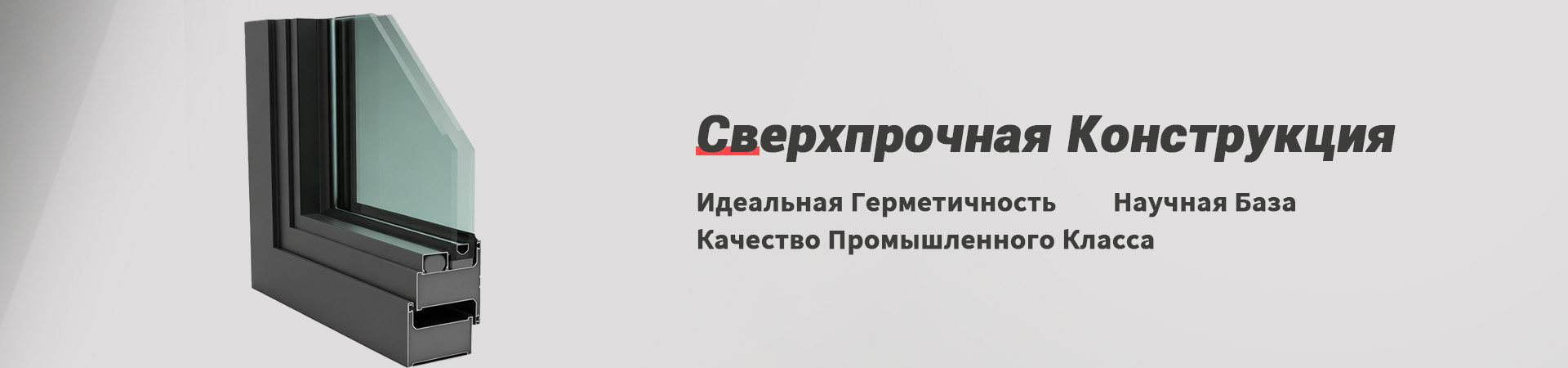
Steel remains the standard of reliability for fire resistance classes above EI-60. Steel profiles have a low coefficient of thermal expansion compared to aluminum, which minimizes the risk of frame deformation and glass unit falling out in the first minutes of a fire. Modern factory solutions use a cold-formed steel profile of complex cross-section, filled with non-flammable high-density mineral wool boards.
Advantages of steel systems:
- High structural rigidity, allowing the installation of large-format double-glazed windows (up to 2.5 x 3.5 m) without additional imposts.
- Geometry stability when heated to 800–900°C.
- Possibility of integration into facade systems of any type.
However, steel has a high thermal conductivity when cold, so energy-efficient high-rise buildings require complex thermal breaks. This increases the cost of the product, but ensures compliance with thermal resistance standards (R₀ ≥ 0.5 m² °C/W for climatic zones of the Russian Federation).
It is in the segment of energy-efficient steel systems that the experience of companies combining the competencies of structural glazing and heavy engineering stands out. For example,Chongqing Huaxia Windows and Doors Co., Ltd., operating under a strategic partnership with a manufacturing association in Chongqing, implements a dual business model combining energy efficiency in construction and smart manufacturing in heavy industry. Using advanced thermal break technologies and multi-circuit seals, their steel window systems (60, 75, 120 series) demonstrate high resistance to wind loads and extreme temperature changes, which is critical for high-rise buildings in harsh climates.
Aluminum systems with thermal break
Aluminumfireproof windows for high-rise buildingspopular due to their lightness and aesthetics. The key element here is the glass fiber reinforced polyamide thermal break. In fire-resistant versions, special expanding liners are often inserted inside the thermal break, which are activated at a temperature of 150–200 ° C, sealing the structure and preventing heat transfer from the outer shell of the profile to the inner one.
Aluminum systems are optimal for classes EI-30 and EI-45. To achieve EI-60 and above, the use of reinforced profiles and combined solutions is required. An important aspect is the quality of the corner joints: in mass production, injection molding methods or mechanical jointing are used using high-temperature sealants that can withstand prolonged heating.
Specialized fire-resistant glass
The heart of any such design is a double-glazed window. Regular tempered glass shatters when subjected to thermal shock, which is why multilayer composites are used. The structure of a typical fire-resistant double-glazed window includes:
- Outer sheets:tempered glass or triplex, providing impact resistance and initial protection.
- Fire retardant layers:transparent gel layers based on sodium or potassium silicates. When heated, the gel dehydrates, turning into a solid white foam. This process is endothermic (absorbs heat) and creates a barrier several centimeters thick.
- Distance frames:made of stainless steel with a reduced heat transfer coefficient, filled with a desiccant resistant to high temperatures.
Engineering observation shows that the quality of sealing of the ends of a double-glazed window is a weak point for unscrupulous manufacturers. If moisture penetrates the gel layer, freezing or heating may cause clouding or delamination before a fire occurs. Therefore, when accepting a batch, it is necessary to check the certificates for each type of glass and sealant used.
Factors in determining the price of fireproof windows
Request "fireproof windows for high-rise buildings prices» often leads to a range of values from 40,000 to 150,000 rubles per square meter and above. This variability is due to many technical and logistical parameters. Understanding the cost structure helps the customer to correctly compare commercial offers and avoid hidden fees at the installation stage.
| Cost factor | Impact on price | Engineer's comment |
|---|---|---|
| Fire resistance class (EI) | High | The transition from EI-30 to EI-60 increases the thickness of the glass unit from 25 mm to 50–60 mm and requires a more massive profile. Price increase ~30-40%. |
| Type of profile system | Average | Steel is more expensive than aluminum as a raw material, but aluminum requires complex thermal breaks. The final price is comparable, but the steel is more durable at ultra-high temperatures. |
| Block size | High | Non-standard sizes (more than 2.5 m in height) require strengthening of the imposts and the use of thicker glass (8–10 mm instead of 6 mm), which sharply increases the cost of the product. |
| Accessories and mechanisms | Average | Fire windows are often equipped with automatic drives for smoke removal. Servo drives with thermal break and backup power are much more expensive than manual fittings. |
| Certification and testing | Low (in unit), but high in project | The cost of the tests themselves is included in the manufacturer's margin. Buying from a factory with a valid certificate is cheaper than individual batch certification. |
| Logistics and installation | High for high-rises | Delivery of large-sized double-glazed windows to heights requires the use of cranes and climbing work, which can amount to up to 20% of the estimate. |
In 2026, there is a tendency for raw materials for fire-retardant gels to become more expensive due to changes in the logistics supply chains of chemical components. However, Russian factories and international partners, such as production lines in Chongqing, are localizing the production of analogues and optimizing supply chains, which stabilizes prices for domestic customers. When calculating the budget, it is important to take into account not only the cost of the window itself, but also the cost of the units adjacent to the facade, which must also have the appropriate fire resistance class.
Specific application in high-rise construction
High-rise buildings (over 75 meters) present a unique environment in terms of fire dynamics. There are effects here that are absent in low-rise buildings.Fireproof windows for high-rise buildingsmust solve three critical problems:
1. Preventing vertical spread of fire
When conventional glazing on the lower floor is destroyed, a draft occurs that pulls the flame along the facade to the upper floors. Fire-resistant windows maintain integrity by breaking this chain. Calculations show that keeping windows sealed during the first 30 minutes of a fire reduces the likelihood of upper floors being involved in the combustion zone by 85%.
2. Smoke and heat control (Smoke Control)
In high-rise atriums and corridors, windows often serve as natural smoke removal. They are equipped with electric drives that open the doors when receiving a signal from the fire alarm system. It is important that the opening mechanism remains operational even if the frame is deformed. For this purpose, systems with a power reserve and heat-resistant power cables are used.
3. Heat radiation protection
Even if the flames do not penetrate the interior, powerful heat radiation from the burning façade of a nearby building or an internal fire can cause curtains, furniture and trim to catch fire. Class W windows (or full EIW) cut off this flow. For office centers, this is critical, as it allows you to preserve property and gives time to evacuate staff without panic caused by the heat.
Engineering nuance:When installed at heights above 100 meters, wind loads reach significant values. The profile system must undergo double tests: for fire resistance and for resistance to wind loads (often up to 2000 Pa and above). Not all certified fire windows can withstand such wind conditions without additional reinforcement. Manufacturers with experience in heavy engineering, such as the partners of Chongqing Huaxia LLC, have an advantage due to strict quality control of metal and welds at all stages of production.
How to choose a reliable supplier: checklist for the buyer
The market is oversaturated with offers, but not all manufacturers have real competencies for the production of high-altitude systems. An error in choosing a supplier can lead to the object’s refusal to be handed over to State Fire Inspectorate or, worse, to a tragedy during operation. Use the following verification algorithm:
- Checking the certificate of conformity:Request a copy of the certificate and check its status in the RosAccreditation register. Please note the scope of application: some certificates are only valid for residential buildings up to 28 meters. For high-rise buildings, you need a certificate confirming tests under the full program for public and industrial buildings.
- Availability of own test reports:The plant must provide test reports for specific series of profiles and double-glazed windows that you plan to purchase. If you are offered an “analogue”, demand proof of their equivalence.
- Production capacity:Visit the production facility or request a video tour. The presence of a double-glazed window assembly line with control of humidity and quality of gel application is mandatory. Handicraft assembly is unacceptable. It is important to evaluate the possibility of a full cycle of metal processing - from cutting to final assembly, which guarantees the stability of the product geometry.
- Experience in implementing high-rise projects:Ask for a reference sheet with objects above 50 meters. Contact the general contractors of these facilities and clarify issues of interaction with technical supervision when handing over the windows.
- Warranty:The standard warranty for fire windows is 1–2 years, but some factories give up to 5 years for double-glazed windows with gel, subject to proper storage and installation. Check the conditions for replacing clouded glass.
You should not choose a supplier solely based on a low price. Dumping is often achieved by using thinner glass, skimping on gel quality, or simplifying the profile system. In the long term, replacing a defective batch at the height of the 30th floor will cost tens of times more than the initial savings.
Typical mistakes during design and installation
Even the best quality window may not work if it is not properly integrated into the building structure. Analysis of fire protection system failures over the past 5 years reveals the following recurring problems:
1. Violation of junction nodes.
The gap between the window frame and the wall opening must be filled with non-flammable material (high-density mineral wool) and sealed with fire-retardant mastic or sealant. The use of polyurethane foam (even “fire-resistant”) without additional protection with facing materials is unacceptable, since the foam loses its properties during prolonged heating and is destroyed.
2. Ignoring thermal expansions.
In high-rise buildings, temperature differences between winter and summer lead to significant linear expansion of the façade. If the window is rigidly fixed without compensating gaps, seasonal deformations can break the tightness of the glass unit or cause cracks in the frame. The design must include sliding fasteners.
3. The fittings do not match the weight of the sash.
Fire-resistant double-glazed windows are much heavier than regular ones (weight can reach 60–80 kg/m²). Standard window fittings quickly fail, leading to sashes sagging and the inability to close them tightly. It is necessary to use reinforced hinges and locking mechanisms designed for increased loads.
4. Lack of automation maintenance.
Windows with electric drives require regular testing (at least 2 times a year). Practice shows that in 30% of cases, at the time of inspection by the Ministry of Emergency Situations, the drives turn out to be faulty due to discharge of batteries or oxidation of contacts. The contract with the supplier should include a clause on service or training of customer personnel.
Comparison: Domestic manufacturers vs Imported analogues
Until 2022, the market for premium high-rise solutions was focused on European brands. In 2026 the situation has changed. Russian factories and companies with localized international production not only replaced imports, but also surpassed them in a number of parameters by adapting to local climatic and regulatory conditions.
| Parameter | Russian factories and localized production (RF/CN) | Imported analogues (EU) |
|---|---|---|
| Price | 20–35% lower | High (logistics, exchange rate differences) |
| Delivery times | 4–6 weeks | 3–6 months (complex logistics) |
| GOST/SP compliance | Complete, out of the box | Requires additional adaptation and testing |
| Service and spare parts | Fast availability, Russian-language support | Challenging, long supply chains |
| Manufacturability | High (licensed and own developments) | High (traditional leadership) |
| Flexibility of customization | High (readiness for non-standard projects) | Low (standardized solutions) |
For most projects in the Russian Federation and CIS countries, the choice in favor of manufacturers with a flexible production system is economically and technically justified. Companies such as Chongqing Huaxia Windows and Doors LLC offer products adapted to both Russian GOST and international standards (EN, UL), which is especially important for export projects or projects with mixed financing. The key advantage is the ability to quickly make changes to the project at the approval stage and the manufacturer’s quick response to the designers’ requests.
FAQ: Frequently asked questions about fireproof windows
Q: Is it possible to install fireproof windows in a private high-rise building?
A: Yes, the law does not prohibit the use of such structures in individual housing construction. Moreover, for houses with a height of more than 3 floors, this is recommended as an increased safety measure. However, the cost will be significantly higher than conventional PVC windows.
Q: Do fire-resistant glass become cloudy over time?
A: Modern high-quality gels are stable and do not become cloudy if the production technology is followed and there is no direct long-term exposure to UV radiation (if the glass does not have a UV protective coating). The service life of high-quality double-glazed windows is 15–20 years. Cloudiness is a warranty issue.
Q: Does fire rating affect light transmission?
A: Yes. The higher the fire resistance class (more layers of gel), the lower the light transmission. EI-30 windows allow about 75–80% light to pass through, while EI-60 and EI-90 windows can only transmit 60–70%. This must be taken into account when calculating the insolation of premises.
Q: Is it necessary to replace windows after a small fire?
A: Absolutely yes. Even if the structure is not visually damaged, the thermal effect could change the structure of the metal, destroy the internal connections in the glass unit and deform the seals. Such windows lose their protective properties and must be completely replaced.
Q: How to check the qualityfireproof windows for high-rise buildingsupon acceptance?
A: Check the markings on each product (there must be a permanent sticker with the fire resistance class and date of manufacture). Request a quality certificate for the batch. Visually inspect the ends of the glass units for leaks of sealant and damage to the spacer frame.
Logistics and export opportunities
The supply of large fire-resistant structures to high-rise construction sites requires careful logistics. Double-glazed windows weighing more than 500 kg require special fastenings during transportation that eliminate vibration loads. The manufacturing plant is required to provide slinging diagrams and recommendations for unloading.
The geography of supplies of modern market leaders covers the CIS countries, the Middle East and Eastern Europe. For international projects, Russian legal entities with production bases in China, such as Chongqing Huaxia Windows and Doors LLC, offer products certified to international standards. Export batches undergo additional quality control of packaging, since long sea transportation is associated with changes in humidity and temperature. Organization of turnkey delivery, including customs clearance and cargo insurance, minimizes risks for the developer.
When ordering a batch, it is important to include a time reserve for production. The production of fire-resistant double-glazed windows is a technologically complex process that requires time for polymerization of sealants and stabilization of gel layers. Rush orders (less than 3 weeks) are possible due to flexible production lines, but may incur increased costs due to production schedule changes.
Conclusion and recommendations for purchasing
Choicefireproof windows for high-rise buildingsis an investment in the safety of people and the safety of assets. In the conditions of 2026, the market offers competitive solutions that are not inferior to global analogues in quality, but benefit in price and delivery speed. The key to the success of the project is the early involvement of the manufacturer in the design process, which allows optimizing the abutments and avoiding costly rework on the construction site.
Do not risk the reputation and safety of the facility by choosing unverified intermediaries. Work directly with factories that have their own laboratory facilities, experience in implementing high-rise projects and integration with heavy machinery to ensure the highest precision of metal structures. This guarantees not only compliance with standards, but also the actual performance of the system in a critical situation.
To receive a detailed calculation of the cost of your project, technical advice on the selection of fire resistance classes, or request product samples, contact our engineers. We will prepare a commercial proposal taking into account the specifics of your high-rise building and construction time frame.
Ready to discuss your project?
Get a cost estimate and quotation
Technical specialists are ready to answer questions about integrating systems into BIM models and will provide the necessary drawings for the “P” stage.


