



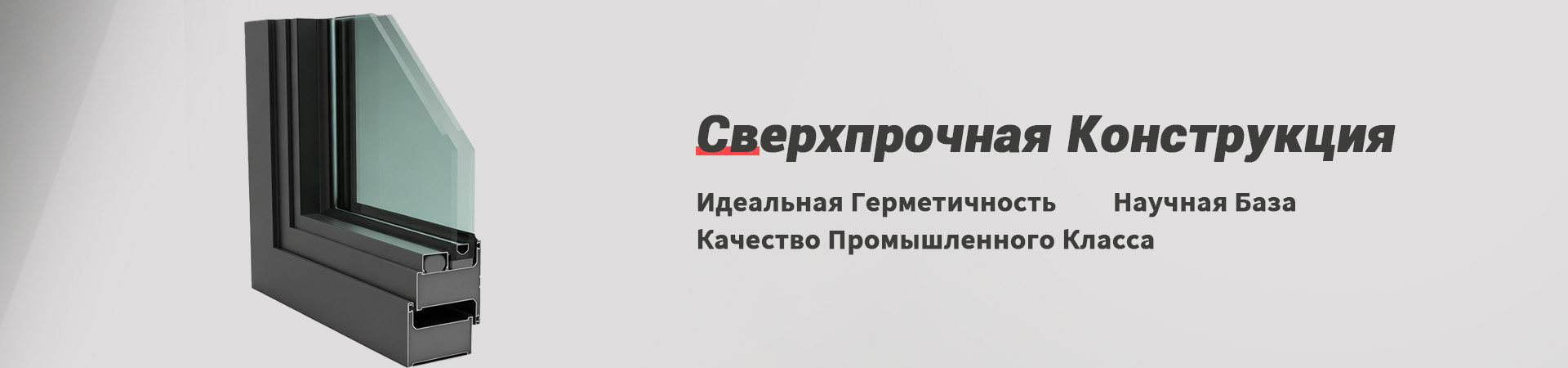
Energy saving windows and doors: buy from the manufacturer
2026-08-14
- Energy-saving windows and doors: technical overview of solutions from the manufacturer
- Physics of the process: how energy-saving windows and doors work
- Where energy efficient windows and doors are used: industry scenarios
- Specifications and selection options
- Production potential: experience of Chongqing Huaxia Windows and Doors LLC
- How to choose a supplier: reliability criteria in 2026
- Price Range and Cost Factors
- Typical mistakes when choosing and using
- Logistics and export opportunities
- Comparison of models: Standard vs Energy efficient vs Passive
- FAQ: Frequently asked questions
- Engineering view: limitations and prospects
- Why is it worth buying energy-saving windows and doors from us?
Energy-saving windows and doors: technical overview of solutions from the manufacturer
Energy saving windows and doorsare complex engineering structures designed to minimize heat loss through translucent and opaque building envelopes. In the context of the climate realities of 2026, when energy tariffs continue to rise and standards for thermal protection of buildings (SP 50.13330) become stricter, the transition to highly efficient window and door systems is no longer just a matter of comfort. This is a direct investment in the operational efficiency of the facility.
The key difference between such systems and standard analogues is not only the use of multi-chamber profiles, but also an integrated approach: the use of glass with low-emissivity i- or k-coating, filling the space between the glasses with inert gases (argon, krypton) and installing “warm” spacers. For industrial and commercial facilities, this means reducing the load on heating and air conditioning systems by up to 30–40%, which directly affects the energy efficiency class of the entire building. We, as a manufacturer, provide full control over each stage - from profile extrusion to the final assembly of the glass unit, guaranteeing compliance with the declared heat transfer coefficients (Uw).
Physics of the process: how energy-saving windows and doors work
To understand whyenergy saving windows and doorseffective, three heat transfer mechanisms must be considered: conduction, convection and radiation. Standard glazing loses heat primarily through infrared radiation from warm internal surfaces to the cold external glass. Energy-saving technologies block this process.
The role of low-e coatings
A microscopic layer of metal oxides (silver, titanium, zinc) is applied to the surface of the glass. This coating is transparent to visible light, but reflects long-wave thermal radiation back into the room. In 2026, double i-glass (soft coating) became the de facto standard, demonstrating an emissivity (ε) of 0.02–0.04, compared to 0.83 for conventional float glass. This means that more than 95% of the heat remains inside.
Gas filling and spacers
Replacing air with argon or krypton in the interglass space reduces convective heat transfer. Argon is heavier than air, it suppresses the movement of gas flows inside the chamber. However, a critical element that is often overlooked by contractors is the spacer material. The aluminum frame creates a “cold bridge”, leading to freezing of the edge zone of the glass unit and condensation. The use of polymer composite frames (warm edge) increases the temperature at the edge of the glass by 2–4°C, which radically changes the microclimate in the window area.
Where energy efficient windows and doors are used: industry scenarios
The application of these solutions ranges from private housing construction to complex industrial complexes. The effectiveness of implementation depends on the specifics of the facility’s operation.
Scenario 1: Class A logistics terminals and warehouses
Temperature stability is critical for warehouse premises, especially in order picking areas where personnel stay for a long time. Installation of industrial sectional doors and window tapes with thermal break allows you to:
- Reduce the cost of heating vast areas by 25%.
- Eliminate the formation of condensation on metal structures, which prevents corrosion and damage to the packaging of hygroscopic goods.
- Maintain the temperature in the work area not lower than +18°C even at external temperatures of -30°C without using local heat curtains of maximum power.
Scenario 2: Office centers and business parks
Here, not only heating comes to the fore, but also protection against overheating in summer (solar factor g). Modern multifunctional glasses used in ourenergy saving windows and doors, reflect excess solar energy, reducing the load on chillers and air conditioning systems. Calculations show that for a glazed facade with an area of 1000 m², savings on electricity for air conditioning can reach 150–200 thousand rubles per year.
Scenario 3: Medical and educational institutions
The requirements for acoustic comfort and absence of drafts are maximum here. The tightness of the sealing contours in combination with asymmetrical double-glazed windows provides noise insulation of up to 45–50 dB. This creates an environment that complies with SanPiN sanitary standards, without the need for additional sound insulation of the walls.
Specifications and selection options
When purchasing, it is important to rely not on marketing names, but on measured physical parameters. Below are the key metrics that we monitor in production.
| Parameter | Designation | Standard solution | Energy saving solution (Premium) | Impact on Operation |
|---|---|---|---|---|
| Window heat transfer coefficient | Uw, W/(m²°C) | 1.3 – 1.6 | 0.7 – 0.9 | The lower, the less heat loss. Uw < 1.0 is required for passive houses. |
| Heat transfer resistance | Ro, m²°C/W | 0.6 – 0.75 | 1.1 – 1.4 | The main standardized indicator in the Russian Federation. For northern regions Ro should be > 1.0. |
| Light transmission | LT, % | 80–85% | 70–75% | The slight reduction in natural light is compensated by heat retention. |
| Noise insulation | Rw, dB | 30–35 dB | 40–48 dB | Achieved through different glass thicknesses and wide chambers. |
| Gas filling | – | Air | Argon (90%) / Krypton | Argon improves Ug by 0.2–0.3 W/(m²·°C). |
Profile system: aluminum vs PVC vs Wood-Aluminium
The choice of profile material determines the durability and scope of application. For high-rise buildings and panoramic glazing, we recommend aluminum systems with thermal breaks made of polyamide. The width of the thermal insert must be at least 34 mm to ensure a high level of insulation. For the private sector and the reconstruction of historical funds, PVC profiles with a depth of 70–86 mm with closed-type reinforcement are optimal.
Engineering Note:When ordering large-format glazing (elements over 2.5 m²), it is mandatory to use glass with a thickness of 6 mm or more, or triplex, to avoid the “lens” effect and ensure structural rigidity.
Production potential: experience of Chongqing Huaxia Windows and Doors LLC
The market is oversaturated with offers, but build quality often remains a “black box” for the customer. Buyingenergy saving windows and doors, you must understand who is behind the products. Our approach is based on capacityChongqing Huaxia Windows and Doors Co., Ltd.- a Russian legal entity operating within the framework of a strategic association with the industrial giant Chongqing Huaxia Steel Structures LLC.
Based in Chongqing, one of the key industrial centers of China, we implement a unique dual business model: "Energy Efficiency in Construction + Intelligent Manufacturing in Heavy Industry". This synergy allows us to apply the quality standards of the critical engineering industry to the production of building envelopes.
Our core range includes two complementary product groups, designed to withstand harsh climates and extreme industrial environments:
- Energy efficient window and door systems:Modular colored steel windows and doors in the 60, 75 and 120 series, as well as 50 series insulated painted steel windows. These solutions use advanced thermal break technology and multi-circuit seals, providing high wind resistance and airtightness.
- Industrial metal products:Through integration with the heavy engineering industry, we also produce stainless steel water pipes, GVU manifolds and other infrastructure components, confirming our ability to work with precision metal structures.
The production base combines the capabilities of two specialized enterprises, providing a full cycle of metal processing - from design and cutting to welding, painting and finishing assembly. Strict quality control at all stages (input, operational and output) ensures that each unit of production complies not only with Russian GOSTs, but also with international reliability standards.
How to choose a supplier: reliability criteria in 2026
When choosing a partner, pay attention to the transparency of processes. In the case of Chongqing Huaxia LLC, you get:
- Component certification.Availability of valid EAC certificates for profile systems and double-glazed windows. Check whether original fittings are used (Roto, Siegenia, Maco) or equivalents. Counterfeit fittings are the main cause of breakdowns in the first 2 years of operation.
- Quality control of welding and assembly.Corner connections of PVC profiles and steel welding are performed on automatic lines with controlled heating temperature. Manual cleaning of seams is unacceptable for the premium segment.
- Laboratory tests of double-glazed windows.The manufacturer must have its own or a partner laboratory to test the tightness of the gas filling. Loss of argon over time is a real problem for low-cost manufacturers. We guarantee gas safety for a period of 25 years.
- Installation solutions.Even the best window will perform poorly if it is installed outside the thermal contour. We offer installation supervision services using steam and waterproofing tapes in accordance with GOST 30971.
Price Range and Cost Factors
Costenergy saving windows and doorsis formed not only from the glazing area. In 2026, the price structure is as follows:
- Profile system (30%):Brand, number of cameras, strength class (A, B, S).
- Double-glazed window (40%):Type of glass (i-glass, multifunctional, tempered), type of gas, width of the spacer frame.
- Accessories (15%):Safety class (RC2, RC3), micro-ventilation, hidden hinges.
- Production and logistics (15%):Complexity of lamination, non-standard shapes, delivery.
It is important to understand: an increase in the cost of a structure by 15–20% due to the introduction of energy-saving technologies pays off in 3–5 heating seasons due to energy savings. For commercial properties, the payback period is even shorter due to the scale of energy consumption.
Typical mistakes when choosing and using
An analysis of complaints over the past 5 years has revealed a number of system errors that customers and installers make.
Mistake 1: Ignoring ventilation
Sealed energy-saving windows completely cut off the natural flow of air. Without organizing mechanical supply and exhaust ventilation or installing air infiltration valves, the humidity in the room increases sharply. The result is stuffiness and the risk of mold on slopes not connected to the window.Solution:integration of windows with a smart home system or installation of automatic supply ventilation valves.
Error 2: Incorrect selection of double-glazed windows for the sunny side
Installing conventional i-glass on the southern façade without sun protection leads to a “greenhouse” effect. In summer, the room overheats, despite low heat loss in winter.Solution:the use of multifunctional glass, which works both to retain heat in winter and to reflect solar energy in summer.
Mistake 3: Saving on polyurethane foam and tapes
Using cheap PPU (polyurethane foam) without protection from UV radiation and moisture leads to its destruction after 2–3 years. The installation seam is blown out, and all the advantages of an expensive double-glazed window are negated.Solution:three-layer assembly seam according to GOST.
Logistics and export opportunities
As a manufacturer with global reach, Chongqing Huaxia Windows and Doors Co., Ltd. arranges suppliesenergy saving windows and doorsthroughout the Russian Federation, to the CIS countries, the Middle East and Eastern Europe. The specifics of transporting large-sized structures require specialized transport with pyramids for fixing glass. Each product unit is marked and packaged in protective film and corner profiles. For export deliveries, we provide full customs support and compliance with the standards of the importing country (including CE marking for European destinations, where applicable, and ST-1 for EAEU countries).
Comparison of models: Standard vs Energy efficient vs Passive
For clarity, let’s compare three standard configurations available in our catalog.
| Characteristics | Standard (Basic) | Energy efficient (Optima) | Passive House (Maximum) |
|---|---|---|---|
| Profile | PVC 60 mm, 3 chambers | PVC 70 mm, 5 chambers / Aluminum 60mm / Steel 60mm | PVC 86 mm, 7 chambers / Aluminum 80mm+ / Steel 75-120mm |
| Double-glazed window | Single chamber 24 mm, regular glass | Double chamber 40 mm, 1x i-glass, Argon | Double chamber 50 mm, 2x i-glass, Krypton, Warm frame |
| Uw (W/m²°C) | 1.4 | 0.9 | 0.75 and below |
| Price (relative) | 100% | +25% | +60% |
| Recommendation | Non-residential premises, seasonal cottages | City apartments, offices, private houses | Eco-houses, objects with high microclimate requirements |
Our recommendation:For most projects in the central zone of Russia, the “Energy Efficient” configuration is the golden mean, providing a balance between cost and comfort. The transition to the Passive House level is justified only if there is a heat recovery system.
FAQ: Frequently asked questions
1. Is it true that energy-saving glass distorts color rendition?
Modern silver-based coatings are almost invisible to the eye. A slight neutral tint (gray or bluish) may only be present when viewed from an angle in the reflection, but the transmitted light remains natural. The new generation of multifunctional glass has a color rendering coefficient Ra > 90, which meets museum standards.
2. Is it possible to install energy-efficient windows in an old foundation?
Yes, but careful measurements are required. Profiles of the 70–86 mm series are wider than old Soviet frames. It is necessary to evaluate the width of the slopes and the possibility of installing window sills. In some cases, it is necessary to dismantle part of the masonry or use expansion profiles.
3. How to check if there is argon in a double-glazed window?
Visually - nothing. When ordering, we provide a product passport indicating the parameters. In production, control is carried out by spectral analysis. In domestic conditions, an indirect sign may be the absence of condensation inside the bag during extreme temperature changes, but this is not an accurate diagnostic method.
4. Does the number of chambers in a profile affect sound insulation?
Not significant. Sound insulation depends primarily on the mass of the glass, the tightness of the rebate and the difference in the thickness of the glass in the package. A multi-chamber profile is important for thermal insulation, but for noise protection it is better to choose an asymmetrical double-glazed window (for example, 6 mm + 10 mm + 4 mm).
5. What is the service life of the seals in your windows?
We use EPDM (ethylene propylene rubber) or silicone seals. Their estimated service life is 15–20 years with annual maintenance (cleaning and lubrication with silicone grease). In aggressive industrial cuts, it is recommended to replace the seals every 7-10 years.
Engineering view: limitations and prospects
Despite its high efficiency, the technology has its limits. For example, when the glass unit is larger than 6 m², it becomes necessary to use glass with a thickness of 8–10 mm, which significantly increases the weight of the sash. This requires the installation of reinforced fittings designed for loads of up to 150–180 kg. It is also worth noting that in regions with extremely low temperatures (Yakutia, the Far North), standard two-chamber packages may require additional protection of the edge zone or the use of electrically heated glass to prevent icing.
We do not claim that our windows will solve all heating problems if the building has poor wall or roof insulation. Energy saving is a systemic task. However, replacing your windows is one of the fastest and most visible steps to improving your energy balance.
Why is it worth buying energy-saving windows and doors from us?
We don't just sell designs, we offer an engineering solution based on a philosophy of long-term partnership and technological transparency. Our experience in working with industrial and civil facilities, including import substitution projects and prefabricated structures, allows us to select the optimal configuration for specific tasks:
- Direct production and integration:The absence of intermediaries guarantees the best price and time control. The unique connection with heavy engineering ensures the highest precision of metal elements.
- Technical support:Our engineers will help you calculate heat losses and select a glass unit formula, taking into account the specifics of your region.
- Warranty:Up to 10 years for profiles and fittings, up to 5 years for installation work.
- Individuality and adaptability:Possibility of manufacturing structures of non-standard shapes, lamination in any RAL color and using burglar-resistant fittings. Our flexible production system allows us to respond quickly to urgent orders.
Don't let the cold dictate your utility bills. Invest in comfort and efficiency today.
Ready to discuss your project?
Contact our technical specialists for a detailed calculation and advice on choosing a configuration. We will prepare a commercial proposal taking into account all the nuances of your property.
See also ourtechnical solutions for industrial glazingand a catalog of entrance groups with thermal breaks.


