



Burglar-resistant windows and doors: prices from the factory
2026-08-14
- Burglar-resistant windows and doors: prices, security classes and technical specifications
- What are burglary-resistant windows and doors: an engineering approach
- Burglary resistance classes and their application in real conditions
- Structural elements: what makes up safety
- How to choose a supplier: criteria for assessing plant reliability
- Production capabilities: experience of Chongqing Huaxia Windows and Doors LLC
- Price range and cost formation factors
- Comparison of materials: Aluminum vs Steel vs PVC
- Typical errors when ordering and using
- FAQ: Frequently asked questions
- Conclusion and recommendations for purchasing
Burglar-resistant windows and doors: prices, security classes and technical specifications
Burglar-resistant windows and doorsare engineered structures designed to resist unauthorized entry for a specified period of time when certain tools are used. In the conditions of 2026, when requirements for the physical security of commercial and residential real estate in Russia and the CIS countries are becoming more stringent, the choice of such products is no longer a matter of purely aesthetics. This is a critical element of a risk management strategy. The main value of such systems lies not in “impenetrability”, but in the temporary factor: they delay the attacker long enough for the alarm to go off or for a rapid response team (RRT) to arrive.
The key difference between burglar-resistant products and standard analogues lies in the field of materials science and fittings solutions. It uses steel reinforcement of a closed section, multilayer triplex glass with polymer films of class P4A–P6B, as well as fittings with lock cylinders of a protection class of at least 3 according to European standards EN or Russian GOST. It is important for an industrial buyer to understand that the price is determined not only by the mass of the metal, but also by the complexity of integrating electronic access systems, glass break sensors and vibration sensors directly into the profile system.
This material is intended for technical directors, security managers and business owners who are planning to equip warehouses, offices, private residences or production workshops. In this article we will look at how to correctly interpret burglary resistance classes (WK1–WK6 / RC1–RC6), what hidden costs arise during installation, and why budget solutions often lead to vulnerabilities in the most unexpected places. Direct deliveries from the factory allow you to optimize the budget by 15–20%, excluding intermediary markups, but require a deep understanding of technical documentation.
What are burglary-resistant windows and doors: an engineering approach
In the security industry, the term “burglary resistance” is strictly regulated. This is not a marketing exaggeration, but the result of laboratory tests simulating the actions of a criminal.Burglar-resistant windows and doorsare tested for resistance to static load, dynamic impact and mechanical impact with hand tools (screwdrivers, crowbars, hacksaws, angle grinders).
From the point of view of the physics of the process, protection is based on three principles:
- Increased opening time:Every second of delay increases the likelihood of an intrusion being detected.
- Noise reduction:Structures are designed to minimize the acoustic effect when attempting to saw or knock out, which paradoxically requires the use of damping materials that simultaneously dampen the vibration of the tool.
- Preserving the integrity of the glazing:Even if the frame withstood the attack, ordinary glass breaks in a split second. Burglar-resistant systems use laminated glass (triplex), which, when broken, remains on the film, creating an insurmountable barrier to penetration.
It is important to note that in 2026, DIN EN 1627–1630 standards remain the basic guidelines even for manufacturers working in accordance with GOST. The classification is divided into six resistance levels (RC1–RC6). For most commercial facilities, level RC2 or RC3 is sufficient, while critical infrastructure facilities (banks, data warehouses) require RC4 and higher. The mistake of many purchasers is the desire to establish the maximum protection class everywhere, which leads to an unjustified increase in the cost of the project without a significant increase in safety in low-risk areas.
Burglary resistance classes and their application in real conditions
The choice of protection class should be based on threat analysis. Below is a detailed table of correspondence between classes, the tool used and recommended application scenarios. This data will help you avoid overpaying for redundant features.
| Class (EN/GOST) | Resistance time | Tool type | Recommended Application | Approximate cost (relative) |
|---|---|---|---|---|
| RC1 (WK1) | No standard | Physical strength (shoulder, leg) | Internal partitions, low risk areas | Basic +10% |
| RC2 (WK2) | > 3 minutes | Screwdriver, pliers, wedges | Private houses (ground floors), offices in residential areas | Basic +35% |
| RC3 (WK3) | > 5 minutes | Crowbar, second screwdriver | Shops, pharmacies, cottages in guarded villages | Basic +60% |
| RC4 (WK4) | > 10 minutes | Saw, axe, chisel, hammer | Bank branches, jewelry stores, server rooms | Basic +120% |
| RC5 (WK5) | > 15 minutes | Power tools (drill, grinder) | High-risk facilities, weapons/precious metals warehouses | Basic +250% |
| RC6 (WK6) | > 20 minutes | Powerful power tool | Military facilities, government storage facilities | Basic +400% |
Pay attention to the “Resistance time” column. This is the minimum time that a professional cracker will spend to overcome one entry point. However, in practice, if the facility is equipped with a video surveillance system with behavior analytics, even three minutes (RC2) may be enough for the private security company to respond. Therefore, the protection class must correlate with the speed of security response.
Engineering nuance: weak links
Even an RC4 rated door will become useless if it is installed in a weak wall or if the anchors are too sparsely spaced. Experience shows that 40% of successful break-ins occur not through breaking through the canvas, but through dismantling the entire structure along with the frame from the opening. Therefore, when orderingburglary-resistant windows and doorsit is necessary to require a design for the junction with building structures, indicating the type of anchors (chemical or mechanical expansion) and the step of their installation.
Structural elements: what makes up safety
For a product to truly meet its stated class, each component of the system must work as a single organism. Let's look at the key nodes.
1. Profile system and reinforcement
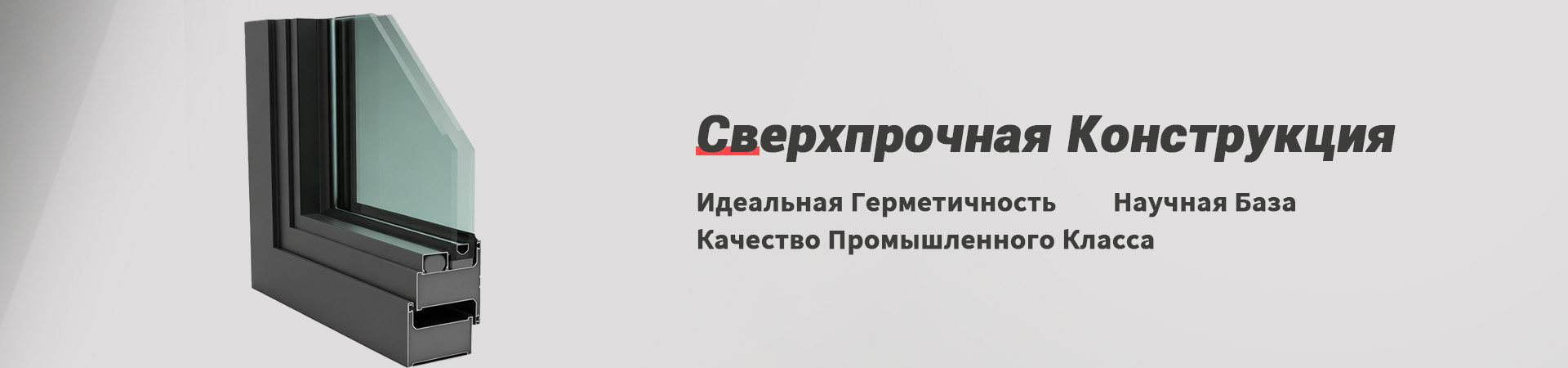
Standard PVC or aluminum profiles do not have sufficient rigidity. Burglar-resistant products use closed-section steel reinforcement with a thickness of 2 to 4 mm. In some cases (classes RC5–RC6), composite reinforcement or filling the profile with concrete-polymer mixtures is used to dampen vibrations from jackhammers. The profile width is also increased to accommodate multi-point fittings.
2. Glazing: double-glazed windows with reinforcement
Glass is the most vulnerable part. Ordinary tempered glass is not suitable here, as it shatters when struck. The following solutions are used:
- Triplex (Laminated Glass):Two or more glasses connected by durable PVB film. Upon impact, the glass cracks, but the fragments remain on the film. For class RC2, a film thickness of 0.76 mm (P1A) is required, for RC3 - 1.52 mm (P2A) and higher.
- Polycarbonate:In particularly difficult conditions, the outer glass is replaced with a sheet of transparent polycarbonate 6–12 mm thick. It is virtually invulnerable to impacts from blunt objects, but is susceptible to scratches, which may require replacement after 5-7 years of active use.
- Shockproof films:They are applied to already installed glass, but this method is less reliable than factory lamination, as it depends on the quality of adhesion and surface preparation by installers.
3. Fittings and locking mechanisms
The heart of a burglar-resistant door or window. Here they apply:
- Mushroom pins:Locking elements that cannot be pryed off with a screwdriver, as they have a specific shape and fit into the strike plate with high precision.
- Steel strikers:They are made of stainless steel with a thickness of at least 3 mm, and are fastened with through screws to the metal reinforcement of the frame.
- Anti-drilling and anti-bumping cylinders:It is necessary to have carbide pins inside the cylinder and a protective cover (socket) made of hardened steel, rotating around its axis, which prevents gripping with pliers.
How to choose a supplier: criteria for assessing plant reliability
The market is oversaturated with offers where simply reinforced structures without certification are sold under the guise of “burglary-resistant”. When choosing a partner for procurementburglary-resistant windows and doorsPay attention to the following markers of competence:
- Availability of test reports:The plant must provide copies of certificates issued by accredited laboratories. The certificate must be for a specific system (profile + fittings + glass), and not general for the enterprise.
- Own design bureau:Possibility of adapting nodes to fit your openings. Standard solutions are rarely suitable for the reconstruction of old buildings where the geometry of the openings is broken.
- Supply chain transparency:Who makes the fittings? Are components used from well-known brands (for example, Roto, Siegenia, Maco) or Chinese analogues? For classes RC3 and higher, the reliability of the fittings is critical.
- Installation experience:Burglar resistance is 50% dependent on installation. Ask if the plant has certified installation teams and whether they provide a guarantee for installation work (recommended period is 3 years or more).
Engineering Tip: Feel free to request a “sectional view” of the product in CAD or PDF format. If the manager can't provide details of reinforcement and anchor locations, that's a red flag. A professional manufacturer is always ready to share technical documentation, as he is confident in his product.
Production capabilities: experience of Chongqing Huaxia Windows and Doors LLC
Choosing a reliable manufacturer often comes down to finding a company that can combine advanced construction technology with the rigor of heavy industry. A striking example of this approach isChongqing Huaxia Windows and Doors Co., Ltd.is a Russian legal entity operating as part of a strategic association with production facilities in Chongqing, one of the key industrial centers of China.
The company implements a unique dual business model: “Energy efficiency in construction + Intelligent production in heavy industry.” This synergy makes it possible to apply quality standards accepted in mechanical engineering to the production of building envelopes. The production base combines two specialized enterprises, which provides a full cycle of metal processing: from design and laser cutting to welding, powder coating and finishing assembly. Strict quality control at all stages - from incoming control of raw materials to output control of finished products - guarantees stability of characteristics even with high volumes of orders.
The company's main product range includes energy-efficient window and door systems made of non-ferrous steel (series 60, 75, 120) and painted steel windows with poured thermal insulation of series 50. These solutions are developed using thermal break technologies and multi-circuit seals, which is especially important for operation in the harsh climatic conditions of Russia and the CIS countries. The company's specialization in products tested in extreme conditions (polar climates, aggressive industrial zones) makes its products an ideal choice for facilities where safety and durability requirements exceed standard standards.
The geography of supplies covers the CIS countries, the Middle East and Eastern Europe, and the flexible production system allows you to quickly adapt to import substitution projects and urgent requests. It is important for technical specialists that the company participated in the creation of Chinese state standards for steel windows, which confirms its leadership in the development of energy-efficient steel systems.
Price range and cost formation factors
Costburglary-resistant windows and doorsvaries widely. In 2026, the average market dynamics are as follows (prices are approximate and depend on exchange rates and logistics):
- Window RC2 (600×1400 mm):from 25,000 to 40,000 rubles. Includes a double-chamber double-glazed window with P1A film and reinforced fittings.
- Window RC3 (600×1400 mm):from 45,000 to 65,000 rubles. Double-glazed window with P2A/P3A film, additional locking points.
- Entrance door RC3 (single leaf):from 80,000 to 120,000 rub.
- Entrance door RC4:from 150,000 rub. and higher. Requires individual calculation due to the complexity of locking systems.
What affects the final price?
In addition to the protection class, the cost is affected by:
- Dimensions and shape:Non-standard shapes (arches, trapezoids) complicate the production of reinforcing elements.
- Opening type:Tilt and turn mechanisms are more complex and more expensive than blind or simply rotary ones.
- Automation integration:Installation of electromechanical locks, window drives, connection to the Smart Home system or security console.
- Color and coating:Premium profile lamination or aluminum powder coating adds 10-15% to the cost.
- Logistics:Delivery of heavy structures requires special transport and unloading equipment.
It is important to understand that saving on fittings can reduce the protection class by one or two levels. For example, replacing class 3 cylinders with class 1 makes the presence of armored glass pointless.
Comparison of materials: Aluminum vs Steel vs PVC
When choosing a frame material, a dilemma often arises. Each material has its own limitations and advantages in terms of burglary resistance.
| Parameter | Aluminum systems (Warm/Cold) | Steel doors/windows | PVC with reinforcement |
|---|---|---|---|
| Maximum protection class | RC4 (special editions) | RC6 and higher | RC3 (rarely RC4) |
| Structure weight | Medium | Very tall | Medium/High |
| Thermal insulation | High (with thermal break) | Low (requires insulation) | High |
| Aesthetics and design | Modern, minimalism, large glass areas | Industrial, massive | Classic, limited door sizes |
| Cost | High | Medium/High (depending on finish) | Most affordable |
| Service life | 40+ years | 20–30 years (risk of corrosion) | 20–25 years |
Recommendation:For facade glazing of shopping centers and office buildings, the optimal choice is aluminum systems with thermal breaks of class RC2–RC3. They provide the necessary level of security while maintaining transparency and a modern appearance. For warehouses, rear entrances and high-risk areas, steel structures such as those offered by Chongqing Huaxia LLC are preferred, which combine high strength with effective thermal insulation. PVC systems remain the best choice for private residential construction due to the balance of price, thermal efficiency and sufficient level of protection (up to RC3).
Typical errors when ordering and using
Even if you buy the right onesburglary-resistant windows and doors, their effectiveness can be reduced to zero by errors at the implementation stage.
Mistake #1: Ignoring ventilation.Often customers install sealed burglary-resistant windows and forget about fresh ventilation. This leads to stuffiness and mold. Solution: integrate supply ventilation valves into the frame with protection against penetration through them (special labyrinth grilles).
Mistake #2: Weak box.A powerful door is installed in a plasterboard partition or foam block without additional reinforcement of the opening with a steel frame. The attacker tears out the door along with a piece of the wall. Always reinforce the opening.
Mistake #3: Lack of maintenance.The mechanisms of burglar-resistant fittings are more complex than conventional ones. They need to be lubricated and adjusted at least once a year. A jammed lock can become a problem not only for the thief, but also for the owner during evacuation.
Mistake #4: A false sense of security.Installing expensive windows when the doors are open or there is no alarm. Burglary resistance works in conjunction with other measures. An RC2 class window without a break sensor gives only a 3-minute head start. If security takes 15 minutes to arrive, those 3 minutes are useless.
FAQ: Frequently asked questions
Q: Can regular windows be upgraded to burglary resistant?
A: Partially. You can replace the double-glazed windows with triplex, install overhead lockers on the handles and replace the cylinders. However, this will not increase the protection class of the frame and fittings to full RC2/RC3. A full renovation requires replacing the hardware and adding locking points, which is often comparable in cost to a new window.
Q: Do burglar-resistant windows affect fire safety?
A: Yes, this is an important point. High class structures (RC4 and above) may impede evacuation and access for firefighters. It is necessary to use systems with an “anti-panic” function (easy opening from the inside with one click) and coordinate decisions with fire supervision.
Q: How long does it take to produce?
A: Standard turnaround time for a factory is 15 to 30 business days. Complex projects with custom engineering can take up to 45 days. Urgent orders are possible, but with the risk of reducing the quality of assembly control.
Q: Is there a difference between “burglary-proof” and “bullet-proof” windows?
A: Cardinal. Bullet-resistant windows (classes Br1–Br6) are designed to absorb bullet energy and can have a thickness of 50–100 mm. Burglar-resistant windows are thinner and lighter, their task is to resist mechanical tools. Bulletproof glass is automatically burglar resistant, but the reverse is not true.
Conclusion and recommendations for purchasing
Investments inburglary-resistant windows and doorsis not just a purchase of construction materials, it is an investment in business continuity and people’s safety. In 2026, technology has made it possible to make such structures aesthetically pleasing and energy efficient, blurring the line between a “bunker” and a modern building.
When creating technical specifications, we recommend:
- Conduct a risk audit for each opening separately.
- Require the supplier to calculate the junction points.
- Do not skimp on fittings and installation.
- Integrate physical barriers with electronic security systems.
Our plant offers a full cycle of work: from engineering design and production to certified installation and service. We work with direct contracts, ensuring transparent pricing and compliance with all declared protection classes.
To receive a detailed commercial offer and consultation with an engineer for your project, please contact us. We will prepare a preliminary calculation and scheme for strengthening the openings within 24 hours.
We also recommend that you familiarize yourself with our technical solutions for industrial facilities:Industrial gates and fencing.


