



Designs for extremely cold climates from the factory
2026-08-18
- Designs for extremely cold climates: engineering solutions from the manufacturer
- What are designs for extremely cold climates and their key differences
- Where are designs for extremely cold climates used?
- Main technical characteristics and GOST requirements
- How to Select Designs for Extreme Cold Climates: Specification Guide
- Comparison of materials: Steel vs Aluminum vs Composites in the cold
- Typical mistakes in design and procurement
- Recommendations for purchasing and logistics from the factory
- Production partner: experience of Chongqing Huaxia LLC
- FAQ: Frequently asked questions about northern structures
- Conclusion: a reliable partner for your Arctic projects
Designs for extremely cold climates: engineering solutions from the manufacturer
Designs for extremely cold climates- these are specialized metal products and prefabricated units, designed taking into account the requirements for cold resistance of materials at temperatures below -60°C. Unlike standard construction solutions, such systems undergo mandatory certification for impact strength and maintain structural integrity in conditions of permafrost, strong wind loads and cyclic freeze-thaw conditions. The use of conventional steels in arctic latitudes leads to brittle fracture of the metal without visible deformations, which creates critical risks for the safety of industrial facilities.
Our factory produces certifieddesigns for extremely cold climates, complying with GOST 27751 and ISO international standards for the northern territories. We use steel grades 09G2S, 10KhNDP and imported low-temperature analogs (Grade B, C, D according to ASTM A36/A572). Each batch undergoes ultrasonic inspection of welds and impact strength tests at -60°C and -70°C. This guarantees the reliability of oil and gas rigs, warehouse complexes, modular buildings and power transmission towers in Yakutia, Norilsk, Yamal and other regions with harsh winter conditions. Direct deliveries from the manufacturer can reduce the cost of the project by 15–20% due to the optimization of logistics and the absence of intermediary markups.
What are designs for extremely cold climates and their key differences
The term “extremely cold climate” in the construction regulatory framework of the Russian Federation and international standards refers to regions where the estimated temperature of the coldest five-day period falls below -45°C, and the absolute minimum can reach -60°C...-70°C. Conventional structural steel (for example, St3sp) loses its ductility at such temperatures. Its crystal lattice goes into a brittle state, and the metal breaks like glass under minor dynamic loads - vibration of equipment, gusts of wind or thermal expansion.
Designs for extremely cold climatessolve this problem on three levels:
- Materials science:The use of low-alloy steels with the addition of nickel, copper and phosphorus, which reduce the cold brittleness threshold. Nickel, for example, stabilizes the austenite phase, increasing toughness.
- Constructive:Changing the geometry of nodes to reduce stress concentrations. In the arctic design, sharp transitions in sections are avoided, smooth radii and special forms of welded joints are used to minimize residual stresses.
- Protective:Application of multilayer anti-corrosion coatings resistant to thermal shocks. Standard paint cracks at -50°C, allowing moisture to enter the metal, which accelerates corrosion significantly.
It is important to understand that simply “insulating” a conventional structure is not enough. If the supporting frame is made of the wrong metal, the thermal insulation can even be harmful, creating a “thermos” effect and hiding the processes of internal destruction of the metal until catastrophic failure. Thereforedesign and productionsuch systems require a separate technological cycle.
Where are designs for extremely cold climates used?
The demand for these solutions is dictated by the development of infrastructure in resource-producing regions. Main applications include:
Oil and gas sector and chemical industry
This is the largest consumer. Drilling rigs, pipeline racks, tank farms and process sites require maximum reliability. Stopping production due to a support failure costs millions of rubles per hour. Heavy spatial trusses and columns made of steel class K55 and higher are used here. Operating temperatures are often combined with aggressive environments (hydrogen sulfide, acids), which requires double protection: cold resistance and chemical inertness of the coating.
Energy and power lines
Power transmission line supports in permafrost conditions are subject to unique loads. When the soil freezes, it swells, putting pressure on the foundation, and the wind in the tundra can reach storm levels (up to 40-50 m/s).Designs for extremely cold climatesin the energy sector, they are characterized by increased rigidity and special foundations (pile foundations, with thermal stabilization of the soil).
Civil and industrial construction (Modular buildings)
Shift camps, warehouses, hangars and administrative buildings in the Arctic are built on a modular basis. The frame must withstand snow loads exceeding standard norms by 1.5–2 times (up to 500-700 kg/m²). Errors in the choice of profile sections lead to snow pushing through the roof. Our solutions take into account the load safety factor γf = 1.4–1.6 for snow impacts.
Transport infrastructure
Bridge crossings, overpasses and lighting poles on the Northern Sea Route and federal highways (for example, Amur or approaches to fields). Dynamic loads from transport, combined with low temperatures, create ideal conditions for fatigue failure of the metal, unless special steels are used.
Main technical characteristics and GOST requirements
When orderingdesigns for extremely cold climatesengineers focus on a strict set of parameters. Deviation from any of them jeopardizes the entire object.
| Parameter | Standard version (temperate climate) | Arctic version (HL / UHL) | Control method |
|---|---|---|---|
| Operating temperature | up to -40°C | to -70°C and below | Calculation according to SP 131.13330 |
| Impact Strength (KCU) | ≥ 27 J/cm² at +20°C | ≥ 30-40 J/cm² at -60°C/-70°C | Tests on a pendulum pile driver (GOST 9454) |
| Steel grade | St3sp5, S245 | 09G2S-12, 10KhNDP, imported Low-Temp Steels | Smelter quality certificate |
| Welding materials | General electrodes (E46) | Low-hydrogen electrodes (E50A, E7018-G) | Chemical analysis of deposited metal |
| Anti-corrosion coating | Primer-enamel, galvanizing | Galvanizing + polymer coating (powder) or liquid rubber | Adhesion, layer thickness, cold bend test |
| Node geometry | Sharp transitions, butt seams | Smooth joints, unloading seams | UZK (Ultrasonic testing), X-ray |
Key indicator -impact strength. For arctic steels, it should remain high precisely at subzero temperatures. If ordinary steel at -40°C shows a value of about 5-10 J/cm² (which is critically low), then specialized grades maintain values above 30 J/cm². It's the difference between "it will crack" and "it will bend but hold up."
Requirements for welding in cold conditions
Welding is the most vulnerable point of any metal structure. In the heat-affected zone (HAZ), the structure of the metal changes, becoming more brittle. Fordesigns for extremely cold climatesspecial rules apply:
- Use only low-hydrogen welding materials. Hydrogen causes cold cracks that can appear days or weeks after installation.
- Preheating of the edges before welding (up to 100-150°C) even if the ambient temperature is above zero, to avoid shock cooling of the weld area.
- Post-weld heat treatment to relieve residual stresses.
- 100% non-destructive testing (ultrasonic testing or radiography) of all critical seams.
How to Select Designs for Extreme Cold Climates: Specification Guide
Choosing a supplier and type of structure is not just a matter of comparing prices per ton of metal. This is an assessment of the plant's engineering competence. An error at the procurement stage leads to accidents that cannot be corrected without completely replacing the unit.
Step 1. Determination of the climatic region according to SP 131.13330.2012
First of all, it is necessary to accurately determine the temperature regime of the construction site. The difference between an area with a minimum of -45°C and -65°C requires different grades of steel. The price of 09G2S steel is 20-30% higher than conventional St3, and 2-3 times higher than that of imported analogues. Don't overpay for extra features, but don't skimp on security either. Request a climate zoning map for your property.
Step 2. Verification of melting certificates
Require from the supplier not just a certificate for the finished structure, but the original certificates of the metallurgist for each batch of rolled sheets and profiles. The document must indicate the results of impact strength tests at a specific negative temperature. If the certificate contains a dash or a test temperature of +20°C, this metal is not suitable for the Arctic.
Step 3. Analysis of production technology
Check with the manufacturer:
- Do they have a preheat chamber before welding?
- What non-destructive testing methods do they use?
- How are finished products stored? (Structures should not lie on dirty ground; contact with moisture should be excluded before shipment).
Step 4. Assessment of anti-corrosion protection
For a service life of 25+ years in conditions of moisture condensation and temperature changes, ordinary paint will not work. The optimal choice is hot-dip galvanizing followed by a powder polymer coating or using two-part high solids epoxy systems. The thickness of the coating should be at least 120-150 microns.
Comparison of materials: Steel vs Aluminum vs Composites in the cold
The question often arises: why do we use steel and not other materials? Let's compare the main options for load-bearing structures.
| Criterion | Low alloy steel (09G2S, 10KhNDP) | Aluminum alloys (AMg6, 6061-T6) | Polymer composites |
|---|---|---|---|
| Cold resistance | High (if you choose the right brand) | Excellent (does not lose viscosity down to -196°C) | Depends on the matrix (epoxy is brittle, vinyl ester is better) |
| Tensile strength | High (400-500 MPa) | Medium (250-300 MPa) | Medium/High (anisotropic) |
| Material cost | Average | High (3-4 times more expensive than steel) | Very high |
| Installation manufacturability | Welding, bolting | Only bolted (welding is difficult and expensive) | Adhesive/bolt connections |
| Application in load-bearing frames | Main material | Limited (light structures, facades) | Niche (power line supports, pipes) |
Engineering conclusion:For the main load-bearing frames of buildings and structuresdesigns for extremely cold climatesmade of low-alloy steel remain the only solution in terms of price/strength/reliability. Aluminum is used where weight is critical (for example, mobile bridges or helipads), but its high cost and joining difficulties limit widespread use.
Typical mistakes in design and procurement
Over 15 years of work in the industry, we have identified a number of system errors that customers and design institutes make.
- Ignoring the “scale effect” in metal thickness.The thicker the steel sheet, the worse its hardenability and the higher the risk of brittle fracture. A 40 mm thick sheet of 09G2S steel may not pass the impact strength test, which a 10 mm thick sheet of the same grade will easily pass. For thick-sheet structures, steel of a higher purity class is required (for example, with thickness standard Z15, Z25).
- Savings on fasteners.Bolts and nuts must also be cold-resistant. Regular bolts of strength class 8.8 can burst at -50°C. Alloy steel bolts coated with a hydrogen embrittlement test must be used.
- Incorrect transportation.Loading and unloading structures in winter require special care. A blow from a crane or a fall from a height of 0.5 meters at -40°C can create microcracks that are invisible to the eye, but fatal during operation. We recommend the use of soft slings and prohibit the dropping of elements.
- Lack of consideration of wind resonance.In the open spaces of the tundra, the wind creates pulsating loads. Rigid structures can resonate. A dynamic design calculation is required.
Recommendations for purchasing and logistics from the factory
Purchasedesigns for extremely cold climatesis a long-term investment. Here's how to optimize the process:
1. Order components as a single package.
Dividing the order for metal, fabrication (manufacturing) and painting from different contractors blurs responsibility. If a weld cracks, the metal fabricator will say the weld is to blame, and the welders will blame the bad metal. Our plant undertakes the full cycle: from the purchase of certified rolled products to the application of the finishing coating. This gives a single guarantee for the product.
2. Plan logistics in advance.
Delivery to remote regions (Yakutia, Chukotka, Yamal) is possible only during certain “windows” (winter roads or navigation). A delivery delay of a week can mean equipment downtime costing millions of rubles. We offer warehousing of finished products at our terminal with the possibility of shipment at the right time, synchronized with your logistics.
3. Require installation supervision.
Even perfectly manufactured structures can be damaged during installation. Overtightened bolts, live welding without heating in cold weather, and geometry violations during lifting are common problems on site. Our specialists go to the site to supervise the assembly of the first units and instruct the installation teams.
Production partner: experience of Chongqing Huaxia LLC
The reliability of Arctic projects directly depends on the production capacity and expertise of the supplier. The company plays a key role in the implementation of complex infrastructure tasksChongqing Huaxia Windows and Doors Co., Ltd.is a Russian legal entity operating within the framework of a strategic association with Chongqing Huaxia Steel Structures LLC. Based in the industrial hub of Chongqing, China, the company operates a unique dual business model that combines Energy Efficiency in Construction and Intelligent Manufacturing in Heavy Industry.
This integration allows the company to act as a professional supplier of comprehensive solutions, focused on the global market and specializing in products for extreme conditions. The production base combines the capabilities of two specialized enterprises: one in the field of construction metal structures, the other in the field of heavy engineering. This provides a full cycle of metal processing: from design and cutting to welding, painting and final assembly using strict multi-stage quality control.
The company's product range includes two complementary product groups, ideal for northern construction:
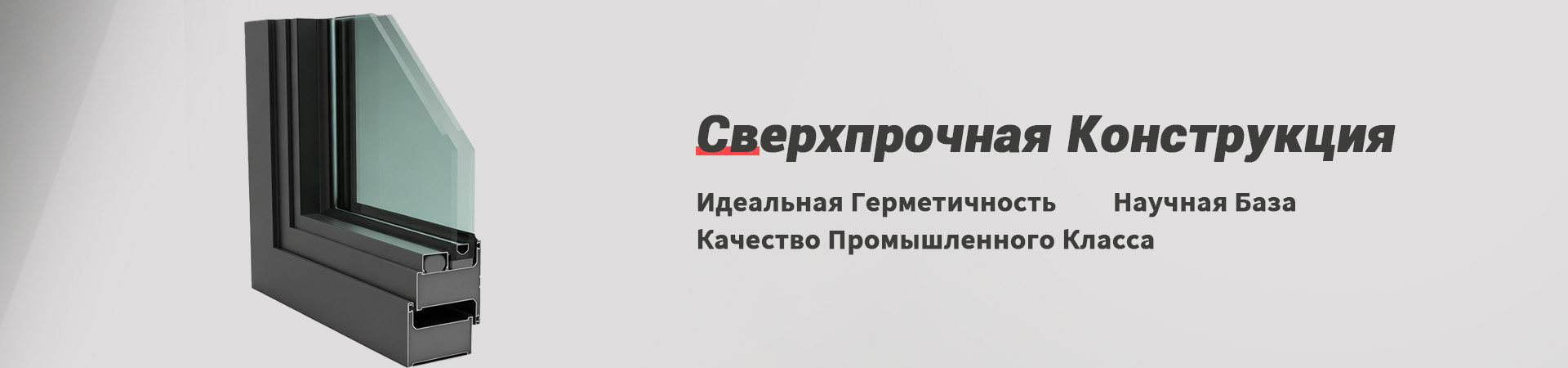
- Energy efficient building envelopes:Modular windows and doors made of colored steel (series 60, 75, 120) and steel windows with poured thermal insulation (series 50). These solutions use thermal break and multi-loop sealing technologies to provide high airtightness and thermal resistance, which is critical for modular buildings in the Arctic.
- Industrial metal products:Stainless steel water pipes, GVU manifolds, brackets, motor bases and other critical equipment components. All products meet the highest requirements for reliability and accuracy.
The geography of supplies of Chongqing Huaxia LLC covers the CIS countries, the Middle East and Eastern Europe. The company is actively involved in import substitution projects and the construction of prefabricated facilities, including temporary medical and military structures. The service policy is based on prompt response and flexible adaptation to the logistics conditions of the regions, which makes the company a reliable partner for projects in harsh climatic zones.
FAQ: Frequently asked questions about northern structures
What is the minimum temperature allowed for installation of structures?
Welding work in the open air is usually prohibited at temperatures below -10°C...-15°C without creating special greenhouses (heated shelters). Bolted connections can be installed down to -40°C, but using special tools and cold-resistant lubricants. The design itself can be operated at any stated temperatures (up to -70°C).
What is the difference between HL and UHL?
HL (Cold climate) - version for temperatures down to -60°C. UHL (Moderate cold climate) - for temperatures up to -45°C...-50°C. The difference lies in the requirements for impact strength and steel grade. For most areas of Siberia, UHL is sufficient, but for the Arctic, HL is required.
Can existing structures made from conventional steel be retrofitted?
It is impossible to radically change the properties of an already manufactured structure. You can only strengthen it (add elements, redistribute the load) or improve corrosion protection. If the facility will be operated in more severe conditions than designed, it must be subjected to examination and, most likely, critical components will be replaced with new ones made of cold-resistant steel.
How much do extreme cold climate structures cost?
The cost depends on the complexity of the geometry, steel grade and batch size. On average, the price is 20-35% higher than for standard designs, due to the cost of metal (premium for cold resistance) and more expensive quality control (ultrasound testing, laboratory tests). An accurate calculation is possible only after providing drawings or technical specifications.
What is the service life of such structures?
Subject to manufacturing technologies and regular maintenance (checking the coating, tightening fasteners), the service life is at least 25-30 years. Many facilities built in the USSR in the 80s from 09G2S steel are still being successfully operated, which confirms the durability of the correct engineering approach.
Conclusion: a reliable partner for your Arctic projects
Choosingdesigns for extremely cold climates, you choose the safety of people and the continuity of business processes. Our plant, supported by the capacity and expertise of partners at the level of Chongqing Huaxia LLC, has all the necessary licenses, equipment and competencies for the production of metal products that can withstand the most severe tests of nature. We don't just sell metal - we provide an engineering solution that has been tested by time and low temperatures.
Don't risk the reliability of your facility. Entrust production to professionals with experience in the Arctic.
Ready to discuss your project?
- Get a free consultation with a design engineer.
- Request a commercial offer with detailed costing.
- Download the technical catalog with examples of completed projects.
→Contact the sales department and get a cost estimate
We also recommend that you familiarize yourself with ourtechnical solutions for the oil and gas industryand cases for installation in permafrost conditions.


