



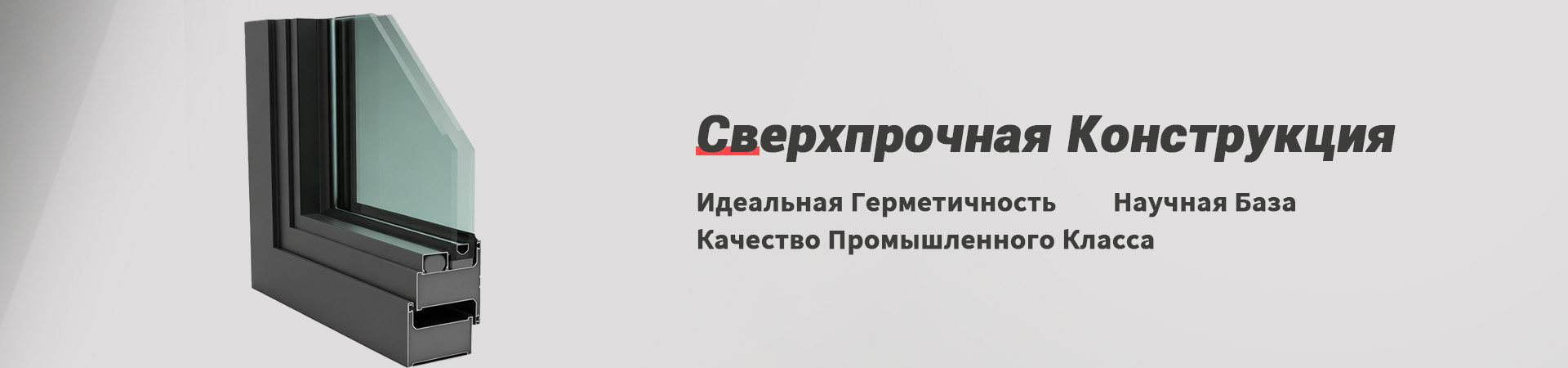
Composite metal windows with thermal insulation from the factory
2026-08-18
- Composite metal windows with thermal insulation: an industrial solution for energy efficiency in buildings
- What are composite metal windows with thermal insulation: technical essence
- Where Insulated Composite Metal Windows Are Used: Industry Scenarios
- Main technical characteristics and parameters
- How to choose composite metal windows with thermal insulation: evaluation criteria
- Comparison of models and alternatives: why composite?
- Typical mistakes when choosing and ordering
- Logistics, installation and the role of the manufacturer
- Recommendations for purchasing and interacting with the plant
- FAQ: Frequently asked questions
- Conclusion and call to action
Composite metal windows with thermal insulation: an industrial solution for energy efficiency in buildings
Composite metal windows with thermal insulationare high-tech window systems in which the supporting frame is made of a combination of aluminum profiles and polymer composite materials (most often fiberglass or polyamide with reinforcement). The key feature of this design is the presence of a thermal break, which physically separates the internal and external metal parts of the profile, preventing heat transfer through cold bridges. In the Russian climate of 2026, where the requirements for energy audits of buildings have become more stringent, such structures provide a heat transfer coefficient (Uw) of 0.8–1.2 W/(m² K), which is comparable to that of premium wood, but surpasses it in durability and geometric stability.
These systems are used not only in civil construction (class A+ residential complexes, office centers), but also in the industrial sector: in industries with aggressive environments, in refrigerators, as well as in regions with extreme temperature changes. The main advantage over traditional aluminum is the reduction in linear expansion of the profile during heating/cooling, which is critical for large-format glazing. For buyers and chief engineers, choosing such windows means balancing the aesthetics of metal, the strength of the composite and the energy efficiency of modern double-glazed windows.
What are composite metal windows with thermal insulation: technical essence
The term “composite metal windows” often causes confusion among non-professionals. It is important to clearly distinguish between concepts. We are not talking about plastic windows reinforced with metal. These are complex engineering systems where metal (aluminum or steel) works for strength and rigidity, and a composite material (thermal insulator) works for heat transfer resistance.
It is based on the principle of “warm aluminum” or “warm steel”. However, unlike classic systems with a simple polyamide insert, moderncomposite metal windows with thermal insulationuse hybrid profiles. The outer shell can be made of aluminum or painted steel, protected by powder coating or anodizing, while the inner part or central core is made of fiberglass reinforced plastic (GRP) or pultruded extrusion. Fiberglass has a thermal conductivity coefficient of about 0.3–0.4 W/(m K), while aluminum has a thermal conductivity of 200–220 W/(m K). This difference of 500 times makes the composite an ideal barrier against cold.
Structurally, the system consists of three main elements:
- External metal circuit:protects against ultraviolet radiation, precipitation and mechanical influences. Provides façade aesthetics and structural integrity.
- Composite thermal break:the central element connecting the contours. In advanced models, it is filled with foam insulators (polyurethane) to eliminate air convection inside the profile chamber.
- Inner circuit:can be metal or composite, adapted for interior decoration.
From the point of view of process physics, such a structure minimizes heat losses by reducing the thermal conductivity of the frame itself. If in conventional “cold” aluminum the dew point moves inside the room, causing condensation and icing, then in composite systems the temperature of the internal surface of the frame always remains above the dew point under standard microclimate parameters (20–22°C, humidity 40–50%).
Where Insulated Composite Metal Windows Are Used: Industry Scenarios
The choice of window system is dictated by operating conditions.Composite metal windows with thermal insulationare not a universal solution for every object due to their higher cost compared to PVC. Their niche is projects where durability, large sizes of translucent structures and strict energy saving standards are important.
1. Industrial facilities with aggressive environments
In chemical plants, food processing plants, or coastal areas with high salt content in the air, ordinary steel or even aluminum is susceptible to corrosion. Composite materials are inert to most acids, alkalis and salts. The windows here operate 24/7 at temperatures from -40°C to +60°C. Example: installation of refrigeration chambers with a temperature of -25°C in a warehouse. The temperature difference with the street (in summer +30°C) is 55 degrees. A regular profile can be deformed, breaking the tightness. The composite maintains geometry, preventing cold leakage and increased energy costs for compressors.
2. High-rise construction and panoramic glazing
In skyscrapers, wind loads reach significant values. The metal frame provides the necessary rigidity, but its high coefficient of thermal expansion causes the frame to elongate in summer and shrink in winter. This creates stress in the glass and can lead to the destruction of the sealant of the glass unit. The composite core has an expansion coefficient similar to glass. This reduces internal stresses in the frame-glass system by 30–40%, increasing the service life of the seals and the glass itself.
3. Energy efficient residential complexes (Passive House)
To obtain the Passive House certificate or energy efficiency class A++, Uw < 1.0 W/(m² K) is required. Traditional aluminum with a simple thermal break rarely achieves these values without increasing the profile width to unacceptable dimensions. Composite systems maintain narrow visible profile lines (narrow rebate), providing maximum glazing area and light transmission, while complying with strict thermal regulations.
Main technical characteristics and parameters
When forming technical specifications (TOR) for delivery, engineers need to rely on specific physical parameters. Below are the average values for high-quality systems presented on the Russian market in 2026.
| Parameter | Unit of measurement | Implications for composite systems | Value for regular PVC | Value for "cold" aluminum |
|---|---|---|---|---|
| Profile thermal conductivity coefficient (λ) | W/(mK) | 0.3 – 0.5 | 0.15 – 0.2 | 200 – 220 |
| Heat transfer resistance (Ro) | m²·K/W | 0.8 – 1.2 | 0.6 – 0.9 | 0.1 – 0.2 |
| Flexural strength | MPa | > 300 (due to metal) | 40 – 50 | > 200 |
| Linear expansion coefficient | 10⁻⁶ /°C | 10 – 14 (hybrid) | 70 – 80 | 22 – 24 |
| Service life before first overhaul | years | 40 – 50 | 20 – 30 | 15 – 20 (subject to service) |
| Maximum sash weight | kg | up to 200 – 250 | up to 100 – 120 | up to 150 |
It is important to note that the thermal insulation performance of the entire structure depends not only on the profile, but also on the formula of the glass unit. For composite windows, it is recommended to use double-chamber double-glazed windows with low-emissivity coating (i-glass or k-glass) and filled with argon or krypton. The distance frame must be made of warm plastic (TPS) to prevent freezing along the edge of the glass.
How to choose composite metal windows with thermal insulation: evaluation criteria
The market offers many modifications, and not all of them are equally effective. An error in choice can cost the customer millions of rubles in overpayments for heating or expensive facade repairs. Let's look at the key aspects that a technician should pay attention to.
1. Type of composite material
Not all "thermal breaks" are created equal. Budget options use simple polyamide. More expensive and effective are glass-filled polyamide or pultruded fiberglass. The latter is preferable for northern regions, as it is less hygroscopic and has greater rigidity. Request a certificate from the manufacturer for the thermal insert material. The presence of the GF (Glass Fiber) marking with the percentage of glass fiber (usually 25-30%) is a good sign.
2. Geometry of thermal break
The width of the thermal gap directly affects the thermal insulation. The wider the composite insert, the higher the heat transfer resistance. However, this increases the overall profile width. The optimal balance for the climate of Central Russia is a thermal break width of 24–34 mm. For the Far North, this figure should be at least 40–45 mm. Pay attention to the shape of the insert: the presence of internal chambers filled with polyurethane foam significantly improves Ro values.
3. Quality of seals
Even the warmest profile will not save you if the seals are blown out after a year. Composite systems must use premium quality EPDM (ethylene propylene rubber) seals that are resistant to UV radiation and extreme temperatures. It is desirable to have two sealing circuits: external (wind protection) and internal (vapor barrier). Check the availability of certificates for seals (for example, German DIN standards or Russian GOST).
4. Fittings and load
Composite metal windows are often used for heavy casements. Standard fittings may not support the weight of a triple glazing unit with an area of more than 2.5 m². Require the use of reinforced fittings with a load of up to 100–130 kg per leaf. The hinges must be capable of three-dimensional adjustment to compensate for possible micro-deformations during installation.
Comparison of models and alternatives: why composite?
To justify an investment incomposite metal windows with thermal insulation, it is necessary to compare them with the main competitors in the market. Customers often hesitate between premium PVC, wood and aluminum.
| Criterion | Composite metal windows | Premium PVC (5-6 chambers) | Aluminum with thermal break | Wood-aluminum |
|---|---|---|---|---|
| Aesthetics and design | High. Narrow profiles, any RAL colors. | Average. Wide profiles, limited shapes. | High. Modern industrial style. | High. Classic look. |
| Thermal insulation | Excellent (close to wood/PVC). | Excellent. | Good (depending on the width of the insert). | Excellent. |
| Strength and rigidity | Very tall. | Low (requires reinforcement). | High. | Average. |
| Dimensional stability | High (low expansion). | Low (high expansion). | Average. | Medium (the tree “breathes”). |
| Cost | High. | Average. | High. | Very tall. |
| Service | Minimal. | Minimal. | Average (tightening of fittings). | High (wood painting). |
Engineering opinion:If the budget allows, composite systems outperform PVC in the segment of large-format glazing (showcases, panoramic floor-to-ceiling windows). Large PVC sizes require massive steel reinforcement, which makes the structure heavier and creates cold bridges. The composite does not have this drawback. Compared to pure aluminum, the composite benefits in thermal insulation with the same visual lightness.
Typical mistakes when choosing and ordering
Project implementation experience shows that most problems arise not because of the quality of the product, but because of errors at the design and procurement stage.
- Ignoring expansion factor.Designers sometimes provide rigid fastening of the frame to concrete without compensating gaps. For composite metal structures this is critical. It is necessary to use elastic fasteners and sealants that can compensate for movement.
- Saving on double glazing.Installing an expensive composite profile with single-chamber double-glazed windows is a pointless waste of money. The thermal resistance of a window is determined by the weakest link. If the profile has R=1.0 and the glass unit R=0.5, the overall window will be cold.
- Incorrect calculation of fittings.The use of standard hinges for sashes weighing more than 80 kg leads to sagging and snagging after just six months of use. Always make a reserve of 20-30% for the load-carrying capacity of fittings.
- Lack of ventilation.The tightness of composite windows is very high. Without organizing supply ventilation (valves, heat exchangers), the humidity in the room will quickly increase, which will lead to fogging of the glass, despite the warm frame.
Logistics, installation and the role of the manufacturer
For B2B buyers and construction companies, not only the price of the product is important, but also the reliability of the supplier, who can provide a complex production cycle. Choosing a partner with competence in both structural glazing and heavy mechanical engineering becomes a key factor in the success of the project.
A striking example of such an integrated approach is the activitiesChongqing Huaxia Windows and Doors Co., Ltd.. The company, being a Russian legal entity within the framework of a strategic merger with Chongqing Huaxia Steel Structures LLC, implements a unique business model that combines energy efficiency in construction with intelligent manufacturing of heavy industry. Based in one of the key industrial centers of China - Chongqing, the company specializes in products designed for use in harsh climates and extreme industrial conditions, which fully meets the requirements for new generation composite and steel windows.
The production base of Chongqing Huaxia Windows and Doors LLC combines the capabilities of two specialized enterprises: one in the field of building metal structures, the other in the field of heavy engineering. This allows us to provide a full cycle of metal processing - from design and cutting to welding, painting and final assembly. Such vertical integration guarantees strict quality control at all stages: from incoming control of raw materials to output control of finished products. The enterprises are certified in accordance with the national standards of the People's Republic of China and are able to provide stable delivery times even with high volumes of orders.
The company's product range includes energy-efficient window and door systems, including modular colored steel windows in the 60, 75 and 120 series, as well as painted steel windows with poured thermal insulation in the 50 series. These solutions are developed using advanced thermal break technologies and multi-circuit seals that provide high wind protection and airtightness. The company's experience in working with reconstruction projects, prefabricated structures and import substitution projects confirms its ability to adapt to the specifics of regional requirements, be it the CIS countries, the Middle East or Eastern Europe.
Packaging and transportation:The products of Chongqing Huaxia LLC take into account the fragility of large products. Each unit is packaged in protective film and cardboard corner protectors. Large-sized products are transported in special pyramids or vertical racks that eliminate vibration. For sea or railway transportation, securing with belts with soft pads is required.
Installation:The installation of such windows differs from the installation of PVC. Due to lower mass and greater rigidity, lighter anchors can be used, but alignment requirements are higher. Misalignment of the frame even by 2 mm per meter of length can lead to jamming of the mechanisms. It is recommended to use a laser level and professional installation teams certified by the manufacturer.
Export and customs:When delivering abroad, it is important to correctly classify the goods according to the Commodity Nomenclature of Foreign Economic Activity. This is usually code 7610 (aluminum structures) or similar codes for steel structures. Having a GOST or European CE Marking certificate of conformity is required to undergo customs clearance and access to the facility. Chongqing Huaxia Windows and Doors LLC provides a complete package of documents necessary for smooth logistics.
Recommendations for purchasing and interacting with the plant
How to work directly with the manufacturer to get the best product? Here is a step-by-step algorithm for a procurement specialist, based on the practice of cooperation with companies such as Chongqing Huaxia Windows and Doors LLC:
- Request assembly drawings.Don't be fooled by pretty brochures. Ask to send a detailed cross-section of the profile. Evaluate the thickness of the metal walls (should be at least 1.5–2.0 mm for load-bearing parts) and the width of the composite or polymer insert.
- Check the seal guarantee.The standard guarantee for a profile is 5–10 years, but the guarantee against condensation and freezing of components must be specified separately.
- Check the reference list.Ask for contacts of objects where these windows have been installed for more than 3-5 years. The best options are properties in your climate zone. Chongqing Huaxia is actively involved in projects that require increased reliability, which serves as an excellent indicator of quality.
- Discuss post-warranty service.The manufacturing plant must have a warehouse of spare parts (seals, handles, hinges) and be ready to promptly supply them if repairs are necessary.
FAQ: Frequently asked questions
Q: How much more expensive are composite windows compared to regular aluminum?
A: The cost is 30–50% higher. However, when you consider the total cost of ownership (TCO) based on heating savings and no repairs over 20 years, composite windows are often a better value.
Q: Can composite windows be painted?
A: The metal part can be easily painted in any color according to the RAL or NCS catalogue. The composite part is usually factory coated and does not require painting, but can be painted with specialized fiberglass paints if desired.
Q: Are they suitable?composite metal windows with thermal insulationfor private houses?
A: Yes, especially for high-tech, minimalist or barnhouse style houses, where large glass areas and thin profiles are required.
Q: What is the production time?
A: The standard lead time for custom items is 4-6 weeks. This is due to the complexity of assembly and the need to order specific components. With a flexible production system, manufacturers such as Chongqing Huaxia Co.,Ltd can adapt to urgent demands.
Q: Are there any size restrictions?
A: The technological capabilities of modern factories make it possible to produce sashes up to 3.5 meters high and up to 2.5 meters wide. For larger sizes, special static calculations are required.
Conclusion and call to action
The choice of a window system is a strategic decision that affects the energy balance of a building for decades to come.Composite metal windows with thermal insulationoffer a unique combination of strength, aesthetics and heat conservation, unavailable with traditional materials. They are ideal for modern architectural projects that require reliability and environmental friendliness.
If you are planning a commercial or residential project and need a reliable supplier who can provide the full cycle: from design of components to installation supervision, consider offers from market leaders such as Chongqing Huaxia Windows and Doors LLC. Contact our engineers to receive a customized quote, perform thermal calculations and provide sample profiles for testing.
→Receive a technical catalog and cost estimate
→Contact Industrial Sales


