



Analysis of the pain points of the door and window market in Russia and a technical solution based on steel-plastic colored steel composite doors and windows - white paper
2026-05-13
Preface
The territory of Russia as a whole is located at high latitudes, the climatic conditions are extremely harsh: in Siberia, the Far East and northern regions, winter minimum temperatures can reach −70 °C, daily temperature fluctuations throughout the year are very large, the number of freeze-thaw cycles exceeds 120; At the same time, the country is concentrated in high-rise buildings, and in winter there are often strong winds and snowstorms. The specifics of a harsh cold climate imposes requirements on external doors and windows of buildings for thermal insulation, resistance to low temperatures, wind and frost resistance, water resistance and tightness, which significantly exceed generally accepted international standards.
Currently, plastic (PVC) windows and doors, aluminum windows with thermal break and wooden windows, widely used on the Russian market, have inherent disadvantages when operating in extreme cold conditions and cannot meet the requirements of the updated Russian code of rules for energy saving in construction in 2025. Issues such as brittleness at low temperatures, fogging and drafting around the edges of windows, water pooling in cavities followed by freezing rupture, and high subsequent maintenance and repair costs have become common pain points in new construction and retrofitting old window designs.
This white report is based on the actual climatic conditions of Russia, the structure of supply and demand in the window and door market, prices for main products and the current availability of supplies; it cross-references the suitability of four main types of windows and doors for harsh climates; At the same time, relying on the state scientific achievements of Chongqing Huaxia and the experience of the editor-in-chief of national standards, objectively analyzes the differences between composite and cast-in-place steel-plastic sandwich window and door structures, their inherent shortcomings and targeted technical solutions, providing general contractors, developers, building materials sellers and renovation projects of existing buildings in Russia with professional, objective and situational recommendations for the selection of windows and doors.
I. Climatic conditions of Russia and key problems of windows and doors in construction
1.1 Regional climatic conditions of Russia (with a focus on the central regions of Moscow and St. Petersburg as the main target markets)
Russia has a huge extent from west to east; the European part of the country is characterized by high population density and concentration of buildings, being the main target market for window and door products; Siberia and the Far East are sparsely populated, the volume of projects there is small and is not a priority in this export plan. The climatic differences between the two large regions are significant, the reasons for the failure of windows and doors are fundamentally different, which is a key basis for the differentiated design of the two types of sandwich windows and doors.
1.1.1 Main target markets: Moscow, St. Petersburg (European central regions of Russia, where 90% of new and reconstructed facilities are concentrated)
Both territories belong to a temperate continental humid climate, without Siberian extreme long-term severe cold, but combine four severe factors: long cold winters, frequent freezing and thawing cycles, strong coastal winds and high air humidity - these are the main reasons for the rapid wear of doors and windows; The specific climate parameters are as follows:
• Range of winter temperatures: winter is long (from November to April of the following year, up to 6 months), the average January temperature is −12…−18 °C, historically minimum temperatures are about −30 °C, there are no long-term ultra-low temperatures below −40 °C, so PVC materials do not experience instant brittle destruction from extreme cold;
• Key problem: frequent cycles of freezing and thawing during the day: during the day, solar heat causes snow to melt, at night the temperature drops sharply and the water freezes again, the annual number of freezing/thawing cycles can exceed 110. Repeated temperature fluctuations are much stronger than constant low temperature conditions, destroying the seals of doors and windows, the structure of profile cavities, causing water leaks, blowing and loss of tightness;
• Wind pressure: St. Petersburg is adjacent to the Baltic Sea, strong coastal winds are a common occurrence, the two largest cities have dense buildings of multi-story residential and commercial buildings, which are subject to strong side winds of force 6-9 throughout the year, which places extremely high demands on the overall structural rigidity of doors and windows and their ability to withstand deformation;
• Unique conditions of high humidity and corrosion: air humidity is much higher than in the coastal regions of inland Siberia; rain and melt water easily accumulate inside profile cavities, which greatly contributes to the corrosion of fittings and the internal surface of the profile and is the main cause of hidden damage to doors and windows in this region.
1.1.2 Secondary market: Siberia, coastal areas of the Far East
• Refers to the sub-arctic climate of coniferous forests, the winter is long and constantly extremely cold; typical temperatures are −35 °C…−55 °C, minimum values can reach −70 °C; the daily temperature difference is small, freeze-thaw cycles are rare, there is no repeated damage from thawing and freezing, the main risk is direct brittle cracking of the PVC profile due to low temperatures, and not rupture due to frozen water in the cavities.
1.1.3 Two key differences in door and window design requirements in two major markets
1. Moscow and St. Petersburg (main markets): priority - protection from repeated freezing and thawing, high humidity and corrosion, strong wind pressure in high-rise buildings, accumulation of water in cavities; the risk of PVC becoming brittle at low temperatures is low;
2. Siberia and the Far East (niche markets): priority is protection from extremely low temperatures and associated fragility, special attention is to preventing cracking of plastic profiles at low temperatures.
The territory of Russia is vast, the climate in the west and east varies greatly, so the choice of doors and windows must be strictly adapted by zone. The main consumer market is concentrated in populated European areas around Moscow and St. Petersburg and differs from the deeply frozen regions of Siberia and the Far East; The operating conditions and risks of failure of doors and windows in these two regions are fundamentally different, specific parameters are given below:
1.1.1 Moscow, St. Petersburg (the core of the population of Russia, the main market for new buildings and renovation of existing buildings)
• Basic temperature conditions: refer to a temperate continental humid climate, winter is long and cold, but without extreme deep cold; the average January temperature is −11℃…−15℃, historical minimums are −30℃…−34℃, which is much milder than in Siberia with −50℃…−70℃; The cold period throughout the year lasts up to 6 months; snow and freezing persist from November to April.
• Features of freeze-thaw cycles (the main regional problem): large daily temperature fluctuations - during the day the sun causes heating and melting of snow, at night rapid cooling and icing; more than 100 effective freeze-thaw cycles throughout the year; Compared to the Far East with persistently low temperatures, alternating cycles of freezing and thawing are more damaging to the sealing systems of doors and windows and profile cavities, and the risk of destruction from frozen water in storm drains is higher.
• Wind, rain and snow conditions: St. Petersburg is adjacent to the Gulf of Finland of the Baltic Sea, the coast is exposed to strong winds, there are many high-rise buildings in urban areas, wind loads of 6–9 points are constantly observed; Both cities often experience heavy snowfalls in winter, the maximum snow depth can reach 43 cm, and there are strict requirements for the watertightness of windows and doors and resistance to snow loads.
• Unique conditions of high humidity: St. Petersburg is located in a low-lying area with a dense network of rivers, air humidity is much higher than in the interior regions of Siberia; profile cavities are very easy to condense water, corrosion of fittings and mold/aging of sealing rubbers are more pronounced.
1.1.2 Siberia, Far East (inland extremely cold sparsely populated areas)
• Usual winter temperatures are −35°C…−55°C, extreme minimums are down to −70°C, low temperatures are constant without frequent daily thaws; the key risk is the fragility of plastic profiles at low temperatures, cracking of entire profiles from freezing, the number of freeze-thaw cycles is small, the risk of frost swelling due to frozen water is lower than in Western urban groups.
1.1.3 Summary of basic requirements for the design of doors and windows by region
1. Moscow/St. Petersburg: priority - resistance to multiple cycles of freezing and thawing, high airtightness and waterproofness, resistance to strong coastal wind loads, moisture protection and anti-corrosion; moderate resistance to pressure at low temperatures and brittleness, with sealing and weather resistance, as well as watertightness of cavities having higher priority;
2. Siberia/Far East: priority - maximum resistance to extremely low temperatures, prevention of brittle cracking of PVC; The main design indicator is resistance to constant ultra-low temperatures.
• Extremely cold temperatures: High latitudes bring long periods of extreme cold; In winter in Siberia and the Far East, typical temperatures are −35°C to −55°C, with minimums falling below −70°C. In conventional plastics, the strength at low temperatures sharply decreases, which leads to brittle fracture; metal profiles have high thermal conductivity, which is why condensation and ice constantly form on the inside of the window.
• Frequent cycles of freezing and thawing: in spring and autumn there are large daily temperature changes - snow melts during the day, quickly freezes at night; moisture repeatedly penetrates into the profile cavities and seals, gradually causing sealing failure, profile delamination, corrosion and jamming of fittings and other malfunctions.
• Frequent loads from strong winds: in tall buildings of lowland and coastal cities, the influence of wind loads is significant, traditional door and window designs are not strong enough, and during long-term use, sagging of the sashes, extraneous sounds when opening, deformation of the profile as a whole and other problems often occur.
• Tightening policy on energy efficiency of buildings: in 2025, the new Russian regulatory framework on energy efficiency of buildings significantly increases the requirements for thermal insulation of external windows; low- and mid-budget doors and windows available on the market, as a rule, do not meet these requirements, which causes a massive surge in demand for updating and modernizing old windows throughout the country.
1.2 Four common problems of doors and windows in the Russian construction industry
1.High heating consumption: doors and windows are the main ways of energy loss in buildings; In the total volume of heat consumption in Russian buildings, the share of losses through doors and windows reaches 32%. Insufficient thermal insulation of mass types of doors and windows leads to a constant increase in heating costs for residential buildings and industrial workshops throughout the year.
2. Damage to the plastic profile by brittle destruction at low temperatures: plastic doors and windows with PVC components, ordinary steel-plastic doors and windows at extremely low temperatures, the materials harden and lose viscosity, under the action of stress from freezing-thawing and external shocks they crack, the tightness of doors and windows is completely broken, in winter the problem of blowing cold air around the perimeter of the windows is especially pronounced.
3. Destruction of the structure due to the expansion of freezing water in the cavities: rain and snow vapors, penetrating into the closed cavities of doors and windows, freeze when cooled, their volume increases and directly breaks the profiles, compromising the integrity of the structure and significantly reducing the service life of doors and windows.
4. High cost of operation throughout the entire life cycle: solid wooden doors and windows require annual antiseptic and protective treatment, aluminum windows are prone to condensation and corrosion of fittings, plastic windows age and fail after 3-5 years, repeated repairs and replacements further increase the subsequent operating costs of buildings.
II. Panoramic study of the main categories of doors and windows on the Russian market
The current Russian window and door market has a stable structure: plastic windows and doors dominate, aluminum windows and doors with thermal breaks occupy a niche in the middle and high segment, and wooden products are entrenched in the highly specialized premium segment; Together, these three categories account for more than 95% of the market, but none of them can perfectly adapt to local harsh climate conditions. The following is a comprehensive study in four main areas: market share, supply sources, final prices and disadvantages in cold climates.
2.1 Plastic windows and doors (80% market share, main need in the civil sector)
Market Share: Product of choice for existing housing stock and newly built affordable housing; penetration into multi-apartment civilian buildings is approaching 90%; Due to new energy efficiency regulations, the market share has been gradually declining in recent years.
Sources of supply: premium products depend on original imports from Germany and Italy; mid-segment products are mainly supplied by Turkish and Chinese universal factories for the production of windows and doors; low-cost products are assembled at local small enterprises in Russia, while domestic companies do not independently develop key profile systems.
Final price to consumer (including import duty and local distribution costs):
• European original high-class plastic windows: 12,000–18,000 rub./m² (960–1,440 yuan/m²)
• Turkish/Chinese middle-class plastic windows: 6,000–10,000 rub./m² (480–800 yuan/m²)
• Low class Russian local prefabricated windows: 3000–5000 RUR/m² (240–400 RMB/m²)
Product advantages: low purchase cost, basic thermal insulation performance is better than conventional continuous aluminum doors and windows, suitable for low-cost projects with tough demand.
Key disadvantages for cold climates: at temperatures below -30°C, PVC profiles quickly lose viscosity and become brittle with cracks; simple chamber design, weak resistance to wind pressure; after cycles of freezing and thawing, sealing gum quickly ages, and problems with blowing and leaks often arise; the overall heat transfer coefficient does not meet the Russian new energy saving requirements of 2025, the highest share of write-offs is during the reconstruction of the existing stock.
2.2 Explosive (thermal insulated) aluminum profile for doors and windows (12%–15% market share, high-rise buildings and commercial development)
Market share: Mainly used in high-rise residential buildings, shopping and entertainment complexes and office buildings in primary cities such as Moscow and St. Petersburg; penetration into general residential construction is less than 5%; After the departure of European and American brands from the Russian market, the share of Chinese imports of tensile aluminum profiles grew steadily.
Source of supply: high-quality window and door systems are supplied by European manufacturers; the main suppliers for the mid-segment market are Chinese window and door manufacturers; In Russia, only the final assembly is carried out, all key components are heat-saving inserts, sealing tapes, etc. — are completely imported.
Final retail price (including import duties and local distribution costs):
• European high-quality thermal bridge aluminum windows: 18,000–25,000 rubles/m² (1440–2000 yuan/m²)
• Chinese mid-price thermal bridge aluminum windows: 10,000–16,000 rubles/m² (800–1280 yuan/m²)
• Ordinary continuous aluminum windows: 5000-8000 RUR/m² (400-640 RMB/m²)
Product advantages: high structural strength, excellent windproof ability, good tactile and visual aesthetics, long product life.
Key disadvantages in severe frost conditions: metal initially has a high coefficient of thermal conductivity, so even when using a breaking thermal insulation profile, extensive condensation and ice still form on the surface of the windows; general thermal insulation is not able to meet the heating needs in extremely cold regions, energy consumption of buildings remains high; high cost, unsuitable for mass use in residential projects.
2.3 Wooden windows and doors (market share 3%-5%, niche premium scenarios)
Market share: serves only urban luxury villas, restoration of historical buildings and high-level public buildings; The market volume is small, the share is stable over the long term, and widespread distribution is impossible.
Sources of supply: luxury wooden doors and windows depend on imports from Finland and Germany; solid wood doors and windows in the middle and low price segment are produced by Russian timber processing plants.
Final retail price (including import duties and local distribution costs):
• European imported luxury wooden windows: 25,000–40,000 RUR/m² (2000–3200 RMB/m²)
• Domestic solid wood windows: RUB 18,000–25,000/m² (RMB 1,440–2,000/m²)
Product advantages: natural wood texture is highly decorative, the initial thermal properties are good.
Critical disadvantages for harsh climates: at extremely low temperatures, wood dries out and cracks; in humid conditions with a lot of snow, it absorbs moisture, molds and becomes deformed; antiseptic treatment and painting are required annually; operating and maintenance costs over the entire service life are extremely high; the high price makes mass purchases for construction impossible.
III. Comparative analysis of the performance of all types of doors and windows in harsh climates
Combining three key extreme local conditions—Russian cold as low as −70°C, 120 standard freeze/thaw cycles, and degree 9 wind load—a comprehensive evaluation was conducted of the performance of three types of popular windows and doors on the market compared with two models of Chongqing Huaxia colored steel composite window/door (precast and cast-in-place), clearly demonstrating the ability of different products to adapt to strong cold weather and their design differences
| Key indicators for the conditions of the far north | Ordinary PVC windows | Aluminum windows with thermal break | Wooden windows | Huaxia Colored Steel Combination Windows (with Modified PVC) | Huaxia flooded windows made of colored steel (without PVC components) |
| Heat transfer coefficient K (the lower, the better the insulation) | 1.8~2.5 W/(m²·K) (does not comply with the new RF standards of 2025) | 1.4~2.0 W/(m²K) (not enough for severe frosts) | 1.5~2.2 W/(m²K) | 0.89~1.32 W/(m²K) (extreme thermal insulation) | 1.1~1.5 W/(m²K) (high strength and thermal insulation) |
| Maintains performance after 100 freeze-thaw cycles | 60%~70% (profile is prone to cracking) | 75%~85% (hardware is susceptible to corrosion) | 70%~80% (wood is prone to deformation) | 75%~82% (modified gain, stable performance) | 85%~95% (all steel construction, resistant to freezing cycles) |
| Breathability class | II~III class (noticeably blowing in winter) | III~IV class | II~III class | I~II class (special seal for the far north) | 8th grade (highest regional standard) |
| Waterproof class | Class II~III (cavities prone to water accumulation and frost heaving) | Class III~IV | Class II~III | Class III | Class 6 (resistance to melt snow accumulation) |
| Wind resistance class | Class I~II (prohibited for use in high-rise buildings) | Class III~IV | Class II | Class I | Class 9 (suitable for high-rise buildings in all regions) |
| Service life without maintenance | 8~10 years (rapid aging) | 15~20 years (requires regular maintenance of hardware) | 10~15 years (annual mandatory maintenance) | 20~25 years (zero maintenance for the entire period) | 25~30 years (no maintenance required during the entire life cycle) |
| Suitable for extreme cold -60℃ | Not suitable, PVC becomes brittle and cracks | Not suitable, excessive condensation | Not suitable, wood cracks and deforms | Suitable, modified PVC reduces cold brittleness, no cracks | Perfect fit, no plastic components, no risk of cold brittleness |
IV. Two Major Series of Huaxia Steel Composite Windows and Doors: Structural Differences, Inherent Flaws, and Solutions for Extreme Cold Environments
Chongqing Huaxia is the leading developer of the national standard GB/T 29734.3-2020 “Energy-efficient windows and doors for buildings. Part 3: Steel-plastic composite windows and doors." In 2007, the company single-handedly implemented a state-level project of the Ministry of Housing, Urban and Rural Construction of the People's Republic of China for the scientific and technological breakthrough “Energy-saving windows and doors made of non-ferrous steel” (project number: 2007-K1-15), specifically aimed at solving three main industry problems: eliminating cold bridges, resistance to low temperatures and protection against freeze-thaw cycles. Focusing on the extremely cold conditions of the high latitudes of Russia, the company has developed two types of differentiated products - combined and poured, objectively revealing the design features of each type to ensure transparency of selection and technical objectivity.
4.1 Combined steel-plastic windows and doors: especially for low-rise housing and renovation of old buildings in extreme cold conditions
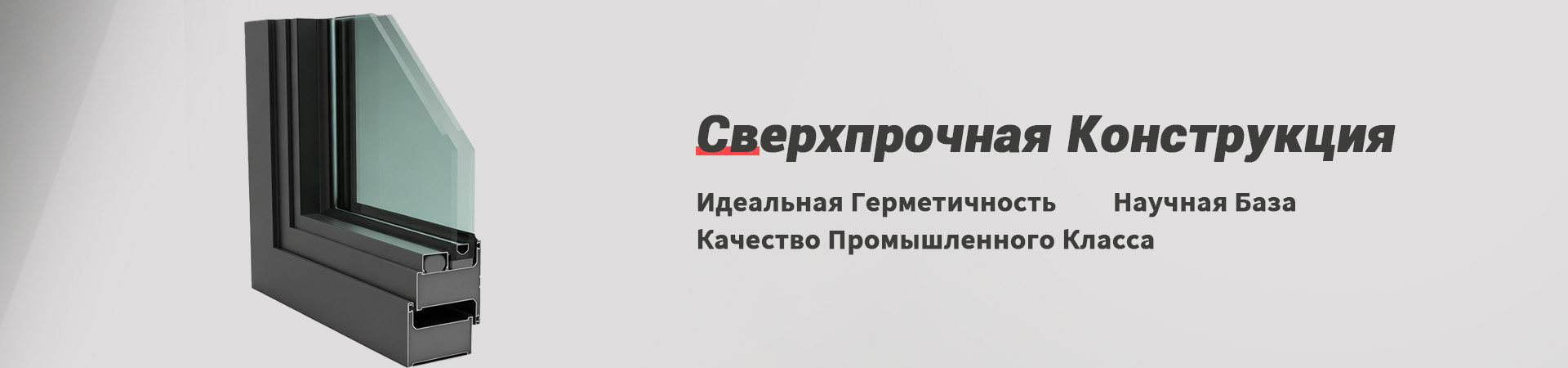
Product structure: Mechanical connection of two layers of steel profile with an intermediate thermal insulation insert made of PVC. Thanks to the ultra-low thermal conductivity coefficient of PVC material, maximum thermal insulation values are achieved.
Objective inherent defects (taking into account the high-latitude, extremely cold climate of Russia): This product contains PVC insulating inserts. Due to the physical properties of the material, ordinary PVC has an inherent defect - cold brittleness at low temperatures. In prolonged extreme cold conditions below -35°C in Russia, the molecular chains of conventional PVC harden and the viscosity drops sharply, making the material extremely vulnerable to cracking and failure under freeze-thaw cycles. This is the main reason for the failure of conventional steel-plastic composite windows and doors on the Russian market in regions with harsh climates.
Huaxia's Specialized Reinforcement Technology: We have abandoned standard industrial raw material PVC in favor of our own proprietary modified high-impact PVC for extreme cold conditions. It is adapted to extremely low temperatures down to -30°C in Moscow and St. Petersburg, which completely eliminates the risk of material embrittlement during sudden cold snaps in urban environments. At the same time, the PVC insulating insert is completely built into the cavity of the steel profile, which isolates it from external humid air and prevents the insert from aging in high humidity conditions. Taking into account the climatic characteristics of megacities, where alternation of freezing and thawing prevails, rather than constant deep cold, modified PVC completely covers all the needs of local operating conditions.
Exact division of application scenarios (taking into account the main markets of Russia):
• Combined doors and windows made of non-ferrous steel: Suitable for energy-efficient reconstruction of windows and doors in multi-storey residential buildings and old housing stock in the suburbs of Moscow and St. Petersburg. Low temperatures within the city are not sufficient for the cold brittleness of modified PVC to manifest. Thanks to the ultra-low heat transfer coefficient, the maximum reduction in energy consumption for heating buildings is ensured at an optimal price-quality ratio.
• Infilled steel windows and doors: suitable for high-rise residential buildings, office buildings, industrial workshops and coastal structures in the central regions of Moscow and St. Petersburg. The complete absence of PVC components completely eliminates the risk of plastic parts aging due to sudden temperature changes. The all-steel closed structure ideally withstands frequent freeze-thaw cycles, strong coastal winds and high humidity, being an optimal solution for urban centers;
• Additional adaptation for Siberia and the Far East: for inland regions with extremely cold climates, only fully infill windows and doors are recommended, which completely avoids the risk of PVC cold brittleness.
4.2 Fiberglass windows and doors with infill: especially for high-rise buildings and industrial halls
Product structure: completely enclosed hollow steel profile + integrated molding by continuously filling the cavities with polyurethane thermal insulation material. The profile is completely free of any PVC components.
Key differentiating advantage (no problem of low-temperature brittleness): Unlike combined composite structures containing PVC, in poured window-door systems, plastic thermal insulators are completely eliminated at the raw material level, which completely eliminates the problem of PVC brittleness at low temperatures. The all-steel closed hollow base can withstand extremely low temperatures, strong wind loads and high-frequency freeze-thaw cycles characteristic of Russia. Structural strength and dimensional stability do not decrease at low temperatures, making this product the most stable for use in extremely harsh environments.
Areas of application: High-rise buildings in megacities such as Moscow and St. Petersburg, industrial workshops, as well as large civil engineering projects in coastal areas with strong wind loads.
4.3 Eight key technology barriers
1. Separate Thermal Break Composite Structure: The integrated connection between the steel profile and the thermal insulation layer breaks the thermal conduction path at the structural level, meeting the thermal insulation requirements of extreme cold environments;
2. Thermal insulation materials with double adaptation to cold: modified PVC thermal inserts can withstand high temperatures ≥70°C and low temperatures ≤-30°C, adapted to the conditions of extreme annual temperature changes in Russia (European part);
3. Six-layer anti-corrosion surface treatment: a full cycle, including etching, phosphating, electrophoresis priming and curing of the finish coating; suitable for conditions of high humidity and snow cover, the profile is not subject to corrosion throughout its service life;
4. Exclusive Low Temperature Resistant Sealing System: Specialized cold climate sealing strips will not harden or crack at -30°C; the service life of the seal corresponds to the service life of the window or door;
5. Design with glazing beads for quick installation: adapted to local construction habits in Russia; ease of installation/dismantling of double-glazed windows and subsequent maintenance reduces the cost of work on site;
6. All-steel high-strength base: the overall strength of the structure significantly exceeds that of metal-plastic and wooden windows and doors, providing resistance to heavy snowfalls and high wind pressure on the upper floors;
7. Environmental friendliness and no harmful emissions: the entire product line meets Russian standards for environmentally friendly building materials, has zero formaldehyde content and zero VOC (volatile organic compound) emissions;
8. Serial production according to a double standard: products simultaneously comply with Chinese national standards (GB) and the requirements of mandatory certification of GOST of the Russian Federation, which allows for smooth customs clearance and state acceptance of objects.
V. Comparison of total life cycle costs (the main benchmark for engineering procurement in Russia)
Russian local customers tend to pay attention only to the initial purchase price of windows and doors, ignoring the hidden costs of subsequent maintenance, energy consumption for heating, replacement and reinstallation. The following table provides an objective comparison of the total costs of five types of windows and doors from a full life cycle perspective, reflecting the actual cost of purchase:
| Product type | Initial purchase costs | Annual maintenance costs | Heating costs over 10 years | Total life cycle cost over 10 years | Recommendation for conditions of the far north |
| Budget PVC windows | Very low | High (frequent replacement of seals) | Very high (high energy losses due to poor thermal insulation) | The highest | Not recommended |
| Aluminum windows with thermal break | Mid-high | Medium (periodic replacement of corroded fittings) | High (condensation on the surface increases energy consumption) | Quite tall | Only suitable for projects with special appearance requirements |
| Solid wood windows | Very tall | Very high (mandatory annual anti-corrosion treatment) | Average | Very tall | Not suitable for mass construction |
| Huaxia Prefabricated Colored Steel Windows and Doors | Average | Zero Maintenance | Very low (maximum heat saving and energy efficiency) | Minimum | Best choice for low-rise housing in extreme cold conditions |
| Huaxia Colored Steel Filled Steel Windows and Doors | Medium-high | Zero Maintenance | Very low | Very low | The best choice for high-rise and industrial buildings |
VI. Conclusion of the White Paper and cooperation program on the Russian market
6.1 Key findings
1. Russia's high-latitude cold climate is characterized by four unique conditions: ultra-low temperatures, high frequency of freeze-thaw cycles, strong wind loads and high energy consumption of buildings. Traditional vinyl, aluminum and wood windows on the market have permanent inherent defects and do not meet the latest local energy efficiency standards;
2. Combined windows made of non-ferrous steel with a thermal break made of PVC have an inherent disadvantage in the form of cold brittleness at low temperatures. However, thanks to the materials modification technologies developed by the company, this disadvantage can be fully compensated. The benefits of such windows in terms of maximum thermal insulation are irreplaceable, making them an ideal solution for low-rise projects in extreme cold conditions;
3. Infilled steel windows and doors are constructed with an all-steel closed hollow profile with polyurethane infill without any plastic components. This completely eliminates the risk of cold brittleness of PVC, provides optimal structural strength and weather resistance, and is also suitable for high-rise buildings and industrial sites with high loads;
4. Simply comparing the original purchase price has no practical engineering meaning: the energy consumption and maintenance costs of the two types of Huaxia composite windows and doors over the entire life cycle are much lower than those of traditional windows and doors, and the long-term economic benefits are more obvious.
6.2 Individual solutions for cooperation with Russian clients
• Wholesale supply of finished windows for projects: provision of standardized specialized windows for extreme cold conditions for general contractors and developers, support for custom sizes for the project and guarantee of stable supplies of large quantities;
• Expanding the capabilities of local dealers: free provision of a full set of GOST certificates, product test reports, localized installation manuals and samples to assist regional agents in quickly developing the market;
• Special program for the renovation of old windows and doors: providing comprehensive services for energy efficient modernization (measurement, design, supply and installation) for housing renovation projects in Russia;
• Official technical support for standards: provision of materials from government research projects and evidence-based documentation for the development of national standards to facilitate rapid acceptance of projects by local official bodies of the Russian Federation.
Authoritative technical confirmation of the enterprise
Chongqing Huaxia Windows and Doors Co.,Ltd
The sole implementer of a state-level research project of the Ministry of Housing, Urban and Rural Construction of the People's Republic of China on energy-saving doors and windows made of non-ferrous steel (2007-K1-15)
Leading developer of the state standard GB/T 29734.3-2020 “Energy-saving windows and doors for buildings. Part 3: Windows and doors made of steel-plastic composites"
Holder of 2 patents for the invention of window and door designs and 11 specialized fully automated lines for mass production
30 years of research, development and production experience across the entire value chain of steel structures and energy-efficient windows and doors allows us to meet Russia's needs for large-scale, long-term and stable supplies


